


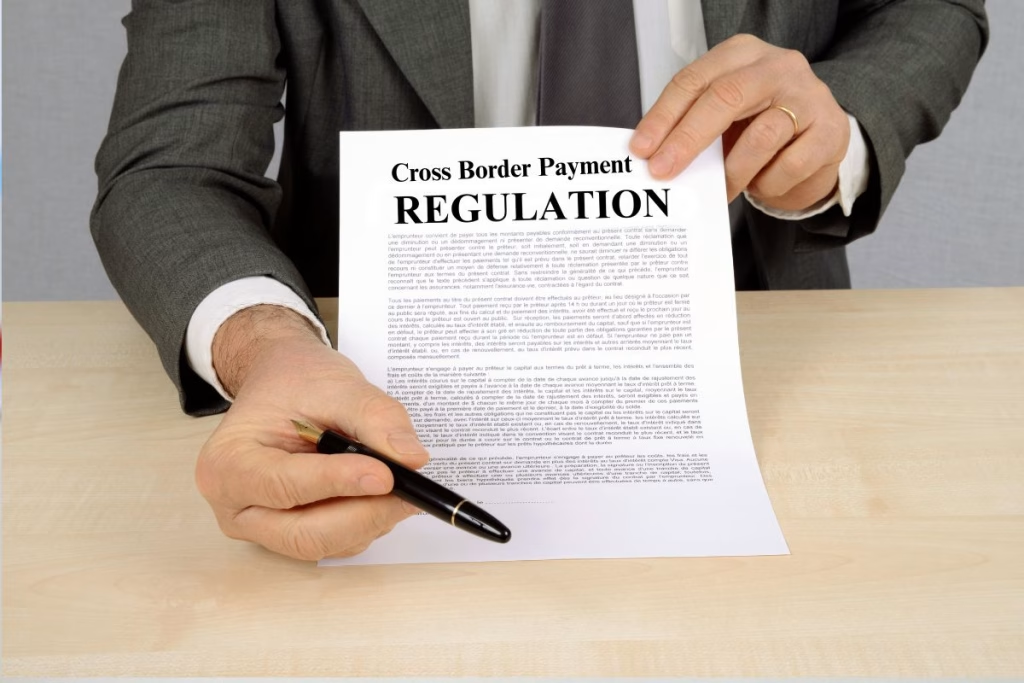
Cross Border Payments are now a common way for businesses and financial institutions to send money internationally. However, keeping up with the rules can be tricky. Each country has its own regulations that companies and financial institutions must follow carefully. Businesses also need to know what documents are required for each transaction.
This helps avoid delays or penalties. Compliance is especially difficult when operating across several countries at the same time. Rules and requirements often change, so companies must stay updated at all times. Order Express can help businesses stay informed while meeting all these obligations.

Understanding Key Rules and Regulations in Cross Border Payments
Cross Border Payments involve strict regulations that protect businesses and customers from risks such as fraud and money laundering. Each payment method and transaction type is subject to specific compliance requirements. This section explains the essential regulations and why they matter for businesses managing international transactions.
Key Rules for Cross Border Payments
Cross Border Payments must follow strict rules to protect businesses and customers. One of the most important regulations is anti-money laundering (AML) compliance. This rule requires companies to create clear procedures that stop illegal money movement. Businesses must verify customer identities and confirm that every transaction is legitimate before processing.
Another essential rule is know your customer (KYC) compliance. Companies need to collect specific customer details before allowing any payment. These steps help reduce fraud and keep financial systems secure. Missing KYC checks can lead to penalties and damage trust with customers.
Foreign exchange compliance also plays a major role. It sets standards for trading foreign currencies and sending international payments. Businesses must ensure every currency exchange follows proper reporting rules. This prevents illegal activities and maintains transparency.
Sanctions screening is equally important. Every sender, receiver, and counter-party must be checked against the US Office of Foreign Assets Control Specially Designated Nationals list and any other applicable sanctions lists before the payment is released. This process checks if a customer or company is on a global sanctions list. If someone flagged on these lists tries to send or receive money, the transaction must be stopped. Performing sanctions screening consistently protects businesses from legal issues.
Note: Under US Bank Secrecy Act rules any cash-in or cash-out transaction that exceeds 10 000 USD in one business day, or several smaller transactions that aggregate above that amount, requires a Currency Transaction Report (CTR) filed with FinCEN within fifteen days. Any suspicious activity that involves 2 000 USD or more must trigger a Suspicious Activity Report (SAR) within thirty days, with continuing SAR filings at the ninety, one hundred twenty, and one hundred fifty day marks if the activity persists. Copies of all CTRs, SARs, and their supporting documents must be stored securely for at least five years.
Staying updated with these rules is essential as regulations frequently change. Companies that set up strong compliance systems can manage international payments more effectively. Order Express Cross Border Payments offers solutions that help businesses stay compliant and avoid unnecessary risks.
Common Rules Businesses Must Follow for Cross Border Payments
Organizations offering Cross Border Payments must meet strict regulatory requirements. Achieving compliance is critical to protect customers and reduce business risks. Companies must follow anti-money laundering (AML) rules and know your customer (KYC) standards. These regulations require verifying customer identities and reviewing transactions for potential fraud.
Sanctions screening is another vital requirement. Businesses must check if customers or partners appear on any global sanctions lists. Foreign exchange compliance also applies, ensuring all currency exchanges meet reporting standards. Companies that skip these steps risk fines and losing customer trust.
Note: Identity verification thresholds are set at 3 000 USD for federal compliance, but some states require lower limits such as 900 USD in Arizona and 1 000 USD in Oklahoma. These amounts apply to single or aggregated transactions during any forty-eight hour period.
Data security is equally important. Businesses must follow standards like those set by the PCI Security Standards Council. These rules help secure customer information and prevent data breaches. Updating systems regularly also reduces cybersecurity threats and keeps payment platforms compliant with changing regulations and financial literacy resources
Many companies now use RegTech solutions to simplify compliance. These tools can automate processes and quickly detect suspicious activities in Cross Border Payments. Leveraging advanced technology also makes it easier to stay ahead of regulatory updates.
Although international payment rules may seem challenging, they are essential for a safe customer experience. Companies that invest in the right tools and strategies can meet legal requirements and protect their operations. Order Express Cross Border Payments provides solutions that help businesses stay compliant while offering customers fast and secure transactions.
Why Compliance Matters in Cross Border Payments
Cross Border Payments require navigating a complex network of global regulations. Businesses must make compliance a top priority to avoid legal risks. This includes following anti-money laundering (AML) laws and know your customer (KYC) standards. Companies must also stay informed about both domestic and international laws affecting their transactions.
Compliance efforts can be challenging, but automated tools can help. These systems simplify complex tasks like customer verification and transaction monitoring. They also enhance security and give customers a safe, smooth payment experience during international transfers.
The European Union’s General Data Protection Regulation (GDPR) is a good example of how rules have evolved. It has changed how companies manage personal data worldwide. Businesses must now secure explicit consent from customers before collecting their information. They also need strict data storage practices to stop unauthorized access or security breaches.
Failing to follow these standards can lead to serious penalties and reputational damage. Strong compliance processes protect customers and maintain trust in services.
Compliance is essential for businesses managing international transactions or large payment volumes. By taking a proactive approach, companies can meet global requirements and build a stronger foundation for growth. Order Express Cross Border Payments provides tools that make this process easier and more reliable.
Note: All front-line employees and authorised agents must complete annual anti-money-laundering training and achieve a minimum score of eighty percent to retain active system credentials.
Why These Rules Are So Important
Cross Border Payments regulations play a critical role in safeguarding businesses, customers, and the global financial system. These rules are designed to reduce risks like fraud, money laundering, and the financing of illegal activities. By following them, regulators can more easily detect and prevent suspicious transactions, ensuring that international payment channels remain safe and transparent.
However, complying with these requirements can be challenging. Many businesses face difficulties understanding complex legal frameworks, especially when operating across multiple countries with different laws and languages. Failing to meet these standards can lead to severe penalties, restricted operations, and a loss of customer trust.
To address these challenges, businesses must stay informed about evolving regulations and adopt strong internal processes. Leveraging advanced compliance tools such as automated screening systems and transaction monitoring software can help companies reduce errors, maintain customer confidence, and ensure their international transactions are always secure and fully compliant.
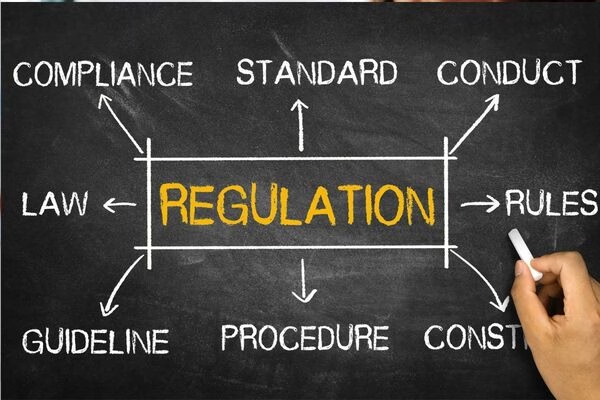
Managing Compliance for Different Transaction Types
Each Cross Border Payment method follows its own set of rules, making compliance challenging for businesses. Knowing how to navigate these regulations and adopting the right processes and tools can help ensure smooth operations and maintain customer trust. This section focuses on transaction-specific regulations and strategies for staying compliant.
How Different Transactions Follow Different Rules
Cross Border Payments can be processed through various methods, including wire transfers, ACH payments, card transactions, and mobile payments. Each method operates under its own regulatory framework, making compliance essential for businesses. Wire transfers typically involve moving funds between banks in different countries, requiring strict Know Your Customer (KYC) checks and sanctions screening to ensure legality.
ACH payments, while cost-effective, often come with additional Anti-Money Laundering (AML) and KYC requirements, as well as thorough sanctions screening. Card transactions, on the other hand, must follow unique verification processes such as fraud detection tools that monitor user behavior and prevent unauthorized activity. Mobile payments also require enhanced security measures like two-factor authentication (2FA) and biometric verification to protect sensitive customer data.
By understanding the specific rules for each transaction type, businesses can avoid compliance gaps, reduce risks, and maintain customer confidence. Implementing strong internal controls ensures smooth and secure international transactions.
Specific Rules for Different Cross Border Payments
Cross Border Payments come in many forms, and each method follows unique regulations. Businesses must understand these rules to stay compliant. Wire transfers, ACH payments, card transactions, and mobile payments all require specific compliance steps. Knowing these requirements helps companies process international transactions securely and legally.
Wire transfers are valued for their speed and reliability. However, they require strong know your customer (KYC) procedures for all parties involved. Sanctions screening is also mandatory to ensure payments are lawful and accurate.
ACH payments are cost-effective for international transfers, but the regulations are strict. Businesses must complete AML and KYC checks before processing transactions. Sanctions screening is also required to reduce the risk of illegal activity.
Credit and debit card transactions are easy for customers but involve extra verification. Fraud detection tools that analyze user behavior patterns are essential. These safeguards help block unauthorized transactions and protect customer funds.
Mobile payments make international transfers accessible without a bank account or card number. Still, they demand advanced security features. Two-factor authentication (2FA) and biometric verification help protect customer data from potential cyberattacks.
Each payment method requires a clear understanding of regulations. Businesses that build strong compliance systems can operate with confidence and reduce costly mistakes. Order Express Cross Border Payments provides the tools to meet these requirements with efficiency and reliability.
Staying Compliant with Ease
The growth of mobile and online payments has added new layers of complexity to Cross Border Payments compliance. Many countries continue to introduce updated regulations for digital transactions, making it essential for businesses to stay informed. Failing to understand these updates can result in operational delays, regulatory fines, or even blocked transactions.
To manage these challenges, businesses should establish strong internal processes and regularly review them for gaps. Documenting clear compliance procedures reduces errors and ensures all staff follow the same standards. Partnering with industry experts can also simplify complex requirements and free up valuable resources.
Technology plays a critical role in maintaining compliance. Automated monitoring systems, secure data storage solutions, and advanced fraud detection tools help companies meet evolving global standards. Order Express Cross Border Payments provides businesses with the right solutions to navigate regulations confidently, enabling smooth, secure, and fast international transactions while protecting customer trust.
How to Navigate Cross Border Payment Regulations
Navigating Cross Border Payments regulations can feel overwhelming, but businesses can succeed with the right approach. Following clear steps reduces risks and ensures smooth international transfers.
- Start with a Risk Assessment
Begin by identifying potential risks linked to international transactions. Understand possible threats like fraud, sanctions violations, and data breaches. Once identified, create strong strategies to reduce these risks. - Build a Strong Compliance Program
Develop a comprehensive compliance program with clear policies and procedures. This ensures your company consistently follows AML, KYC, and other international regulations. Training staff on these standards is equally important. - Use Compliance Software for Efficiency
Technology can make compliance easier and more effective. Automated tools streamline onboarding, payment screening, and transaction monitoring. Secure data storage and advanced reporting tools support full compliance without slowing user experience. - Leverage Regulatory Technology (RegTech)
Consider using specialized RegTech platforms for added security and expertise. These solutions can simplify complex processes like AML monitoring and digital onboarding. They help companies meet global regulatory requirements quickly and confidently.
Adopting these steps allows businesses to meet regulations while protecting customer trust. Order Express Cross Border Payments provides solutions that make compliance easier and international transactions more reliable.
Note: Order Express appoints a designated Compliance Officer who oversees the entire AML program, updates internal policies, files every required CTR and SAR on schedule, maintains the OFAC screening process, and provides ongoing guidance to staff and agents.
Conclusion
Staying compliant with Cross Border Payments regulations is crucial for protecting your business and customers. Every transaction type comes with its own set of rules, from AML and KYC requirements to sanctions screening and data security measures. Failing to follow these regulations can result in heavy penalties, loss of customer trust, and operational disruptions. By understanding these obligations and adopting strong internal controls, businesses can ensure smoother international transactions.
Leveraging advanced compliance tools and technology can also reduce errors and keep your organization ahead of constantly changing regulations. Order Express Cross Border Payments offers tailored solutions that simplify compliance and help businesses operate with confidence across multiple jurisdictions. Stay informed, stay compliant, and build customer trust by using the right systems and processes from the start. Take action today to safeguard your business and secure future growth.
Note: All identification documents, KYC forms and sanctions-screening records must also be kept on file for at least five years to meet Order Express record-keeping requirements.
FAQs
What are Cross Border Payments?
Cross Border Payments are financial transactions where money is sent between individuals or businesses located in different countries.
Why is compliance important in Cross Border Payments?
Compliance prevents fraud, money laundering, and other financial crimes while protecting customers and avoiding costly penalties.
What are the key regulations for Cross Border Payments?
AML, KYC, foreign exchange rules, sanctions screening, and data security standards are the primary regulations that businesses must follow.
How can businesses manage different transaction regulations?
Companies should implement clear internal processes, conduct regular audits, and use compliance tools to meet each transaction type’s unique regulatory requirements.
How does Order Express help with compliance?
Order Express provides secure Cross Border Payments solutions with automated compliance tools, helping businesses reduce risk and stay updated with global regulations.

Alvin is a Content and SEO Specialist who creates clear and helpful content about money transfers and payment systems. He focuses on making complex topics easy to understand so readers can learn how these services work in everyday situations.


