


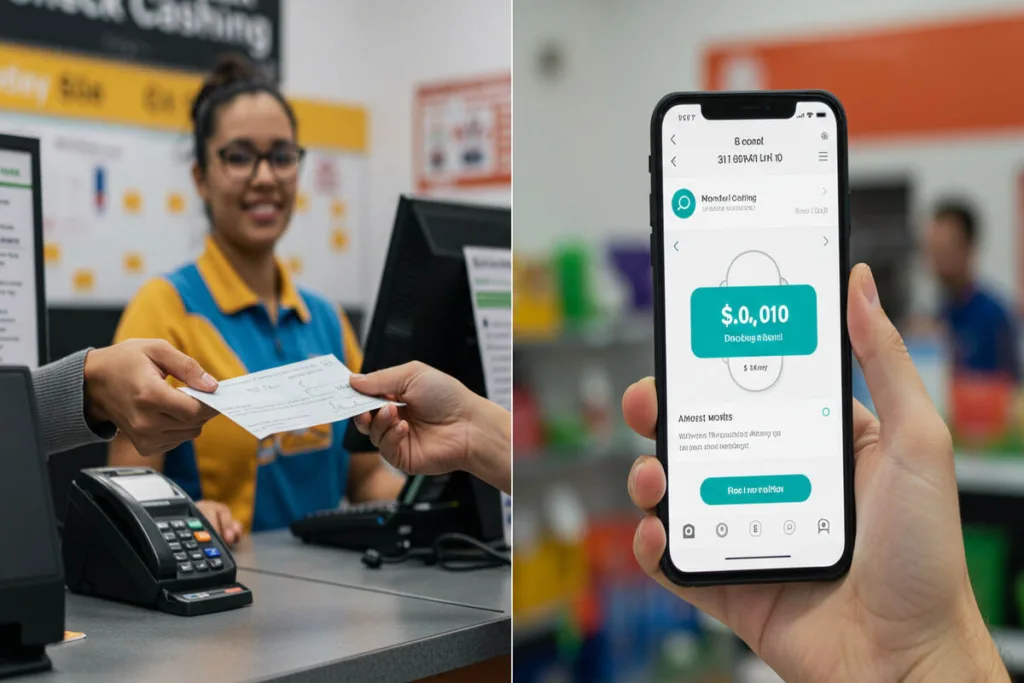
How quickly money is deducted after check cashing depends on how and where the check is processed. If you cash a check at your own bank, the funds may clear instantly. Electronic deposits through financial services providers often take one to two business days, while traditional deposits can take several days. Because timing varies, it’s best to assume the money leaves your account immediately.
Understanding these differences helps you prevent overdrafts, avoid bounced checks, and follow both federal banking rules and company-specific policies. This guide explains when funds are deducted, how check clearing works, and practical steps to protect your balance and stay compliant.
Processing times can vary between banks and providers. Knowing check cashing requirements and security practices helps you prepare for verification and avoid unnecessary delays or unexpected costs.

Understanding When Money Leaves Your Account With Check Cashing
When you write a check, the money does not leave your account right away. The withdrawal happens only after your bank receives a request to release the funds. Depending on how the check is deposited, the process can be slow or almost immediate. This makes it important to understand how check cashing works so you know when your money becomes unavailable.
With traditional deposits, the receiving bank sends the check to your bank for approval, which may take a few days. Electronic deposits speed up the process by turning paper checks into digital images, often clearing faster. If the person cashes the check directly at your bank, the funds can be deducted instantly once confirmed. Always treat a written check as money already spent to stay in control of your balance.
How Normal Deposits Affect Check Cashing?
When a check is deposited at a bank, the item is sent to your bank for processing. Once your bank approves the transfer, the money is deducted from your account. This process can sometimes take a few business days, but the timing is not always predictable. To stay on top of your finances and avoid surprises, treat the money as already spent the moment you write a check. Understanding how normal deposits work in check cashing helps you better manage your balance and plan ahead with confidence.
Electronic Deposits And Check Cashing
Electronic deposits make the check cashing process faster and more efficient. Instead of moving paper checks, banks use digital images created through mobile apps, scanners, or kiosks. These images are shared instantly between banks, reducing the time it takes for a check to clear. Because of this speed, money may leave your account sooner than with traditional paper methods. Always plan as if funds are deducted immediately to avoid unexpected issues and keep your account balanced.
If The Payee Cashes The Check
If the payee goes directly to your bank, the transaction can happen instantly. Your account is charged as soon as the bank confirms you have enough funds. If the balance is insufficient, the bank rejects the check. You may face overdraft charges, and the payee may add separate fees.

How To Avoid Problems With Check Cashing?
Responsible money management ensures you never risk a returned check. Here are practical ways to prevent issues.
Keep Enough Funds For Check Cashing
Always make sure you have enough money in your account before writing a check. When you issue a check without sufficient funds, it can create serious problems because the payment may be rejected and recorded as a bad check. This not only affects your financial reputation but can also limit your ability to use important banking services in the future. To stay on track, treat every check as if it will be processed immediately. Building the habit of maintaining available funds ensures your check cashing transactions run smoothly, prevents negative records, and supports responsible money management.
Balance Your Account Regularly
Keeping track of your account activity is essential when managing check cashing. By monitoring your spending, you can reduce the risk of overdrafts and maintain better control over your money. Recording each transaction ensures you always know where your balance stands.
To stay organized, use simple tools that make tracking easier:
- Check registers to record every payment
- Mobile apps for instant account updates
- Spreadsheets for clear transaction history
- Regular bank statement reviews for accuracy
Reconciling your records with bank statements helps confirm that everything matches and no errors slip through. This habit also builds financial discipline and provides peace of mind. Over time, consistent tracking creates confidence in managing check cashing and strengthens your overall money management skills.
Understanding Deposit Holds In Check Cashing
When you deposit a check, the money is not always available right away. Unlike cash, checks often take extra time to clear, and during this process your bank may place a temporary hold. Sometimes part of the funds are released quickly, while the rest stay pending until the check is fully processed. Knowing how deposit holds work in check cashing helps you plan better, avoid spending money too soon, and keep your account in good standing.
Use Credit Cards When Possible
Credit cards protect your checking balance. Payments do not leave your checking account until you pay the monthly bill. If used wisely, credit cards help avoid overdraft fees. Paying the full balance every month prevents interest charges.
Link A Savings Account
If your checking account runs low often, connect it to savings. Many banks automatically transfer money when balances dip below zero. While the transfer may include a small fee, it is less costly than overdraft charges.
Avoid Risky Habits With Check Cashing
When it comes to check cashing, relying on float time is one of the riskiest habits you can develop. Banking systems now process checks faster than ever, which means money can leave your account much sooner than you expect. Counting on delays can create unnecessary stress and financial setbacks.
Here are key points to remember:
- Never assume you have extra time before a check clears
- Repeated overdrafts may trigger account monitoring
- Risky behavior can limit your access to financial services
- Treat every check as if it clears the same day
Building safer habits around check cashing helps you protect your account and maintain financial stability. Always plan ahead, monitor your balance, and avoid writing checks without confirmed funds. Staying proactive not only prevents overdrafts but also strengthens your long-term financial reputation.

Federal Rules Versus Company-Specific Policies
Rules for check cashing fall into two categories: federal regulations and company-level requirements. Keeping them separate helps avoid confusion.
Federal Rules For Check Cashing
The Bank Secrecy Act requires financial institutions to record and report certain transactions. Currency Transaction Reports (CTR) must be filed for cash transactions above $10,000 in a single day. Suspicious Activity Reports (SAR) are required when financial institutions suspect money laundering, fraud, or other unlawful activity. Federal rules also prohibit structuring, which is breaking transactions into smaller amounts to avoid reporting thresholds. These regulations apply to all banks and money service businesses.
Company-Level Requirements
Each financial service provider may apply its own rules in addition to federal law. For example, Order Express maintains separate procedures for check cashing. These include transaction limits, identification requirements, and customer recordkeeping. Check cashing transactions of $3,000 or more require customer ID, and repeated activity may trigger enhanced monitoring. Agents and employees are trained to detect unusual or suspicious transactions, and compliance staff files reports when required. These internal policies operate alongside federal regulations but are distinct from them.
Important Note on State-Specific Limits (Order Express Policy): In addition to the $3,000 nationwide threshold, certain states have lower limits:
- Arizona & Oklahoma: Identification is required for any check cashing transactions of $1,000 or more within 24 hours.
- Louisiana: Identification is required for the U.S. Treasury or Louisiana Department of Revenue refund checks of $1,000 or more within 24 hours.
These thresholds override the $3,000 rule when applicable.
Why Separation Matters
When you read about check cashing, remember that general banking rules and specific company policies serve different purposes. Federal laws ensure nationwide consistency in anti-money laundering controls. Company policies protect consumers and the financial institution’s reputation. Both must be respected, but they should never be confused.
Order Express Recordkeeping Requirements: For transactions that meet or exceed the thresholds ($1,000 in AZ/LA, or $3,000 in other states), Order Express collects and stores:
- Customer name, address, date of birth, and occupation
- Type, number, and issuing authority of valid photo identification
- Copy of ID (when applicable)
- Customer signature
These records are retained for five years, in compliance with company policy.

What You Need To Know Before Writing A Check?
Understanding the details of check cashing can save you from costly mistakes. Many people are unsure how long checks take to clear, what happens if funds are insufficient, or whether postdating a check offers protection. Getting clear answers helps you avoid fees, delays, and unnecessary risks.
Banks and financial providers follow strict policies and federal rules that affect how checks are processed. Knowing your rights and responsibilities puts you in control of your money. These frequently asked questions cover the most common concerns, giving you practical knowledge to manage your account confidently and protect your financial reputation.
What Happens If You Bounce A Check?
If you write a check without funds, your bank charges overdraft fees. The recipient may also impose fees, and credit reporting agencies may receive negative information. In serious cases, knowingly issuing a bad check can result in civil or criminal penalties.
How Long Can You Stop Payment On A Check?
Placing a stop payment on a check gives you a chance to prevent funds from leaving your account if you issued the check in error. Acting quickly is key because banks process requests within a limited timeframe. If the check is already cashed, the stop payment will not apply.
Here are the main points to remember:
- Request a stop payment as soon as you realize the mistake
- Timing matters; once cashed, the check cannot be reversed
- Most banks require both verbal notice and written confirmation
Stop payments are a useful safeguard, but they are not guaranteed. Always track your checks carefully to avoid surprises. Staying organized helps you avoid rushed decisions. Knowing your options keeps you in control of your check cashing activities and protects your balance from unexpected deductions.
Can You Postdate A Check?
Postdating a check does not guarantee that the bank will wait until that date to process it. While some states allow formal notice of postdating, most banks treat the check as valid immediately. Always confirm your bank’s rules before relying on postdating.
Suspicious Activity Monitoring (Order Express Policy): Order Express employees are required to report suspicious transactions of $2,000 or more, even if they are below federal CTR thresholds. This includes unusual patterns, structuring attempts, or activity inconsistent with a customer’s profile. Reports are filed internally and with federal regulators as required.
Conclusion
Check cashing may feel routine, but it can impact your finances faster than you expect. Money leaves your account when the bank processes the transaction, which could be the same day or within a few business days. Delays are unpredictable, so treat every check as if it clears immediately. Protect yourself by keeping enough funds available, tracking your balance, and avoiding risky habits like relying on float time. Remember, federal rules and company-specific policies both govern check cashing, and each plays a role in keeping transactions safe and compliant.
Take control of your finances today: monitor your account, confirm your balance before writing checks, and ask your provider about identification or reporting requirements. Manage smarter, avoid fees, and stay confident.
Disclaimer: This article provides general financial education. It does not replace professional financial advice. For company-specific requirements, review official policy documents or contact the compliance department.
Call to action: Always confirm your balance before writing or cashing a check. Contact your financial service provider for details on identification requirements and transaction limits. Stay informed and manage your money with confidence.
FAQs
How long does it take for money to clear after check cashing?
Money can clear instantly if cashed at your bank. Otherwise, electronic deposits may take one to two business days.
How can I avoid overdrafts with check cashing?
- Keep funds in your account
- Track outstanding checks
- Reconcile bank statements
- Avoid relying on clearance delays
What are federal rules for check cashing?
Federal law requires reports for transactions above $10,000 and suspicious activity. Structuring to avoid reporting thresholds is prohibited.
Do companies have their own check cashing policies?
Yes. Providers often set transaction limits, require identification above $3,000, and monitor repeated activity for compliance.
What happens if a check bounces after cashing?
The bank charges overdraft fees, the payee may add penalties, and your financial reputation can suffer long-term consequences.

John is a Content & SEO Specialist who enjoys breaking down complex financial topics, like cross-border payments and money transfers, into content that’s easy to understand. He focuses on creating practical, search-driven content that helps people find answers and make informed decisions.


