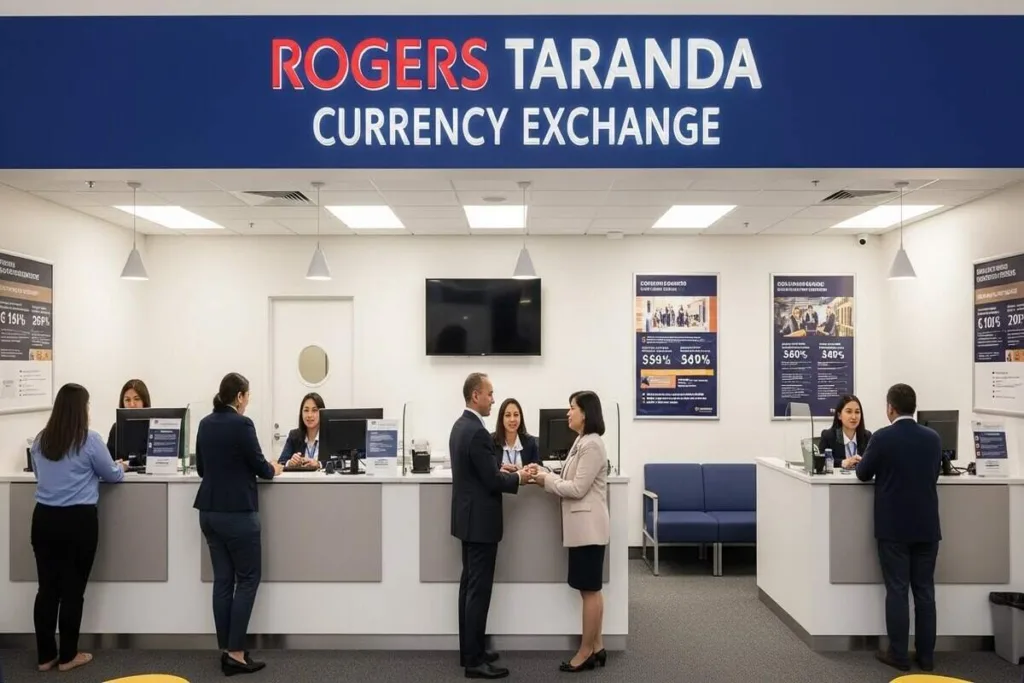
Preparing for a quick currency exchange stop requires careful planning before arriving at the counter. Customers who organize documents, timing and payment preferences reduce delays and complete transactions more confidently. As part of everyday financial services offered through Order Express, customers are encouraged to review identification requirements and accepted payment methods before visiting any exchange location. Order Express has provided licensed financial services including currency exchange and money transfers for more than 30 years across the United States.
Bringing valid government-issued identification ensures compliance with financial regulations and supports faster verification. Confirming accepted payment options in advance prevents avoidable interruptions during processing. Customers should also check current exchange rates shortly before visiting to set realistic expectations.
Understanding estimated totals helps customers make faster approval decisions at the service window. Reviewing travel dates and destination currency details further improves transaction accuracy. Visiting during appropriate business hours reduces unnecessary waiting and supports smoother service.
For broader operational context about how everyday currency exchange services function, review our guide on how everyday currency exchange services work.
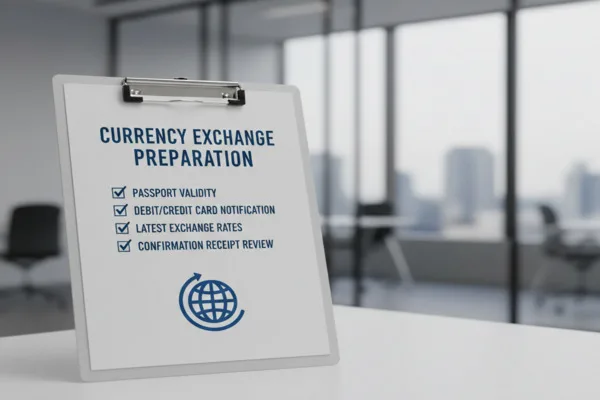
What should customers bring to a currency exchange location?
Customers preparing for a quick currency exchange stop should gather required documents, payment methods and transaction details beforehand. Preparing these items ensures faster processing and reduces unnecessary delays during your short in person visit.
Bring valid government-issued identification
Currency exchange providers require valid government issued identification to comply with financial regulations and verification standards. Most locations accept a driver’s license, passport or state identification card that displays a current address clearly. Ensure the identification remains unexpired because expired documents typically delay or prevent transaction approval at counters.
Financial institutions that provide currency exchange services must follow identity verification and recordkeeping standards under federal law, as outlined by the Financial Crimes Enforcement Network under the Bank Secrecy Act. These legal obligations apply to licensed providers and help prevent fraud and money laundering.
For clarity, prepare identification that meets these basic conditions:
- Displays your full legal name exactly as registered
- Shows a clear photo matching your current appearance
- Remains valid and not expired
- Contains a readable identification number
Note: Currency exchange providers verify identity to meet anti money laundering regulations and protect customer transactions.
Carry the correct form of payment
Customers should confirm accepted payment types before arriving to avoid unnecessary transaction complications at the counter. Most currency exchange locations accept debit cards and cash while some limit or exclude credit card payments. Bringing small denomination bills often helps if the location cannot provide large amounts of change.
Before visiting, verify:
- Whether debit cards require a PIN during transactions
- If the location charges additional fees for certain payment types
- Whether daily withdrawal limits affect your planned exchange amount
Customers who also plan to send funds internationally may benefit from reviewing available money transfer services to understand how payment methods differ between services.
Note: Confirming payment policies in advance reduces processing time and ensures accurate exchange calculations.
Organize funds before reaching the counter
Customers should separate exchange funds from personal spending money before approaching the service counter. Keeping transaction funds distinct prevents confusion and reduces delays during payment verification. Organized cash or prepared debit cards allow representatives to begin processing immediately. Customers who search through wallets at the counter often slow the entire service line.
Place identification and the chosen payment method together for quick presentation to the representative. Easy access to required documents supports faster identity verification and transaction approval. Representatives must confirm identification before completing most currency exchange transactions. Clear organization minimizes repeated handling and reduces the chance of misplaced documents.
If exchanging larger amounts, group bills neatly according to denomination before arrival. Structured stacks help representatives count quickly and confirm totals without repeated recounting. Customers who regularly use financial service centers for multiple transactions, including check cashing services, may find that preparation habits improve efficiency across services.
Customers should also confirm available card balances before entering the location. Visible preparation signals readiness and supports a smooth, efficient currency exchange experience.
How can customers estimate exchange amounts accurately?
Customers can estimate exchange totals before visiting to understand approximate returns and avoid confusion during transactions. Preparing accurate expectations supports quicker decisions and smoother communication with exchange representatives onsite.
Check live exchange rates before arrival
Checking live exchange rates online allows customers to approximate how much foreign currency they will receive. Customers can reference official benchmarks, including Federal Reserve foreign exchange rate data published in the H.10 release, to understand how global market movements influence currency values.
To calculate an estimate:
- Locate the current exchange rate for your target currency
- Multiply your intended exchange amount by that posted rate
- Subtract any listed service fee from the estimated total
Note: Exchange rates fluctuate throughout the day, so final totals may differ slightly from online estimates.
Understand service fees and minimum amounts
Understanding service fees ensures customers prepare enough funds to cover both exchange value and transaction costs. Some locations apply flat fees while others incorporate costs directly into the displayed exchange rate offered. Customers should also confirm minimum or maximum transaction thresholds before making a quick stop.
Federal oversight of financial institutions and exchange rate policy is guided by the U.S. Treasury exchange rate policy overview, which explains how currency valuations are monitored at the national level. Consumers seeking additional financial education can also explore the FDIC Money Smart consumer education program for practical guidance on managing transactions and understanding financial services.
Before arriving, clarify:
- Whether the provider charges a flat service fee
- If rates improve for higher transaction amounts
- Whether minimum exchange amounts apply for certain currencies
For questions about service availability or transaction limits at a specific location, customers may review the Order Express contact page before visiting.
Note: Transparent pricing awareness helps customers avoid last minute adjustments at the counter.
Choose the right time of day
Customers should visit during nonpeak hours to reduce waiting time and improve service efficiency. Midmorning and early afternoon typically experience lighter traffic than evenings or weekends. Shorter lines allow representatives to complete transactions without rushing essential verification steps. Faster service reduces overall visit time and improves the in-person exchange experience.
Checking store hours online ensures arrival during confirmed operational periods without unexpected closures. Some currency exchange locations adjust hours on weekends or during recognized holidays. Verifying hours in advance prevents wasted trips and unnecessary schedule disruptions. Customers should also confirm whether specific branches require appointments for large transactions.
Planning visits around quieter periods supports smoother processing and better customer attention. Representatives can answer questions clearly when service counters remain less crowded. Reduced wait times also limit exposure to last-minute exchange rate changes. Strategic timing helps customers complete currency exchange transactions quickly and confidently.
Note: Visiting during off-peak hours often reduces total visit time by several minutes.
Review transaction details before leaving
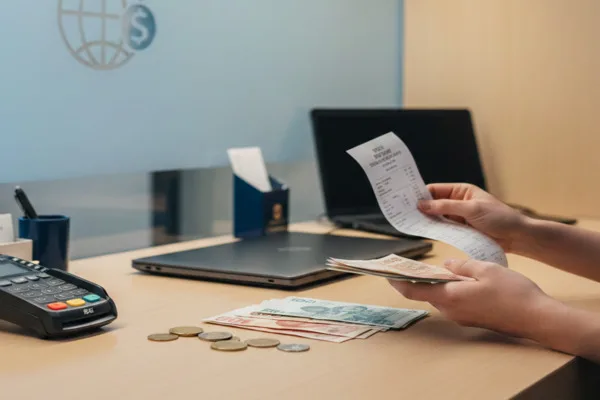
Customers should review the receipt and counted foreign currency before leaving the counter. Confirming totals immediately prevents future confusion and ensures accurate completion.
Verify the exchange rate applied matches the quoted rate during the transaction. If any discrepancy appears, request clarification immediately while documentation remains accessible.
Customers can follow this quick exit checklist:
- Confirm foreign currency amount matches printed receipt.
- Ensure identification and payment cards return safely to wallet.
- Store exchanged currency securely before leaving location.
Prepared verification protects the customer and concludes the visit efficiently. For broader consumer protection information, customers may review resources provided by the Consumer Financial Protection Bureau on sending money abroad.
Conclusion
Preparing for a quick currency exchange stop becomes simple when customers plan documents, payment methods and timing before arrival. Organized preparation reduces wait times, supports accurate calculations and minimizes unexpected transaction delays at the counter. Reviewing live rates and understanding service fees allows customers to estimate totals confidently before committing funds. Verifying identification requirements ensures compliance and prevents unnecessary complications during processing.
Choosing nonpeak hours further improves efficiency and creates a smoother in person experience. Customers who review receipts and confirmed totals before leaving protect their transaction accuracy. Order Express encourages customers to prepare these details in advance for faster, more confident service. When you are ready to exchange currency, contact Order Express to confirm requirements and complete your transaction efficiently.
Disclaimer: This article provides general educational information and does not replace guidance from licensed financial professionals. Exchange rates, fees and identification requirements may vary by provider and location at the time of service.
Order Express is registered with the Financial Crimes Enforcement Network (FinCEN) as a Money Services Business (MSB) under the Bank Secrecy Act (BSA). We strictly follow Know Your Customer (KYC), Anti-Money Laundering (AML), and record retention requirements. These practices ensure that all financial transactions are secure, transparent, and compliant with federal and state regulations.
FAQs
What payment methods are typically accepted at currency exchange locations?
Most currency exchange providers accept cash and debit cards, while some may limit or decline credit card transactions depending on internal policies.
How can I estimate how much foreign currency I will receive?
Check the posted exchange rate, multiply it by your intended amount and subtract any applicable service fees to calculate an approximate total.
Do exchange rates change throughout the day?
Yes, exchange rates fluctuate based on market activity, which means the final in store rate may differ slightly from earlier online estimates.
Is it better to exchange larger amounts at once?
Some providers offer improved rates for higher transaction amounts, but customers should confirm pricing structures before deciding on exchange size.
What should I check before leaving the currency exchange counter?
Review the receipt, confirm the applied exchange rate and count your foreign currency immediately to ensure accuracy before exiting the location.

Alvin is a Content and SEO Specialist who creates clear and helpful content about money transfers and payment systems. He focuses on making complex topics easy to understand so readers can learn how these services work in everyday situations.