


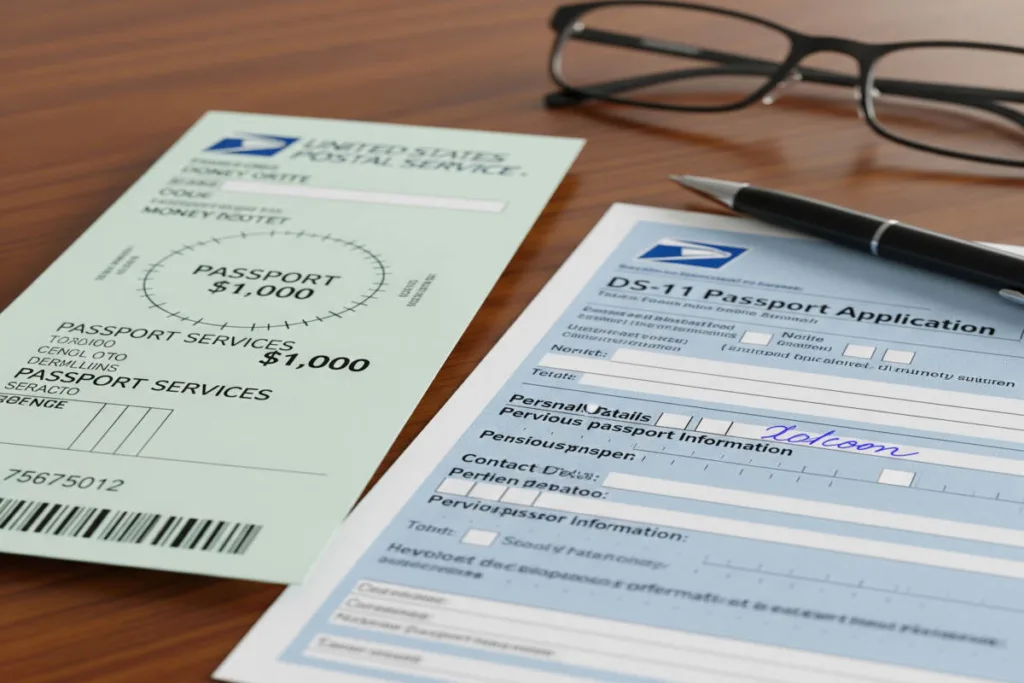
When applying for a passport, you must pay application fees using an accepted form of payment. A money order is one of the safest options because it is prepaid, traceable, and widely approved by the U.S. Department of State. You can buy a money order at post offices, banks, credit unions, retail stores, convenience outlets, or authorized money service businesses.
To use it, confirm the exact fee, complete the payee information as “U.S. Department of State,” and attach it to your application. Keeping the receipt ensures proof of payment and helps replace it if lost. This guide explains where to get a money order, how to complete it correctly, and what rules apply when using one for passport applications.
A money order can help simplify important government payments, but using it correctly matters. The Money Order Guide: How To Buy, Fill Out, Cash And Track covers the essential steps to buy, fill out, cash, and track your money order from start to finish.

Why Choose A Money Order For Passport Payments?
When paying for a passport application, choosing the right payment method can make the difference between a smooth process and frustrating delays. Money orders stand out as a trusted option because they combine the convenience of prepaid payment with the reassurance of broad acceptance by government agencies. Unlike personal checks, money orders do not carry the risk of bouncing, and they leave a clear paper trail that proves payment.
They also provide a secure safeguard against fraud, making them particularly valuable when submitting sensitive documents like a passport application. With benefits that include guaranteed processing, strong fraud protection, and simple purchase options, money orders offer peace of mind for anyone handling important government transactions. The following sections will explain what a money order is, why it is useful for passport applications, and how it protects your payment.
Understanding A Money Order
A money order is a prepaid paper document similar to a check. Unlike personal checks, it requires upfront payment, making it less risky. Many government agencies accept this form of payment. It works well for people who prefer not to use cash, credit, or debit.
Benefits Of Using A Money Order For Passport Applications
Using a money order to pay passport fees is one of the most reliable ways to ensure your application is processed smoothly. Because the U.S. Department of State accepts money orders, customers can trust that their payment method will meet official requirements. This eliminates the uncertainty that comes with other forms of payment and helps applicants move forward without unnecessary delays.
Here are the key advantages of choosing a money order:
- Ensures payment is accepted by the U.S. Department of State
- Reduces the chance of delays caused by incorrect or declined payments
- Creates a secure transaction record for personal tracking
- Provides peace of mind when submitting sensitive government applications
In addition, money orders offer an added layer of confidence compared to personal checks or cash. Applicants can hold on to the receipt as proof of payment, which is especially important if issues arise later. By relying on a secure and prepaid method, customers avoid the risk of rejected payments and strengthen their chances of a successful application process. This makes the money order not just a convenient option but a smart and protective choice.
How Does A Money Order Provide Security Advantages?
Money orders reduce exposure to fraud and identity theft compared to cash or personal checks. Each order includes a receipt that helps track payment. Customers can request a replacement if the original is lost or stolen. This makes money orders a trusted option for government fee payments.

Where To Purchase A Money Order?
Finding the right place to purchase a money order can save you time, money, and stress when preparing a passport application. Customers today have multiple options ranging from traditional financial institutions to convenient retail outlets and specialized money service businesses. Post offices and banks remain dependable for those who value face-to-face service, while grocery and retail stores offer flexible hours that fit busy schedules. Authorized money service businesses also provide money orders alongside other financial services, ensuring speed and compliance.
Each option comes with its own advantages, including cost, accessibility, and availability of customer support. Understanding the benefits of these different providers helps you choose the most practical and secure location to purchase your money order.
Post Offices And Financial Institutions
Post offices remain a common location for buying money orders. Banks and credit unions also provide them, sometimes at reduced cost for account holders. These options appeal to individuals who prefer dealing directly with financial institutions.
Retail And Convenience Locations
Large retail chains, grocery stores, and convenience outlets often sell money orders. Many customers appreciate the extended hours and accessibility. These locations provide fast service for those who cannot reach banks during standard business hours.
Authorized Money Service Businesses
Money service businesses (MSBs) offer money orders alongside services like bill payments, money transfers, check cashing, and currency exchange. Customers can visit an authorized MSB location for fast access. Providers often train staff to handle customer identification requirements and financial compliance.

How To Use A Money Order For Your Passport Application
Using a money order for your passport application is straightforward when you follow a clear process. First, confirm the exact fee so your payment matches government requirements. Next, purchase the money order, fill in the payee details accurately, and retain your receipt. After completing the payment, attach it to your application package and submit it by mail or in person. If any issues arise, such as a lost or stolen money order, you can resolve them using your receipt. Following these steps ensures your passport application moves forward without delays while keeping your payment secure.
Step 1: Confirm Fee Amounts Before Buying A Money Order
Before buying a money order, check the official passport fee schedule. Include additional costs such as expedited service if needed. Having the correct amount ensures the application will not face rejection.
Step 2: Purchase And Complete The Money Order
Pay the full amount plus the issuing fee at the chosen location. Complete the payee section with “U.S. Department of State.” Fill in your name and address in the purchaser fields. Retain the receipt to prove purchase and track payment status.
Step 3: Submit With Application
Attach the completed money order to your passport application. Follow instructions for submission by mail or in person. Keep a copy of your application package for your records.
Step 4: What Should You Do If There Are Issues With Your Money Order?
If a money order is lost or stolen, contact the issuer promptly. Use the original receipt to request cancellation or replacement. The process may take time, so always secure your receipts until the passport is processed.

Compliance And Payment Requirements
When using money orders for passport applications or other financial needs, it is essential to understand the rules, policies, and costs that apply. Federal regulations require strict oversight of large transactions to prevent fraud and money laundering, meaning some purchases may involve presenting valid identification. In addition to these national requirements, providers such as Order Express follow internal safeguards designed to protect both the customer and the business.
Customers also have their own role in ensuring a smooth experience by carrying proper identification and securely keeping receipts. Beyond compliance and responsibility, cost is another factor to consider. Fees vary depending on where the money order is purchased, and limits can affect how payments are structured. Knowing these details helps individuals make informed decisions, avoid unnecessary expenses, and ensure that their transactions meet all legal and provider requirements without unexpected complications.
Order Express is also required to comply with federal reporting obligations:
- A Currency Transaction Report (CTR) is filed for any cash-in or cash-out transaction above $10,000 in a single business day.
- A Suspicious Activity Report (SAR) may be filed if transactions appear unusual or suspicious, typically at thresholds starting at $2,000.
These reports are submitted confidentially to regulators and help protect customers and the financial system.
Federal Rules
Federal law requires money service businesses to maintain strict reporting and recordkeeping for financial transactions. Identification may be required when purchasing money orders above specific thresholds. For example, customers may need to provide valid ID when buying $3,000 or more in a 48-hour period. These rules apply across the industry and ensure compliance with anti-money laundering regulations.
Order Express Policies
Order Express follows all federal requirements and adds internal safeguards.
Important: Order Express applies stricter identification requirements than federal rules in certain states.
- In all states (except Arizona and Oklahoma): Valid government-issued photo ID is required for money order transactions of $3,000 or more within 48 hours.
- In Arizona and Oklahoma: ID is required for money order purchases of $1,000 or more within 24 hours.
These safeguards are part of Order Express’ Know Your Customer (KYC) policy and apply regardless of federal thresholds.
Customers purchasing money orders through Order Express may be asked for identification depending on transaction size. These measures protect both the customer and the business from fraudulent activity. Order Express also provides check cashing, money transfers, and currency exchange services under regulated conditions.
Customer Responsibility
Customers play an important role in making their money order transactions smooth and problem-free. Carrying valid government-issued identification is often required, especially for larger purchases. Taking responsibility upfront helps prevent delays and ensures the payment process is accepted without issue.
Here are the key actions every customer should take:
- Bring a valid, government-issued photo ID when purchasing a money order
- Double-check the payee and purchaser information before leaving the counter
- Keep the original receipt in a safe place until the payment clears
- Be aware of federal rules regarding thresholds for identification
- Understand provider-specific policies, which may differ slightly depending on location
Following these steps not only protects the customer but also strengthens financial security. Staying informed about both national regulations and provider policies makes transactions faster and reduces the risk of disputes. Customers who prepare in advance can avoid unnecessary stress. Additionally, practicing these habits builds trust with providers and creates a consistent, positive experience when using money orders.
Cost Considerations For Money Orders
Fees By Location
Costs vary by provider. Post offices charge modest fixed fees, while banks may set higher rates for non-customers. Retailers and MSBs often charge between one and five dollars depending on the purchase amount.
Limits And Availability
Providers may impose maximum purchase limits for a single money order. Customers needing larger payments may need to purchase multiple money orders. Each additional purchase carries a fee, so planning ahead helps reduce costs.
Budgeting Tips
Check total fees before deciding where to purchase. Some banks waive fees for account holders, while MSBs may offer competitive pricing. Customers using services like check cashing or bill payment at the same time may save time and costs.
Conclusion
Choosing a money order for your passport application ensures secure, traceable payment accepted by the U.S. Department of State. Unlike cash or personal checks, a money order provides a receipt, reduces fraud risk, and guarantees your payment clears without delays. You can purchase one at post offices, banks, retail stores, convenience outlets, or authorized money service businesses. Federal law requires identification for larger amounts, while providers like Order Express follow strict compliance safeguards to protect customers. Always confirm fee amounts, retain your receipt, and keep identification ready when needed. Take control of your passport application today, visit your nearest authorized Order Express location to purchase a money order and complete your application quickly, safely, and confidently.
Visit your nearest authorized Order Express location to purchase a money order today and make your passport application simple and secure.
Disclaimer: This article provides general information for customers. It is not legal advice. Always confirm federal requirements and Order Express policies before completing financial transactions.
FAQs
What is a money order for a passport application?
A money order is a prepaid, secure payment method accepted by the U.S. Department of State for passport fees.
Where can I buy a money order for passport fees?
Buy money orders at post offices, banks, credit unions, retail stores, convenience outlets, or authorized money service businesses.
How do I fill out a money order for a passport?
Write “U.S. Department of State” as payee, add your name and address, keep the receipt, and attach it to your application.
What ID is required when buying a money order?
Federal rules require valid government ID for purchases of $3,000 or more in 48 hours.
Order Express requires valid ID at $3,000 in all states and at $1,000 within 24 hours in Arizona and Oklahoma.
What should I do if I lose my money order?
Contact the issuer immediately, provide the receipt, and request cancellation or replacement. The process may take several weeks.

John is a Content & SEO Specialist who enjoys breaking down complex financial topics, like cross-border payments and money transfers, into content that’s easy to understand. He focuses on creating practical, search-driven content that helps people find answers and make informed decisions.


