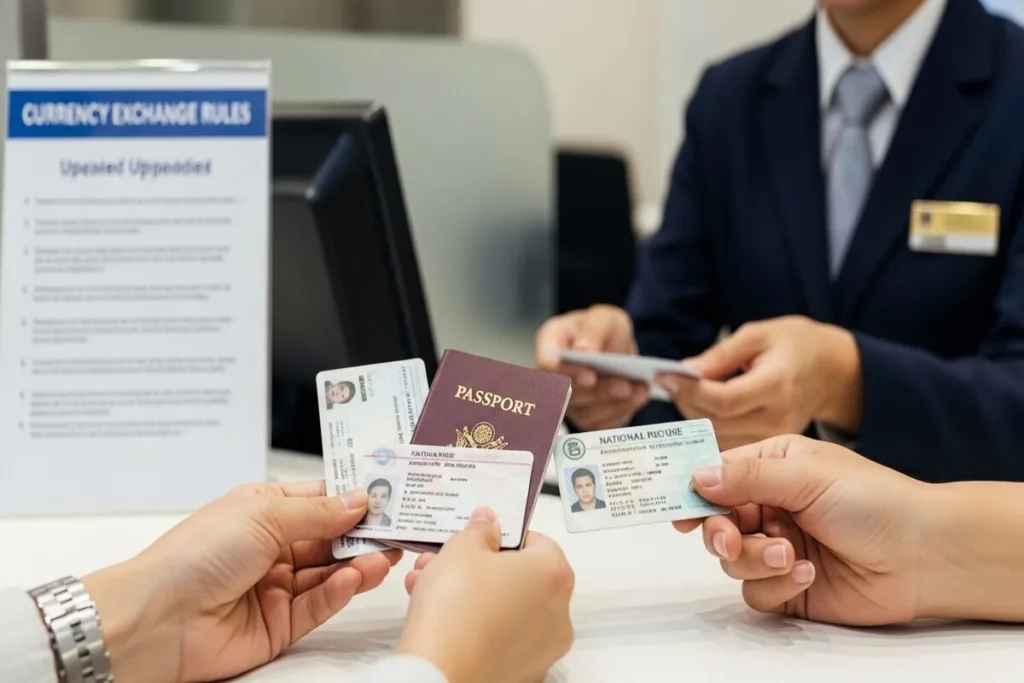
You may need valid government-issued identification to complete a currency exchange transaction, depending on the amount and the provider’s compliance requirements. Financial institutions apply identity verification rules based on federal anti-money laundering regulations and their own internal policies.
For a broader overview of how exchange processes work, visit retail currency exchange guidance to see how verification fits into the full transaction flow.
Note: Financial institutions follow Customer Identification Program (CIP) requirements to verify identity using name, date of birth, address, and identification number.
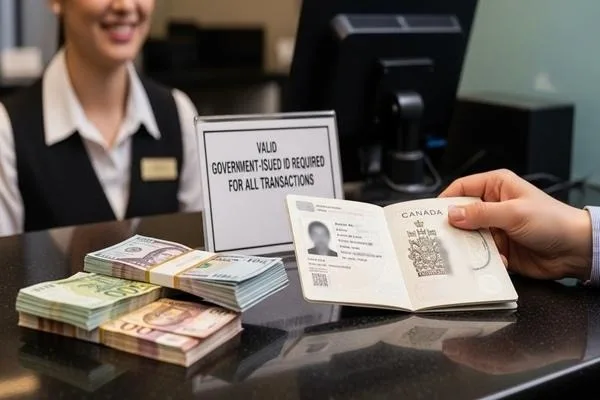
Why Currency Exchange Requires Valid Government-Issued Identification
Currency exchange providers rely on verified identification to confirm that every transaction is legitimate and securely processed. Under federal anti-money laundering regulations, financial institutions must verify customer identity when certain transaction thresholds are met. In addition to those federal requirements, individual providers may apply their own internal verification policies, as outlined by agencies such as FinCEN guidance resources.
This process starts with government-issued IDs and may extend to supporting documents depending on the transaction type. Understanding how these identification requirements work helps you prepare the right documents, avoid delays and complete your currency exchange smoothly.
Accepted Primary IDs For Currency Exchange Transactions
Primary identification documents are official IDs issued by national or local authorities that include a clear photo and signature. These IDs serve as the first level of verification for most currency exchange providers during in-person or digital transactions.
Commonly accepted primary IDs include the following document types:
- Passport issued by a national government for international identity verification and cross-border transactions
- Driver’s license with photo and signature issued by a recognized licensing authority
- National identification card issued by a government agency for domestic verification purposes
- Postal or voter identification cards accepted in certain regions depending on provider policies
These IDs must be valid, unexpired and free from damage to ensure smooth currency exchange processing. Federal regulations generally require identity verification once a currency exchange transaction reaches specific monetary thresholds, as reflected in Federal Reserve exchange rate reporting context. Broader international currency valuation trends may also influence transaction monitoring standards, as outlined in U.S. Treasury exchange rate analysis. Individual providers may also require identification at lower amounts based on internal compliance policies or state-specific rules. Customers should expect requirements to vary depending on transaction size and location.
Secondary Identification And Supporting Documents Explained
Secondary identification documents may be requested when a transaction triggers enhanced review under federal anti-money laundering rules or when a provider applies additional internal risk controls. Providers may request these documents to confirm residency, address or identity consistency across submitted information.
Examples of commonly requested supporting documents include:
- Utility bills showing your current residential address issued within the last three months
- Bank statements that match your name and address for financial identity verification purposes
- Employment or student identification cards used as supplementary identity confirmation when required
These documents strengthen identity validation and help prevent transaction delays or rejection during processing.
Why Providers Verify Identity Documents
Currency exchange providers verify identification documents to ensure that each transaction aligns with identity verification and anti-fraud requirements. This process protects both the customer and the provider by confirming that transactions are legitimate and authorized, consistent with consumer protection principles found in FDIC financial education resources.
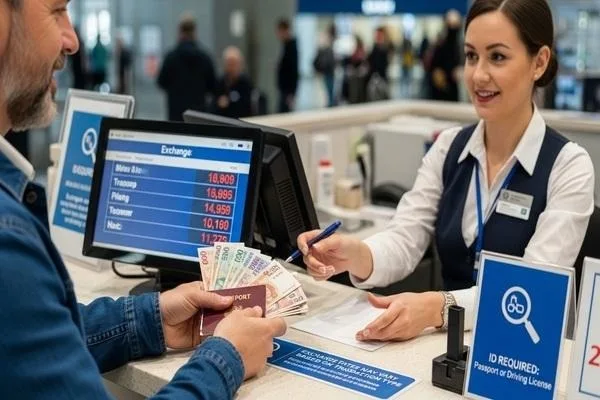
How Currency Exchange ID Requirements Change By Transaction Type
Currency exchange ID requirements vary based on transaction size, risk, and platform. Smaller transactions need minimal verification, while larger ones require stricter checks. Digital platforms use layered verification, so preparing the right documents helps avoid delays.
Under federal regulations such as the Bank Secrecy Act, identity verification is required once certain monetary thresholds are reached. In some cases, multiple transactions completed within a short period may be combined, or aggregated, to determine whether those thresholds apply.
For example, transactions of $10,000 or more may trigger federal reporting requirements under the Bank Secrecy Act.
ID Requirements For Small And Routine Currency Exchange Transactions
For smaller currency exchange transactions, identification requirements depend on the provider’s internal policies and applicable state rules. Even for lower amounts, providers may still request identification as part of their risk-based compliance programs, while others may request it as part of standard customer verification practices. As these are lower-risk, providers simplify verification while ensuring the ID is clear, matches the transaction name, and is not damaged or altered.
Additional Verification For Higher-Value Currency Exchange Transactions
When a currency exchange transaction reaches federally defined reporting thresholds, financial institutions must apply enhanced verification procedures. Providers may also implement additional documentation requirements based on their internal compliance frameworks. Providers implement these measures to ensure transaction legitimacy and prevent misuse of financial services.
For larger transactions, you may need to provide:
- A primary government-issued ID along with one or more supporting documents
- Proof of address such as a recent utility bill or official correspondence
- Additional identity confirmation through signatures or digital verification steps
These added requirements ensure that higher-value exchanges meet enhanced verification expectations and reduce potential transaction risks.
Identification Requirements For Online And Digital Currency Exchange Platforms
Online currency exchange platforms require digital ID verification to ensure secure transactions and prevent fraud. This typically involves uploading a government-issued ID, completing a selfie or facial check, and sometimes providing additional documents for further verification. If you need in-person assistance, you can visit local branches where staff can guide you through the identification process step by step. For further clarification or specific transaction concerns, you can contact customer support before initiating your exchange.
Key Takeaways
- Currency exchange may require valid government-issued identification once federal reporting thresholds or provider-specific compliance requirements are triggered.
- Primary IDs such as passports or national cards serve as the main requirement for most standard currency exchange transactions.
- Secondary documents like utility bills or bank statements support identity verification during higher-value or sensitive exchanges.
- ID requirements vary based on transaction size and channel, with stricter checks applied to larger or digital transactions.
- Preparing valid and matching documents helps avoid delays and ensures faster completion of your currency exchange transaction.
Conclusion
Understanding what IDs are needed for currency exchange helps you prepare properly before initiating any transaction with a provider. Federal anti-money laundering regulations establish identity verification requirements once certain transaction amounts are reached. In addition, individual providers may apply their own internal policies that affect when identification or supporting documents are requested.
By organizing your documents in advance, you can avoid delays and complete exchanges smoothly and securely. Whether you transact in person or online, meeting ID requirements ensures your transaction proceeds without interruption and meets provider verification standards.
If you are ready to exchange currency, prepare your valid identification documents now and complete your transaction with confidence today.
Disclaimer: Identification requirements may vary depending on the service provider, location and transaction conditions, so always confirm specific requirements before proceeding.
FAQs
What is the most common ID required for currency exchange?
A valid government-issued photo ID such as a passport or driver’s license is the most commonly required document.
Can I use an expired ID for currency exchange?
No, providers require valid and unexpired identification to process currency exchange transactions without delays or rejection.
Do all currency exchange services require proof of address?
Proof of address may be requested if a transaction triggers enhanced review under federal anti-money laundering regulations or if a provider applies additional internal verification policies.
Is a passport always accepted for currency exchange?
Yes, a passport is widely accepted as a primary identification document for both domestic and international currency exchange.
Do online currency exchange platforms require the same IDs as physical locations?
Yes, but you must submit digital copies and complete additional verification steps such as selfie or facial checks.

John is a Content & SEO Specialist who enjoys breaking down complex financial topics, like cross-border payments and money transfers, into content that’s easy to understand. He focuses on creating practical, search-driven content that helps people find answers and make informed decisions.