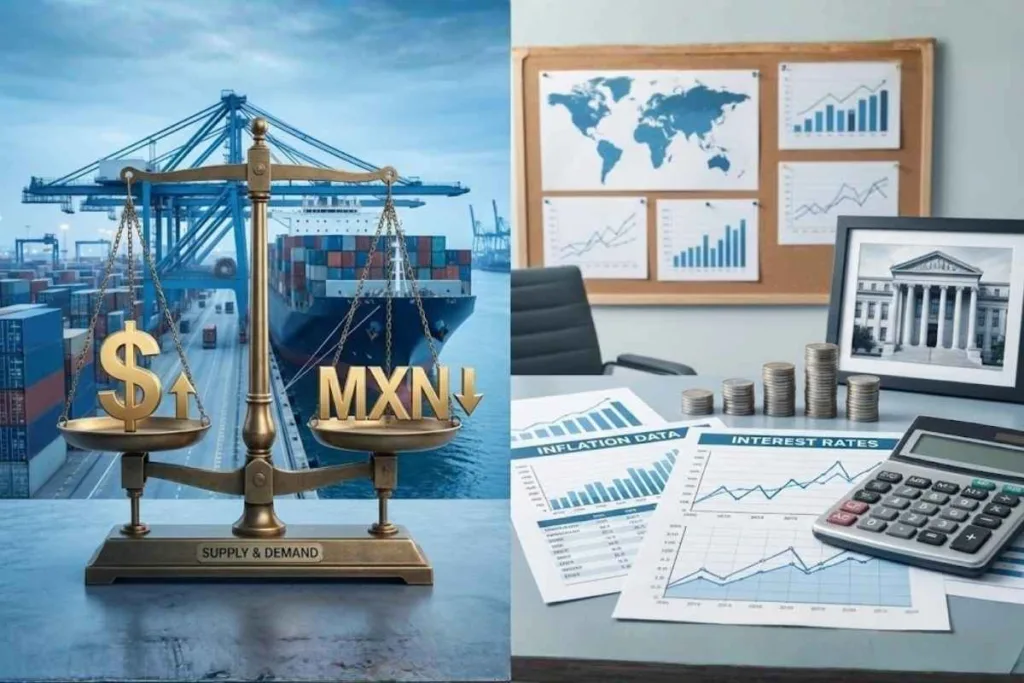
The value of one currency against another depends on market demand and macroeconomic strength. Exchange rates move constantly based on supply and demand, economic performance and monetary policy decisions.
Order Express applies market-based pricing at the time of each transaction. Fees and total cost (including the applicable exchange rate) are shown before you pay or confirm your transfer. When you prepare to send money internationally, understanding these two drivers helps you anticipate rate movements.
In this guide, you’ll learn how currency values are shaped by (1) global market supply and demand and (2) underlying macroeconomic fundamentals such as interest rates, inflation and growth and how these factors can influence the rate available for your transfer.
This focused guide explains the two primary mechanisms influencing currency value before everyday transactions.

How Exchange Rates Move: Market Supply And Demand Dynamics
Currency value is primarily determined by supply and demand in the global foreign exchange market. When demand for a currency increases relative to supply, its value strengthens against other currencies. Public data such as Federal Reserve foreign exchange rate releases illustrate how these movements appear in global markets.
Trade Flows And Cross-Border Payments
Trade activity directly affects how much of a currency global markets demand. Countries that export more goods often see stronger demand for their currency.
When foreign buyers purchase exported goods, they must convert their money into the exporter’s currency. That conversion increases demand and can raise the currency’s exchange value.
For everyday transactions, this means rates may fluctuate during periods of strong export performance. If your destination country exports heavily, its currency may appreciate during high trade cycles. Higher export demand increases foreign buyers’ need for local currency, which can strengthen exchange rates and influence the cost of international money transfer services.
Capital Flows And Investment Demand
Investment flows create significant currency demand beyond basic trade transactions. Investors move capital between countries seeking returns from stocks, bonds and business opportunities.
When international investors purchase assets in a country, they must first buy that country’s currency. This investment-driven demand can quickly strengthen the currency’s value.
Capital inflows often respond to:
- Strong economic growth
- Attractive interest rates
- Stable political environments
- Positive financial outlooks
If investors withdraw funds, the opposite effect occurs and the currency may weaken. For someone sending money abroad, sudden investment shifts can influence short-term exchange rate changes. U.S. Treasury exchange rate policy analysis provides insight into how governments evaluate broader macroeconomic positioning.
Market Expectations And Sentiment
Currency markets react quickly to expectations about future economic performance. Traders buy or sell currencies based on anticipated developments rather than current conditions alone.
If markets expect stronger growth or policy tightening, demand may rise immediately. Conversely, negative outlooks can weaken a currency even before measurable economic decline occurs.
Common expectation drivers include:
- Upcoming central bank decisions
- Employment and inflation reports
- Geopolitical stability
- Government fiscal announcements
Exchange rates often move before events happen because markets price in expectations early. Consumers preparing for transactions can review educational resources from the Consumer Financial Protection Bureau to better understand timing and international money movement concepts.
If you want a broader explanation of exchange mechanics, review our comprehensive guide to currency exchange fundamentals for everyday transactions or explore additional financial solutions through our other financial services.

Economic Fundamentals And Monetary Policy
Macroeconomic performance and central bank decisions directly influence long-term currency strength. Stronger economic fundamentals typically support higher currency value relative to weaker economies.
Interest Rates And Central Bank Policy
Interest rates represent one of the most powerful drivers of currency value and exchange rate movements. When a country offers higher interest rates, investors often shift capital to capture better returns.
Higher rates can increase foreign investment demand for that currency. Lower rates can reduce demand and weaken exchange value against other currencies.
Central banks influence currency value through:
- Raising or lowering benchmark interest rates
- Controlling money supply
- Communicating forward policy guidance
If you plan a transfer, rate changes often follow central bank announcements. Monitoring policy decisions helps explain sudden exchange rate adjustments. Higher interest rates tend to attract capital inflows, which can strengthen a currency and affect related financial services such as check cashing options.
Inflation And Purchasing Power
Inflation directly affects how much purchasing power a currency retains over time. Lower and stable inflation generally supports stronger long-term currency value.
When inflation rises significantly, a currency may weaken relative to others with better price stability. Buyers and investors seek currencies that preserve value more effectively.
For everyday transactions, inflation differences between two countries influence relative exchange strength. A country with consistently high inflation often experiences gradual currency depreciation. Educational initiatives such as the FDIC Money Smart program help individuals understand purchasing power and inflation concepts.
Economic Growth And Fiscal Stability
Economic growth signals productivity, stability and investor confidence in a country. Strong gross domestic product growth often supports a stronger currency over time.
Government debt levels and fiscal discipline also influence market perception and investor demand. Sustainable public finances generally increase confidence and currency stability.
Markets evaluate economic fundamentals by reviewing:
- GDP growth trends
- Employment levels
- Budget deficits
- Debt sustainability
Stronger economic fundamentals increase investor confidence, which can support currency demand.
Key Takeaways
- Currency value depends primarily on global supply and demand in foreign exchange markets.
- Trade flows and investment capital directly increase or decrease demand for specific currencies.
Central bank interest rate decisions strongly influence short-term and long-term exchange movements. - Inflation, economic growth and fiscal stability shape investor confidence and currency strength.
- Exchange rates reflect both current economic conditions and expectations about future performance.
Frequently Asked Questions
Q: Why Do Exchange Rates Change Daily?
A: Exchange rates change daily because supply and demand shift constantly due to trade, investment and economic expectations.
Q: Do Higher Interest Rates Always Strengthen A Currency?
A: Higher interest rates often attract capital inflows, increasing demand, but other economic factors can offset that effect.
Q: How Does Inflation Affect Currency Value?
A: Higher inflation reduces purchasing power, which can weaken a currency relative to more stable economies.
Q: Can Investor Sentiment Move Exchange Rates Quickly?
A: Yes, markets react immediately to expectations, causing rapid currency fluctuations even before economic data changes.
Q: Are Exchange Rates Controlled By Governments?
A: Most major currencies float freely, meaning market forces primarily determine their value.
Conclusion
The value of one currency against another depends on two core forces: market supply and demand and underlying economic fundamentals. Trade activity, capital flows and investor expectations shape short-term movements, while interest rates, inflation and economic growth determine longer-term strength.
For everyday transactions, understanding these drivers helps you interpret exchange rate changes with greater confidence. Rates move because markets constantly reassess demand, risk and economic outlook.
Exchange rates fluctuate continuously, so timing matters when sending funds internationally. Monitor market conditions and act when rates align with your needs.
If you are ready to complete your transfer, check today’s available rate for your transaction and move your funds with confidence.
Rates vary by corridor, payout method and time of execution.
Services, routes and delivery times vary by location and are subject to verification requirements.
Note: Order Express is registered as a Money Services Business (MSB) with the Financial Crimes Enforcement Network (FinCEN) and is licensed where required by applicable state regulations. See licenses.
Disclaimer: This article is for general informational purposes only. Exchange rates fluctuate based on market conditions, economic factors and monetary policy. The rate available for your transaction may differ from publicly quoted or reference rates and will be disclosed before you confirm your transfer. Nothing in this content constitutes financial, legal or investment advice. Please review all transaction details, including the applicable exchange rate and total cost, prior to authorization.

John is a Content & SEO Specialist who enjoys breaking down complex financial topics, like cross-border payments and money transfers, into content that’s easy to understand. He focuses on creating practical, search-driven content that helps people find answers and make informed decisions.