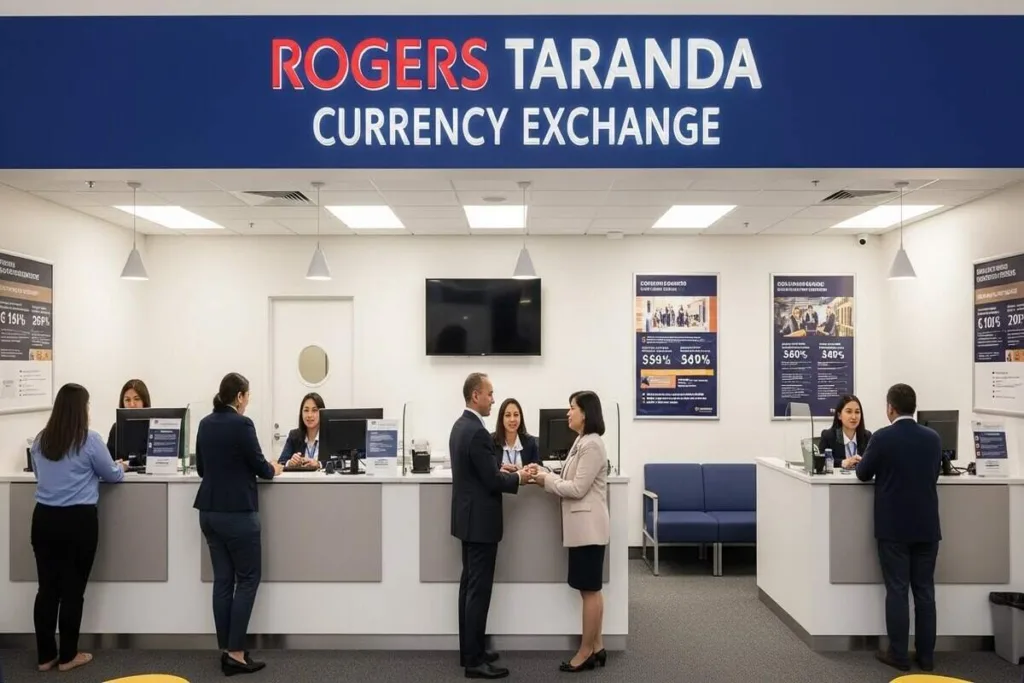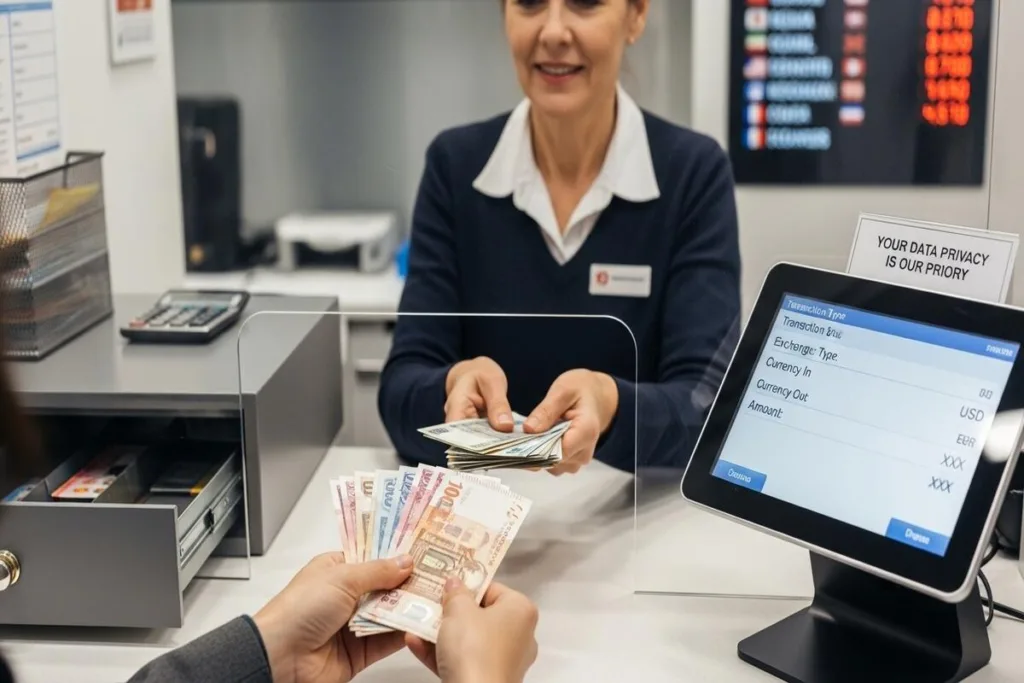
In-person currency exchange helps protect your data through controlled identity handling and secure transaction environments. Physical verification procedures and on-site safeguards can reduce exposure to online risks while maintaining confidentiality. Some transactions may still require identity verification and data collection based on applicable regulatory requirements. When you prepare to exchange funds at a branch, staff follow structured processes that limit unnecessary data access and restrict how information moves within the transaction space. These safeguards focus on keeping your identification details, contact information and payment instruments confidential during each step of the exchange.
For broader retail currency exchange guidance, review our guide on Understanding Currency Exchange Services For Consumers to prepare confidently before your visit.
How Currency Exchange Identity Verification Controls Data Handling
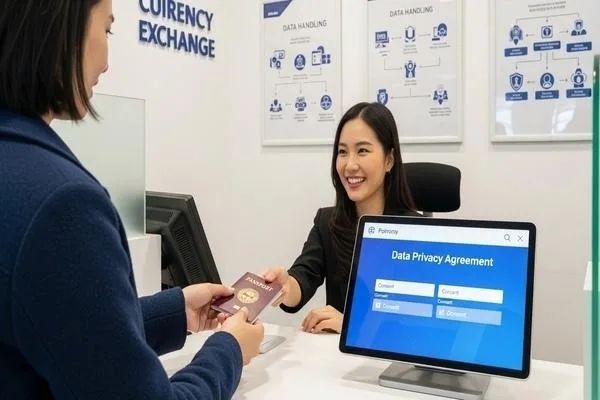
Identity verification controls protect your data by ensuring that personal information is collected and handled according to applicable regulatory requirements. In practice, this means gathering the information needed to verify identity and complete the transaction, while avoiding unnecessary handling or exposure of that data. In-person currency exchange often involves direct document inspection, which can help limit unnecessary digital exposure when compared to fully online processes.
Federal reporting and monitoring obligations apply to financial institutions under frameworks administered by FinCEN and related guidance, shaping how certain records must be retained and protected. These controls focus on validating your identity accurately while ensuring information is handled through appropriate and secure processes.
Direct Document Inspection Designed To Reduce Digital Exposure
Direct document inspection can reduce unnecessary digital exposure by allowing staff to verify identity in person. Depending on the transaction and regulatory requirements, certain details may still need to be recorded or retained, but the process focuses on handling that information in a controlled and secure way. This approach prevents broad digital circulation of sensitive information during the exchange process.
Required Data Collection Is Handled With Care
Currency exchange transactions require specific customer information to meet verification and regulatory standards. Staff collect the details needed to complete the transaction and fulfill these requirements, while focusing on handling that information carefully and limiting unnecessary exposure within the transaction process. Federal anti-money laundering obligations under the Anti-Money Laundering Act of 2020 require institutions to maintain certain records, but those requirements apply to the institution rather than creating obligations for customers beyond providing accurate information.
Controlled Internal Access Protects Sensitive Details
Controlled internal access protects sensitive details by restricting who can view transaction records. Access is typically limited to authorized personnel who need the information to perform their responsibilities or meet compliance obligations. Exchange counters operate with defined staff permissions tied to specific job responsibilities. Only authorized personnel can access identity records associated with completed transactions.
These controls typically include:
- Role-based system access within the branch environment
- Physical supervision of paperwork during processing
- Secure storage of printed transaction records
By limiting internal visibility, in-person currency exchange reduces the likelihood of unauthorized information handling.
How Physical Environment Strengthens Currency Exchange Data Protection
Secure physical environments help protect your data by combining physical security with monitored transaction procedures. These controls are designed to support both customer privacy and compliance with applicable financial regulations. In-person currency exchange operates within supervised spaces designed to prevent interception or unauthorized observation.
Customers can access these safeguards at professionally managed branch locations where structured service procedures guide each transaction. These environments create structured safeguards around how personal and payment information moves across the counter while supporting responsible currency exchange operations.
Monitored Transaction Counters Reduce Interception Risks
Monitored transaction counters reduce interception risks by maintaining supervised customer interactions. Transactions occur at designated service windows designed to protect conversational privacy. Staff position computer screens and printed documents away from public view.
Branches also implement surveillance and internal oversight to discourage misconduct and unauthorized access. Visible security presence reinforces compliance with confidentiality standards during high-value exchanges.
Secure Handling Of Cash And Payment Instruments
Secure handling of cash and payment instruments protects both financial value and associated personal details. Staff process debit cards or other payment methods using secured terminals connected to protected networks. Payment information is handled using secure systems and processes designed to prevent unauthorized access or misuse. Customers exchanging foreign currency through established currency exchange services benefit from structured counter procedures designed to protect both funds and personal information.
When customers provide funds, staff confirm amounts discreetly and finalize documentation immediately. This disciplined workflow prevents sensitive data from remaining exposed on counters or shared surfaces. Secure cash drawers and locked storage further reduce opportunities for unauthorized access.
Immediate Documentation Control And Receipt Privacy
Immediate documentation control and receipt privacy prevent accidental disclosure after the transaction concludes. Staff provide printed confirmations directly to customers without leaving documents unattended. They dispose of internal drafts or temporary notes using secure shredding practices when required.
Customers should also take proactive steps to protect their own information during exchanges, including:
- Reviewing receipts before leaving the counter
- Storing transaction documents securely after completion
- Avoiding public sharing of exchange details online
These combined actions strengthen confidentiality from the counter to your final destination. In some cases, transaction records may be retained as required by law or internal compliance procedures, even after the customer has received their documentation. Consumers seeking broader financial education on protecting personal information can reference resources such as the FDIC Consumer Resource Center and practical tools from the CFPB Consumer Tools.
Key Takeaways
- In-person currency exchange helps protect your data through direct identity verification that helps control how your information is collected, used, and stored.
- Required data collection is handled in a controlled way to reduce unnecessary exposure within branch systems.
- Controlled internal access ensures only authorized staff can view or manage transaction-related records.
- Secure physical environments prevent interception, unauthorized observation and mishandling of payment instruments.
- Immediate documentation control and receipt privacy maintain confidentiality after the transaction concludes.
Conclusion
In-person currency exchange protects your data by combining required identity verification with controlled physical safeguards. While certain customer information must be collected to meet regulatory requirements, the process is designed to handle that information securely and limit unnecessary exposure. Direct document inspection can help reduce and keep sensitive details within supervised branch environments. Customer data is stored and managed according to regulatory requirements, with role-based access restricting who can view transaction records.
Secure counters, monitored interactions and protected payment terminals prevent interception during processing. Immediate documentation control ensures that printed confirmations remain private after completion. Together, these mechanisms create a structured confidentiality framework designed for everyday transactions. As you prepare to exchange funds, choose a provider that demonstrates disciplined verification procedures and visible security controls. Conduct your next currency exchange confidently at a trusted branch that prioritizes your data protection at every step.
Disclaimer: Data handling practices and verification requirements may vary by provider and jurisdiction. Certain transactions require identity verification, recordkeeping, and reporting under applicable federal and state regulations. Always confirm specific procedures directly with your chosen exchange service before transacting.
FAQs
Does in-person currency exchange store my identification permanently?
Branches record and retain transaction details as required by applicable regulations, while applying controls to protect that information from unnecessary access. They avoid collecting unnecessary personal data beyond verification requirements.
Is in-person currency exchange safer than online exchanges for data privacy?
In-person exchanges reduce digital exposure by using physical verification and controlled environments. However, customers should still follow safe document handling practices.
Who can access my transaction information at a branch?
Only authorized staff with defined roles can access your transaction records. Internal permissions restrict unnecessary viewing of sensitive details.
How are payment cards protected during in-person exchange?
Staff use secure payment terminals connected to protected networks. Payment information is handled through secure systems designed to prevent unauthorized access or misuse.
What should I do to protect my receipt after exchanging currency?
Store your receipt securely and avoid sharing transaction details publicly. Proper document handling strengthens your overall data privacy.

John is a Content & SEO Specialist who enjoys breaking down complex financial topics, like cross-border payments and money transfers, into content that’s easy to understand. He focuses on creating practical, search-driven content that helps people find answers and make informed decisions.