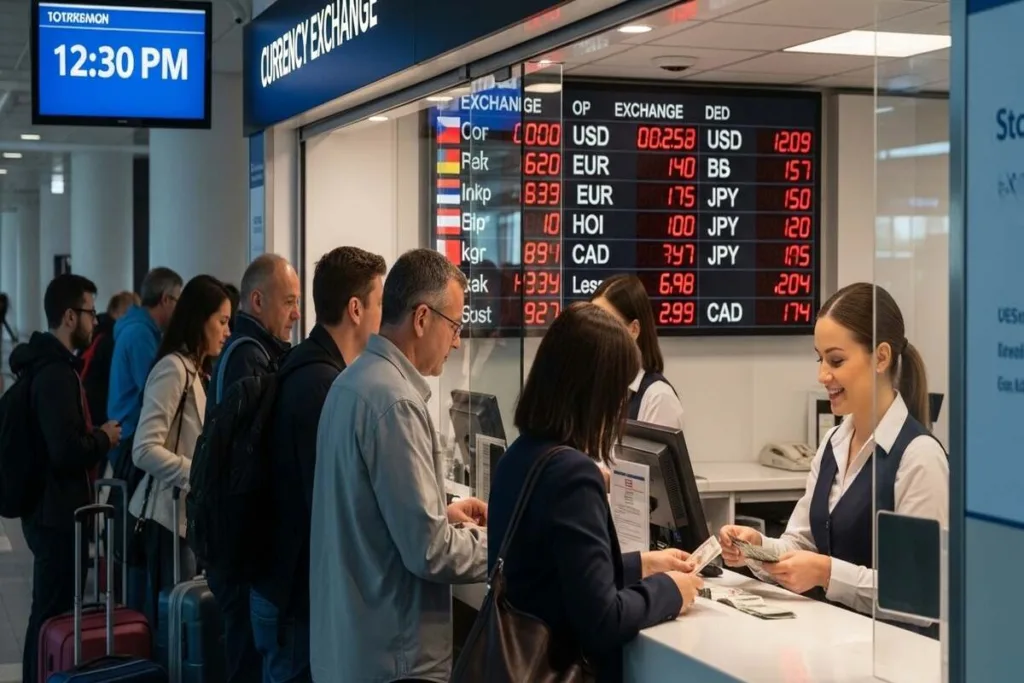
Yes, you can complete a currency exchange in peak hours when in-person processes remain organized and customers arrive fully prepared. Peak demand mainly increases waiting time, but does not prevent transactions when physical service flow operates efficiently.
While operational flow may remain steady during busy periods, all currency exchange transactions remain subject to applicable federal and state regulatory requirements. These requirements may include customer identification, transaction monitoring, or additional verification depending on the transaction amount and structure.
For a broader understanding of how these services function, visit retail currency exchange guidance for consumers.
Note: Currency exchange services are provided by regulated Money Services Businesses (MSBs) and are subject to federal compliance obligations at all times.
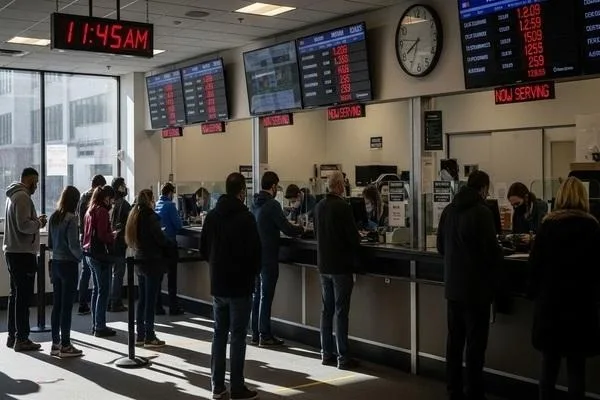
How In-Person Currency Exchange Flow And Queues Impact Transaction Speed
In-person currency exchange during busy hours stays efficient when service flow and queue systems are well organized. Clear processes and structured queues help maintain steady transaction speed, though factors like transaction complexity and queue setup still affect how quickly each exchange is completed.
Understanding how these elements work together helps explain why some transactions move faster than others during busy periods. Operational efficiency affects waiting time, but it does not replace regulatory review. Certain transactions may require identification, documentation, or additional review under federal reporting standards, which can influence overall processing time regardless of queue conditions. For example, oversight frameworks such as the Financial Crimes Enforcement Network guidance outline monitoring expectations for financial institutions handling cash transactions.
Counter Efficiency Maintains Steady Transaction Movement
In-person currency exchange counters process transactions continuously because staff follow structured procedures that maintain consistent service speed throughout busy periods. These procedures ensure each step, from verification to counting and confirmation, happens in a predictable and efficient manner.
Staff members are trained to handle high volumes without slowing operations, allowing transactions to move forward even when queues grow longer. Clear workflows reduce confusion and eliminate unnecessary pauses, which helps maintain steady progress despite peak hour pressure.
Queue Systems Prevent Bottlenecks During Peak Hours
Organized queue systems play a critical role in keeping currency exchange services efficient during peak hours. Physical locations rely on structured processes to manage high customer volume while maintaining a fair and orderly transaction flow. This setup helps prevent overcrowding at service counters and allows staff to continue processing exchanges without disruption.
Here is how queue systems improve efficiency:
- Numbered queues allow customers to track their position clearly and reduce confusion in busy environments
- Designated service lines help separate simple transactions from more complex requests
- Controlled customer flow prevents congestion and supports steady transaction movement
These systems ensure that every customer is served in an organized manner, even when demand is at its highest. They also help staff maintain focus, which reduces errors and improves overall service consistency. By keeping the process structured, queue management directly supports faster and smoother currency exchange completion during peak hours.
Transaction Complexity Affects Processing Time At The Counter
In-person currency exchange is faster for simple transactions because they involve minimal steps and standard checks. More complex exchanges take longer due to extra counting, documentation, or verification, especially for large amounts. These differences are more noticeable during peak hours when staff handle multiple customers at once.
For example, currency exchange transactions that meet specific monetary thresholds may require valid government-issued identification or further documentation under federal anti-money laundering requirements. Larger cash transactions may also trigger reporting obligations under frameworks such as the Anti-Money Laundering Act, which applies to financial institutions regardless of customer volume.
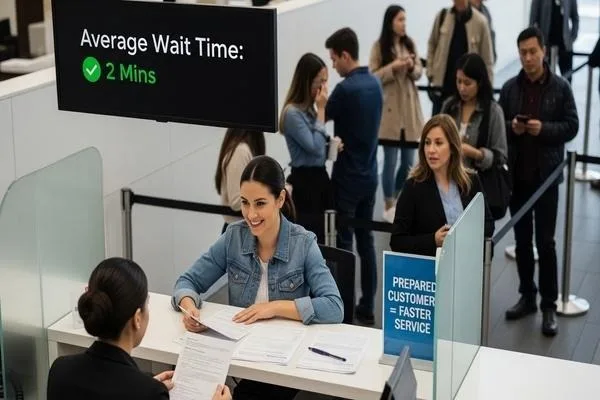
How Customer Preparation Improves Exchange Speed During Peak Hours
Being prepared, having complete documents, clear transaction details, and awareness of busy times, helps customers speed up currency exchange and reduces delays, especially during peak periods.
Staff can move efficiently from verification to completion without interruptions, which helps maintain steady transaction flow even when queues grow longer. Customer preparation supports operational efficiency, but regulatory identification and monitoring requirements still apply independently. Transactions that reach certain thresholds may require formal identification collection or review under federal reporting standards. These requirements are applied uniformly and are not influenced by peak-hour demand.
Complete Documentation Speeds Up Counter Processing
Bringing complete and accurate documents helps you move through a currency exchange much faster, especially during peak hours at physical locations. When everything is ready, staff can immediately begin verification and proceed without unnecessary pauses or repeated checks. In contrast, missing or incorrect details often slow down the process and extend waiting time for everyone in line.
Here is what to prepare:
- Valid identification that matches your transaction details to avoid verification issues
- Exact transaction amounts to prevent recalculations at the counter
- Confirmed currency type and exchange details to eliminate last-minute corrections
Preparing these essentials allows the transaction to flow smoothly from start to finish without interruptions. It also helps staff maintain efficiency when handling multiple customers during busy periods. When you arrive fully prepared, you reduce your own waiting time and contribute to faster service for others in the queue.
Awareness Of Peak Flow Improves In-Person Timing
Even during peak hours, there are brief periods with lighter customer flow that allow faster service. By timing their visit just before or after the busiest moments, customers can reduce waiting time while still transacting during peak hours. Observing these patterns helps improve efficiency without fully avoiding busy periods.
Customers visiting nearby service locations can benefit from understanding daily traffic patterns, which vary by location and time of day. This awareness helps improve planning and reduces unnecessary waiting during peak hours.
Clear Communication At The Counter Reduces Delays
Clear communication between customers and staff helps transactions run smoothly, especially during busy times. When customers clearly state details like currency, amount, and preferences, it reduces delays and confusion. This keeps the queue moving efficiently. Additionally, customers should not split transactions to avoid requirements, as financial institutions monitor combined transactions and such actions may lead to further review.
Customers should not split transactions to avoid requirements, as financial institutions monitor combined transactions and such actions may lead to further review under federal standards such as those outlined by the FDIC consumer resource center.
Key Takeaways
- You can complete a currency exchange during peak hours because in-person systems continue operating even under high customer demand
- Efficient queue management and counter processes help maintain steady transaction flow despite longer waiting times during busy periods
- Customer preparation, including documents and transaction details, significantly reduces delays and improves overall processing speed
- Choosing better timing within peak hours and communicating clearly helps minimize waiting and ensures faster in-person transaction completion
Conclusion
Completing a currency exchange in peak hours remains practical when in-person systems and customer preparation work together effectively. Organized queues, efficient counter processes and clear communication allow transactions to continue smoothly despite increased demand. While waiting time may increase, the ability to complete transactions remains reliable when customers arrive prepared and informed. Understanding how service flow and readiness affect processing helps customers manage expectations and reduce delays. With the right approach, in-person exchanges during peak hours remain efficient and predictable for everyday financial needs. Being prepared and aware ensures that even busy periods do not disrupt essential transactions.
Complete your transaction with confidence by arriving prepared and understanding both service flow and applicable regulatory requirements that may affect processing time.
Disclaimer: Currency exchange processing times may vary depending on operational volume, transaction complexity, and applicable regulatory requirements. Certain transactions may require identification, documentation, or review under federal reporting standards, which can affect processing time.
FAQs
Can I still complete a currency exchange during peak hours?
Yes, transactions continue normally, but you may experience longer waiting times depending on customer volume.
Do queues affect in-person currency exchange speed?
Yes, longer queues increase waiting time, but organized systems ensure transactions still move consistently.
Are simple transactions faster during busy periods?
Yes, straightforward exchanges typically complete faster because they require fewer verification and processing steps.
Does preparation really help during peak hours?
Yes, having complete documents and clear details significantly reduces processing time at the counter.
Is there a best time within peak hours to transact?
Yes, arriving slightly before or after the busiest period can help reduce waiting time.

John is a Content & SEO Specialist who enjoys breaking down complex financial topics, like cross-border payments and money transfers, into content that’s easy to understand. He focuses on creating practical, search-driven content that helps people find answers and make informed decisions.