Currency exchange is usually best when timed based on rate stability and access convenience during your travel journey. Most travelers benefit from exchanging some money before departure and adjusting remaining currency needs strategically after returning. For deeper guidance, review the pillar page on retail currency exchange guidance for consumers to align timing decisions with available service options.
Financial institutions that offer currency exchange services operate under federal regulations designed to promote transparency, consumer protection and accurate transaction disclosures.
Note: Currency exchange services provided by licensed Money Services Businesses (MSBs) are subject to federal regulations under FinCEN, including anti-money laundering (AML) requirements, transaction monitoring, and customer identification procedures to ensure secure and compliant transactions.
What Drives Currency Exchange Timing Before And After Travel
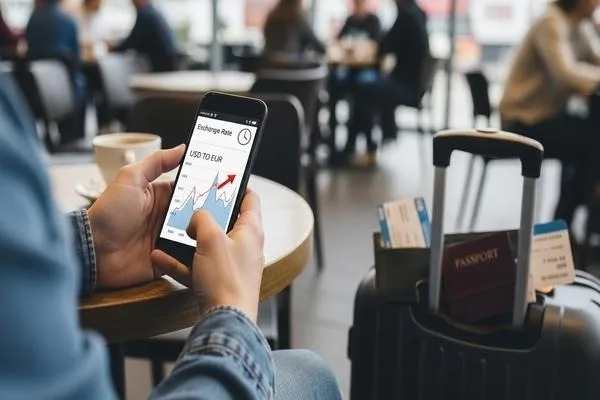
Currency exchange timing depends heavily on how exchange rates shift across different stages of your travel journey. Understanding how market trends behave before departure, during your stay and after returning allows you to make more informed decisions. Travelers who pay attention to rate stability can reduce uncertainty and avoid unfavorable conversions.
By aligning your currency exchange strategy with real market conditions, you gain better control over both budgeting and overall transaction outcomes. Financial institutions must also follow federal requirements related to transparency and recordkeeping when providing currency exchange services, ensuring that transactions are conducted in a secure and compliant environment, as outlined in Federal Reserve H.10 exchange rate data.
Exchange Before Travel Secures Predictable Rates And Reduces Uncertainty
Exchanging currency before travel helps lock in known rates and avoids sudden fluctuations during your trip. Travelers who exchange early gain better control over budgeting and avoid emotional decisions driven by rate volatility. This approach works best when market trends show increasing uncertainty or weakening home currency performance.
Key advantages of exchanging before travel include:
- You secure a confirmed rate instead of relying on uncertain future market movements
- You avoid last-minute decisions that may lead to unfavorable exchange outcomes
- You gain financial clarity when planning expenses across different destinations
Exchange After Travel Allows Reaction To Favorable Rate Movements
Exchanging currency after travel can be beneficial if exchange rates move in your favor while abroad. Travelers who monitor rate changes may return with foreign currency that converts at stronger relative values. This strategy requires awareness of trends and willingness to delay conversion for potential gains.
Situations where post-travel exchange works better include:
- The destination currency strengthens against your home currency during your trip
- You return with unused funds and observe improved conversion opportunities afterward
- Market volatility creates short-term spikes that favor delayed currency exchange
Split Exchange Strategy Balances Risk And Flexibility
A split strategy combines early preparation with post-travel adjustments to reduce overall currency exchange risk exposure. Travelers exchange a portion before departure and leave remaining funds for flexible timing decisions later. This method balances predictability with opportunity, especially in uncertain or fluctuating financial environments.
How Currency Exchange Timing Affects Convenience And Travel Spending
Currency exchange timing plays a critical role in how smoothly you manage money throughout your travel experience. Access to local currency, flexibility in spending and the ability to adapt to real expenses all depend on when you choose to exchange funds. Travelers who plan their currency exchange strategically can avoid unnecessary delays, reduce reliance on limited services and maintain better control over their budget from arrival to return.
Travelers can also use resources such as the CFPB consumer financial tools to better understand how financial decisions impact spending behavior during travel.
Exchange Before Travel Ensures Immediate Access To Local Currency
Exchanging currency before departure ensures you have funds available immediately upon arrival at your destination. Travelers avoid delays, long queues or limited service availability when they already carry usable local currency. This approach supports smoother transitions from airports to accommodations or transportation without financial interruptions.
Benefits of having currency before arrival include:
- Immediate ability to pay for transportation, meals and essential services
- Reduced reliance on unfamiliar or unavailable exchange providers abroad
- Better control over spending from the beginning of the trip
Currency exchange providers offering currency exchange services are required to present clear transaction details, including applicable fees and exchange rates, in accordance with federal consumer protection standards such as those supported by the FDIC Money Smart program.
Exchange During Travel Adapts To Real Spending Patterns
Exchanging currency during travel allows adjustments based on actual spending habits rather than estimated budgets. Travelers often discover differences between planned expenses and real costs, requiring flexible currency access. This method supports better financial control when navigating varying costs across cities or regions.
Travelers can locate nearby branch locations to access services conveniently when additional currency is needed during their trip.
Exchange After Travel Helps Convert Leftover Funds Efficiently
Exchanging currency after travel helps convert unused foreign funds back into usable local currency efficiently. Travelers often return with small balances that still hold value when exchanged at favorable rates. This approach prevents waste and ensures that all remaining funds contribute to overall financial efficiency.
If you need assistance with post-travel transactions, consider contacting customer support for guidance on available currency exchange options. Financial institutions must also maintain accurate transaction records in compliance with federal oversight frameworks such as those described by the U.S. Treasury exchange rate analysis.
Key Takeaways
- Currency exchange works best when travelers combine early preparation with flexible timing based on changing market conditions.
- Exchanging before travel provides rate certainty and immediate access to funds for essential expenses upon arrival.
- Exchanging after travel can maximize value when exchange rates shift favorably during or after the trip.
- A split strategy reduces risk by balancing predictable rates with opportunities for better post-travel conversion outcomes.
- Convenience and spending behavior play a critical role in determining the most effective currency exchange timing strategy.
Conclusion
Currency exchange timing depends on balancing rate stability with real-world convenience during your travel experience. Exchanging before travel ensures readiness and predictable budgeting, while post-travel exchange allows flexibility and potential gains. A combined approach offers the most practical solution for travelers managing both uncertainty and changing financial conditions.
By understanding when to exchange and how much to convert, travelers can improve financial outcomes across every trip. Careful timing helps reduce unnecessary losses and ensures smoother transactions throughout the entire travel journey. Financial institutions providing currency exchange services operate within federal regulatory frameworks that support consumer protection, transparency, and accurate transaction processing.
For reliable and transparent currency exchange services, visit an Order Express branch near you to access competitive rates and compliant transactions.
Disclaimer: This content is for informational purposes only and does not constitute financial advice or specific transaction recommendations. Exchange rates, fees, and availability may vary by provider and location. Customers may be required to present identification depending on transaction size and regulatory requirements.
FAQs
Should I exchange all my money before traveling?
No, exchange a portion before travel and keep flexibility for additional exchange based on actual needs.
Is it risky to wait until after travel to exchange currency?
Yes, rates may worsen, but waiting can benefit you if the exchange rate improves.
How much currency should I exchange before traveling?
Exchange enough for immediate expenses like transport, meals and small purchases upon arrival.
Can I rely only on exchanging currency during travel?
You can, but limited access or timing issues may create inconvenience in certain locations.
What should I do with leftover foreign currency?
Exchange it after returning when rates are favorable or keep it for future travel if applicable.

John is a Content & SEO Specialist who enjoys breaking down complex financial topics, like cross-border payments and money transfers, into content that’s easy to understand. He focuses on creating practical, search-driven content that helps people find answers and make informed decisions.