


Yes, you can cash a slightly damaged money order when all required details remain readable and unaltered. Licensed money transfer providers use strict verification steps to confirm authenticity and protect consumers from fraud. Providers also encourage customers to review helpful resources on the Order Express homepage.
They review issuer markings, serial numbers, payee information, and security features before completing any payout. These checks support compliance with industry regulations and help ensure secure transfers.
Customers search for clear guidance on how to verify a damaged document, why it matters, and what steps to take.
This guide explains how financial service locations assess damage, what makes a money order unacceptable, and how to prepare your document for faster processing. It also outlines consumer safety practices that support secure transactions.

Understanding When A Money Order Is Still Acceptable
Customers want to avoid delays when they bring a Money Order for cashing. Damage may happen during storage, accidents, or mailing. A financial service provider will still consider the Money Order if its core information remains readable. This section explains the deciding factors in simple steps so consumers can understand the process before they proceed. Many customers also use services similar to the Order Express money transfer service when handling financial documents.
Essential Details That Must Remain Clear
A money order must show several required fields without distortion. These items allow the cashier to verify that the document is genuine. The most important details include the payee name, the purchaser name when applicable, the serial number, the printed amount, issuer markings, and security features. A cashier relies on these items when checking for authenticity or signs of tampering. These steps mirror industry expectations used by many institutions for document verification described in FinCEN guidance for money services businesses.
If these details remain clear, the location will likely consider the Money Order for processing. If any field appears altered, the cashier may stop the transaction to protect the customer from fraud.
What Makes A Money Order Unacceptable
Some forms of damage make it unsafe to process a Money Order. Missing sections, erased portions, rewritten amounts, or altered names are common examples. A Money Order with missing serial numbers, unreadable issuer codes, or damaged watermarks may raise fraud concerns. A location cannot complete the transaction if the document fails these basic checks. Fraud concerns often align with risks outlined in CFPB consumer protection guidance.
In these situations, consumers may need to request help directly from the issuer. This option protects the customer and ensures the payment remains secure.
Why Financial Service Providers Review Damaged Documents Carefully
Cashiers follow procedures to prevent fraud and to protect customers during transactions. This review includes checking for counterfeits, confirming the presenter has valid identification, and ensuring the Money Order matches the information printed by the issuer.
Operational note: Identification is reviewed as part of standard transaction verification and does not guarantee approval.
These efforts reflect broader risk controls described in the OFAC compliance framework for financial institutions.
This process does not replace federal or state compliance rules. Instead, it offers an extra layer of safety for the consumer. Locations offering services similar to Order Express follow internal practices that support secure financial transactions. These practices help ensure that each Money Order is handled with care and fairness.

How To Prepare A Damaged Money Order Before Visiting A Location
Consumers often feel unsure when they hold a damaged Money Order. They worry that they may lose the funds or that the document may not be accepted. The good news is that you can take simple steps to prepare your document before visiting a financial service location. These steps reduce confusion, speed up verification, and improve your chances of successful processing. Customers can also reach out to support channels similar to those found on the Order Express contact page.
Keep Damaged Sections Together
If the Money Order tears, keep all pieces together and avoid taping across barcodes or security features. Tape may block scanning lines or create the appearance of tampering. Bring every piece with you. Cashiers can often reconstruct the information visually if all parts remain available. This approach helps the provider review the Money Order more effectively and helps ensure that the document remains readable. These steps align with fraud prevention standards outlined in the FDIC Consumer Resource Center.
Bring Any Proof Of Purchase
A receipt, photographed copy, or purchase stub can help verify ownership of the Money Order. Many issuers include a detachable stub with the serial number. Keeping this item safe helps you prove the original purchase and may speed the verification process. If the Money Order arrived by mail, save the envelope because the date and return address may support the review. While these items do not guarantee approval, they help the provider confirm your connection to the Money Order.
Know What The Cashier Will Check
A cashier will check the Money Order for authenticity, legibility, issuer details, and signs of fraud. The provider completes these steps with every customer as part of standard service. They may ask for identification, review the written fields, and verify the amount. They may also confirm that the Money Order has not been altered. These steps help ensure secure transactions and protect customers from scams. The general review process is similar to expectations outlined in FFIEC BSA/AML examination procedures.
This review does not replace internal Order Express requirements or federal rules. It simply supports consumer safety during routine transactions.
Additional Guidance For Consumers Handling Slightly Damaged Money Orders
Consumers want clear steps to follow before they attempt to cash a damaged Money Order. These helpful subtopics address common questions that appear during daily transactions. Each section focuses on ease, clarity, and safety for the customer.
When You Should Contact The Issuer First
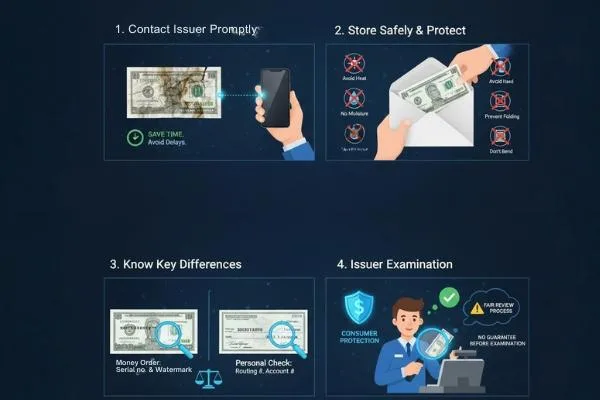
Some damage goes beyond routine wear. If the Money Order shows heavy staining, water damage, missing corners, or deep creases, the issuer may need to replace it. Most issuers provide replacement services when customers meet the documented conditions. Calling the issuer before visiting a provider saves time because the issuer may already have guidance specific to your Money Order brand. This option benefits consumers who want to avoid long processing delays when the document cannot be accepted at a financial service location. Customers often review additional support categories similar to those found in Order Express other services.
Protecting Your Money Order From Future Damage
Many customers handle Money Orders in busy environments. Bags, wallets, mailboxes, and storage spaces may expose documents to heat, moisture, or bending. Store your Money Order in a dry envelope and keep it flat until the transaction. Avoid folding the document so the serial number remains sharp and easy to review. Keep it away from cleaners, heat, or liquids. Small habits like these help preserve the quality of your Money Order and reduce risk during cashing.
How Money Order Verification Differs From Check Verification
Checks and Money Orders sometimes appear similar, but their verification steps differ. A Money Order contains unique serial numbers, issuer watermarks, and specific printed fields that support fraud prevention. A check relies more on bank routing and account information. Money Orders often follow stricter rules because many issuers design them for secure consumer transactions. Customers handling both types of documents often explore services like the Order Express check-cashing service.
Understanding these differences helps customers expect a more detailed review when presenting a Money Order, especially if it is damaged. This helps improve the customer experience and avoids misunderstandings during processing.
What Financial Service Providers Can And Cannot Guarantee
A financial service provider cannot promise that a damaged Money Order will be accepted before reviewing the document in person. The final decision depends on how well the core fields remain readable. Providers can explain the general process, but they must complete an in-person examination before cashing any Money Order. This process exists to protect your payment and support safe transactions. These decisions also reflect regulatory expectations described in FinCEN’s Anti-Money Laundering Act of 2020.
Providers can guarantee fairness and transparency, but they cannot guarantee approval without a full review.
Federal law requires financial institutions to file a Suspicious Activity Report when certain risk thresholds are met. Providers are prohibited from disclosing when a SAR is filed.
How To Speed Up Your Visit And Avoid Delays
Consumers can take simple steps to help cashiers complete their review quickly. Bring your valid identification, keep all pieces of a torn Money Order together, and avoid taping over important fields. Bring any proof of purchase or supporting documents. Share any concerns at the beginning of the visit so the cashier understands the situation. These efforts help keep your transaction smooth and efficient. They also support stronger communication between you and the financial service provider.
What To Do If The Money Order Is Rejected
A rejection does not mean the payment is lost. It usually means the document needs issuer review or replacement. Contact the issuer to ask about their replacement process. Issuers often request the serial number, proof of purchase, a copy of the damaged document, and a completed form. This option protects the consumer because the issuer can confirm authenticity and reissue the funds. This step restores your confidence and ensures the payment stays secure.
How The Financial Provider Protects You During Processing
Financial service providers protect consumers by checking documents for fraud. Cash payouts totaling $10,000 or more may require electronic filing of FinCEN Form 112 within 15 days, as required by federal regulation. This review includes reviewing the basic fields, examining the issuer markings, and confirming the document has not been altered. They also check that the presenter is authorized to receive funds. Locations follow internal procedures to create a secure environment for consumers. Transaction records are retained in accordance with applicable federal recordkeeping requirements to support regulatory review and consumer protection.
This review does not mix with federal rules or the Order Express compliance manual. It remains a separate consumer safety process designed to help protect customers during everyday transactions. Many institutions use oversight procedures similar to those referenced in eCFR 31 CFR 1022.320 suspicious activity reporting requirements for financial institutions.
Breaking transactions into smaller amounts to avoid reporting requirements is illegal under federal law and may result in enforcement action.
Conclusion
Cashing a slightly damaged money order becomes much easier when you know what financial providers look for. When the key details remain clear and the document shows no signs of tampering, most locations can still review it for processing. Preparing your money order, gathering proof of purchase, and understanding the verification steps help you move through your transaction faster and with more confidence. If the document is too damaged to accept, the issuer can guide you through replacement options that protect your funds.
Ready to complete your transaction? Visit a financial service provider today and bring your Money Order for fast review so you can access your funds with confidence.
Provider review procedures are separate from federal reporting obligations and do not replace regulatory requirements.
Disclaimer: This article provides general consumer guidance only. It does not replace internal Order Express compliance rules or any federal or state regulations. Final decisions on document acceptance depend on the financial service provider reviewing the Money Order in person.
Frequently Asked Questions
Q: Can I cash a slightly damaged money order?
A: Yes, if all essential details remain readable. The cashier must verify the payee, amount, serial number, issuer markings, and security features to complete the transaction.
Q: What damage makes a money order unacceptable?
A: A location will reject a money order if fields are missing, rewritten, altered, or unreadable, or if serial numbers, issuer codes, or watermarks cannot be verified.
Q: What should I bring when cashing a damaged money order?
A: Bring all pieces of the document, valid ID, and any receipt or purchase stub. These items help verify authenticity and speed up processing.
Q: What are the steps if my money order is rejected?
A: Contact the issuer. Provide the serial number, proof of purchase, a copy of the damaged document, and any required forms to request a replacement.
Q: How can I prevent future money order damage?
A: Store it flat in a dry envelope, avoid folding, keep it away from heat or liquids, and protect the serial number and security features from wear.

John is a Content & SEO Specialist who enjoys breaking down complex financial topics, like cross-border payments and money transfers, into content that’s easy to understand. He focuses on creating practical, search-driven content that helps people find answers and make informed decisions.


