


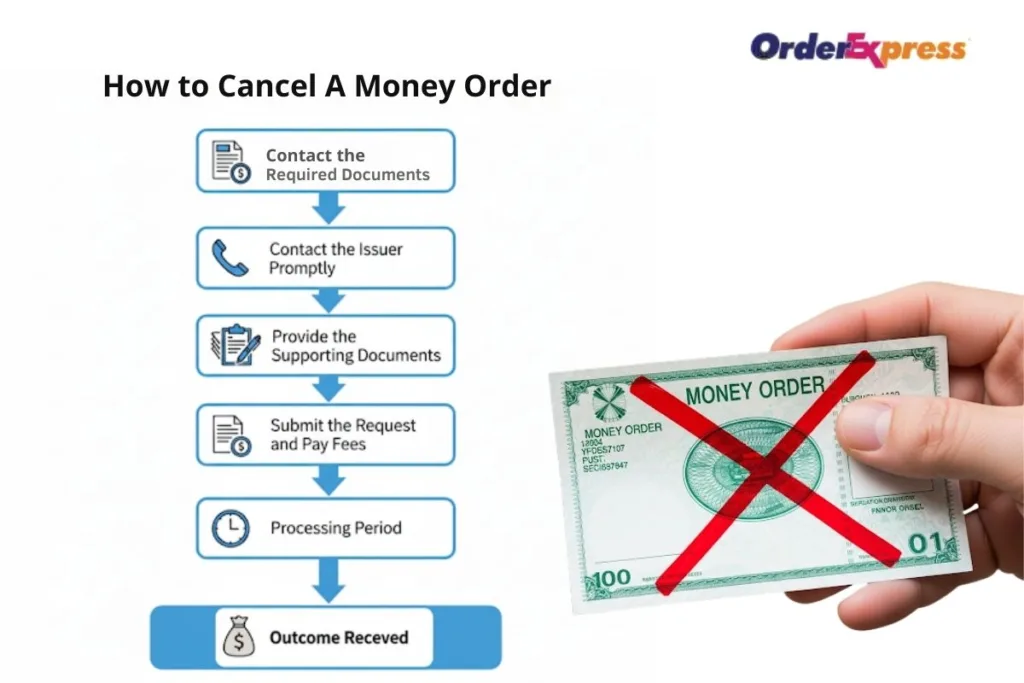
If your money order was lost in the mail and has not yet been cashed, you can usually request cancellation through the issuer. Most providers require your receipt or transaction details, a completed cancellation request, and identity verification before reviewing your request. If the money order has already been cashed, cancellation is generally no longer possible, although you may still be able to request a trace or fraud investigation depending on the provider’s procedures.
Acting quickly improves your chances of recovering your funds. This guide explains when cancellation is possible, the steps involved, what documents you’ll need, what happens after you submit your request, and how to protect yourself if the money order has already been negotiated.
Even when you act quickly after a money order goes missing, the outcome depends on proper documentation and the issuer’s policies. Understanding refunds, replacements, fraud investigations, and recovery procedures provides additional context about what to expect if your request cannot be resolved immediately.

Can You Cancel A Money Order?
Canceling a money order depends on its status at the time of your request. Before beginning the process, it’s important to understand when cancellation is possible, how tracking works, and why timing makes a difference.
Eligibility For Cancellation
A money order can generally be canceled only if it has not yet been cashed. Once the funds have been withdrawn by the recipient, cancellation is no longer available because the transaction has already been completed.
If the money order has already been negotiated, you may still be able to request copies of the transaction records or begin a fraud investigation if you believe it was cashed without authorization. Available remedies vary by issuer and depend on the facts of the case.
How Tracking Works
Most providers allow customers to track the status of a money order online, by phone, or in person at an authorized location. You’ll usually need the serial number or tracking number printed on your purchase receipt.
Without the receipt, locating the transaction typically takes longer because additional verification is required. Tracking helps determine whether the money order is still outstanding, has already been cashed, or requires further review.
When Cancellation Is Not Possible
If the money order has already been cashed, you generally cannot cancel it.
Instead, you may be able to request a copy of the negotiated money order or other transaction records to determine where and when it was processed. If unauthorized activity is suspected, follow your issuer’s fraud reporting procedures and cooperate with any investigation they initiate.
Why Timing Matters
The sooner you report a missing money order, the better your chances of stopping payment before it is negotiated.
Acting quickly also helps preserve transaction records and allows the issuer to determine whether cancellation is still available before the money order is cashed.
You can also learn about your rights in remittance and money transfer to better understand the protections that may apply.
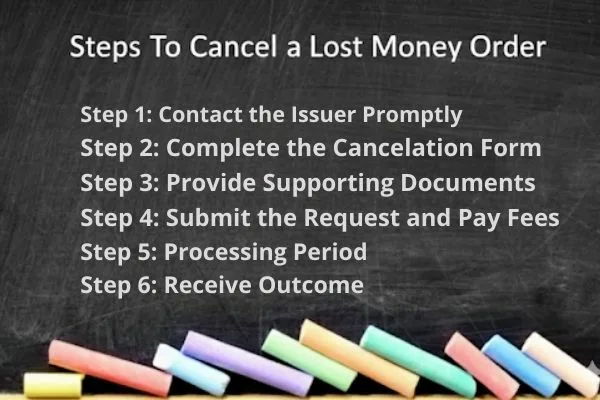
Steps To Cancel A Lost Money Order
Canceling a lost money order involves several straightforward steps. Completing each stage carefully can improve your chances of recovering your funds while avoiding unnecessary delays.
Step 1: Contact the Issuer Promptly
Contact the financial institution or money order issuer as soon as you realize the money order is missing.
Be prepared to provide information such as:
- Purchase date
- Purchase location
- Amount
- Payee name
- Serial or tracking number (if available)
Reporting the loss promptly allows the issuer to begin reviewing the status of the money order before it is negotiated.
This approach also aligns with general consumer protection guidance encouraging customers to report payment issues as soon as they are discovered.
Step 2: Complete the Cancellation Request
Most issuers require you to complete a cancellation or replacement request form.
This form typically asks for:
- Serial number
- Purchase amount
- Purchase date
- Payee information
- Your contact information
If you have the original purchase receipt, include it with your request. Carefully review the information before submitting the form, since missing or inaccurate details can delay processing.
Some issuers may require acceptable identification documents to confirm your identity.
Step 3: Provide Supporting Documents
Supporting documentation helps verify ownership of the money order.
Depending on the issuer, this may include:
- Original purchase receipt
- Government-issued identification
- Transaction confirmation
- Purchase records or other supporting documents
If the original receipt is unavailable, some issuers may still process your request using alternative information. However, additional verification is often required, and the review process may take longer.
Customers sending international payments may also find it helpful to review KYC and cross-border payment requirements for additional background.
Step 4: Submit the Request and Pay Fees
Submit your completed request using the method required by your issuer. Depending on the provider, this may be done online, by mail, or in person.
Many issuers charge a cancellation or tracing fee. The amount, refund eligibility, and payment requirements vary by provider, so review the issuer’s current policies before submitting your request.
Keep copies of all forms, receipts, and payment confirmations for your records.
Step 5: Processing Period
After receiving your request, the issuer reviews the status of the money order to determine whether it has already been negotiated.
Processing times vary depending on the provider and the complexity of the request. If additional documentation is needed, the issuer may contact you before making a final decision.
Step 6: Receive The Decision
Once the review is complete, the issuer will notify you of the outcome.
If your request is approved, the issuer may provide a replacement money order or refund according to its policies.
If the request is denied because the money order has already been cashed or ownership cannot be verified, the issuer will generally explain any additional options that may be available.
Example Case
Imagine you mailed a $400 money order for rent. After a week, your landlord informs you that it never arrived.
You immediately contact the issuer, complete the cancellation request, and provide your purchase receipt. After reviewing the transaction, the issuer confirms the money order had not been cashed and issues a replacement, allowing you to make your payment without losing the funds.
If the receipt had been lost, the issuer might instead request additional information, such as the purchase location, approximate purchase date, and amount, before continuing the review.
Situations like this highlight why keeping your receipt and acting quickly can significantly improve the cancellation process.
What If You Lost Your Receipt?
Losing your receipt does not necessarily prevent you from requesting a cancellation, but it can make the process more complicated.
Most issuers use the receipt’s serial or tracking number to locate the money order quickly. If you no longer have the receipt, they may ask for additional information to verify ownership before reviewing your request.
You may be asked to provide details such as:
- Purchase amount
- Purchase date
- Purchase location
- Payee name
- Approximate time of purchase
- Payment method used
Because additional verification is required, cancellation requests submitted without the original receipt often take longer to process than requests that include complete purchase documentation.
To avoid future delays, consider taking a photo or creating a digital copy of your receipt immediately after purchasing a money order.
What Happens After You Submit A Cancellation Request?
After your cancellation request is received, the issuer reviews the transaction to determine whether the money order remains outstanding or has already been negotiated.
During the review process, the issuer may:
- Verify the purchase information you provided.
- Confirm whether the money order has been cashed.
- Request additional documentation if necessary.
- Review transaction records to confirm ownership.
Once the review is complete, the issuer will notify you of the outcome.
Depending on the results, they may:
- approve your cancellation request;
- issue a replacement money order;
- provide a refund if allowed under their policies;
- deny the request because the money order has already been negotiated; or
- request additional information before making a final decision.
Because every issuer follows its own procedures, processing times, fees, and available remedies vary. Always follow the instructions provided by the issuer handling your money order.
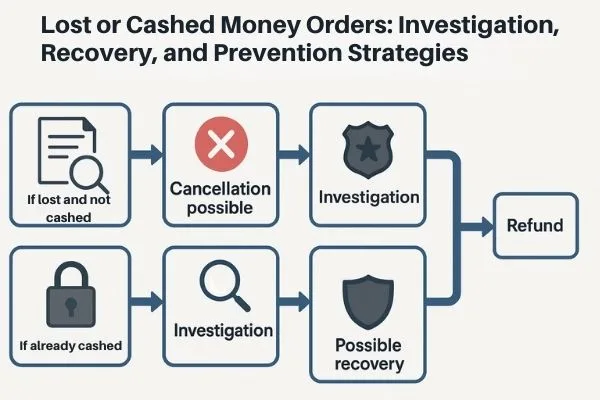
Cashed Money Orders: Investigation, Recovery, And Prevention Strategies
Once a money order has been cashed, cancellation is no longer possible. At that point, recovery depends on fraud investigation, available documentation, and the issuer’s procedures. Understanding your options can help you respond appropriately while also reducing the risk of similar problems in the future.
When Cancellation Is No Longer An Option
If the money order has already been cashed, cancellation is no longer available.
Instead, you may request a copy of the negotiated money order or other transaction records, depending on the issuer’s policies. These records may include information such as signatures, processing locations, or endorsement details that help determine whether the payment was completed as intended.
Reviewing this information can help identify possible errors or unauthorized activity.
Steps To Take if Fraud Is Suspected
If you believe your money order was cashed fraudulently, contact the issuer immediately and explain the situation.
Be prepared to provide any documentation you still have, including:
- your purchase receipt;
- transaction information;
- copies of related correspondence; and
- any information supporting your claim.
Depending on the circumstances, the issuer may begin a fraud investigation or advise you of additional reporting procedures that may apply.
Recovery Limitations
Once funds have been withdrawn through a negotiated money order, reimbursement is not guaranteed.
Recovery depends on the issuer’s investigation, the available evidence, and the facts of the case. If unauthorized activity is confirmed, the issuer will explain any remedies available under its policies.
Because each situation is different, contacting the issuer as soon as possible gives you the best opportunity to begin the appropriate review process.
How To Buy Money Orders Safely
Good habits before mailing a money order can reduce the likelihood of future problems.
Always:
- write the payee’s name immediately;
- complete all required fields before leaving the purchase location;
- verify the payment amount; and
- treat the money order like cash.
For more detailed guidance on preventing delivery problems, read our article on Common Reasons Why a Money Order Gets Lost in Transit.
Why Receipts Are Essential for Protection
Your purchase receipt is one of the most important documents you’ll need if a money order is ever lost.
It allows the issuer to identify the transaction quickly and usually makes cancellation or tracing much easier.
Consider storing both the original receipt and a digital copy until you know the transaction has been completed successfully.
Best Ways to Mail a Money Order Securely
Although no mailing method eliminates every risk, a few simple precautions can help protect your payment.
Whenever practical:
- use a mailing service that provides tracking;
- place the money order inside a plain envelope;
- avoid writing anything on the envelope that indicates cash or payment is enclosed; and
- mail it promptly rather than leaving it unattended.
How to Store Money Orders Safely Before Sending
If you cannot mail your money order immediately, keep it in a secure location until you’re ready to send it.
Avoid leaving it in vehicles, unlocked desks, or other places where it could be lost, damaged, or stolen.
Simple precautions can help prevent unnecessary cancellation requests later.
Safe Handling Tips for Money Order Recipients
Recipients should deposit or cash a money order as soon as reasonably possible after receiving it.
If immediate deposit isn’t possible, store the money order securely until it can be processed.
If the money order is lost before being deposited, notify the sender promptly. Because the purchaser generally initiates cancellation requests, timely communication helps avoid unnecessary delays.
Customers who frequently send or receive payments may also wish to explore available money transfer services when appropriate for their needs.
Real-Life Scenario
Consider a college student who received a $750 money order for tuition expenses.
Before depositing it, the student accidentally misplaced the money order and immediately notified the sender. Because the sender still had the purchase receipt, they were able to contact the issuer and begin the cancellation process before the money order was negotiated.
After the issuer completed its review, a replacement money order was issued.
Although every situation is different, this example demonstrates why acting quickly and keeping purchase records can significantly improve the chances of resolving a lost money order.
Conclusion
Canceling a money order after it gets lost in the mail requires quick action and accurate information. In many cases, cancellation is possible only if the money order has not yet been cashed. Reporting the loss promptly, keeping your purchase receipt, and providing complete transaction details can improve the review process and increase the likelihood of a successful outcome.
If the money order has already been negotiated, cancellation is generally no longer available. However, you may still be able to request transaction records or begin a fraud investigation if unauthorized activity is suspected. Because every issuer follows its own procedures, always rely on the provider’s official instructions regarding eligibility, required documentation, fees, processing times, and available remedies.
Taking a few preventive steps such as completing the payee information immediately, storing your receipt securely, and using trackable mailing services when appropriate can also reduce the chances of future problems.
For official instructions, always contact your money order issuer directly.
Disclaimer: This article is provided for general educational purposes only. Cancellation procedures, fees, processing times, and available remedies vary by issuer. Always follow your financial service provider’s official policies and instructions.
Frequently Asked Questions
Q1: Can I Cancel A Money Order If It Was Lost In The Mail?
A: Yes, if it has not been cashed. Contact the issuer promptly, submit the required cancellation request, provide supporting documents, and follow the issuer’s instructions.
Q2: How Long Does Cancellation Take?
A: Processing times vary by issuer and may take several weeks, especially if additional verification is required.
Q3: What Documents Are Needed?
A: Most issuers request your purchase receipt (preferred), a completed cancellation form, government-issued ID, and transaction details. If the receipt is missing, additional verification may be required.
Q4: Can I Get A Refund After It Has Been Cashed?
A: Generally, no. If the money order was negotiated without authorization, contact the issuer immediately to ask about available investigation procedures.
Q5: What If I Lost My Receipt?
A: Provide the purchase amount, date, location, and payee information. Some issuers can locate the transaction, but processing may take longer.
Q6: How Can I Prevent A Money Order From Getting Lost?
A: Keep your receipt, complete the payee information, use trackable mailing when practical, and report any missing money order immediately.

John is a Content & SEO Specialist who enjoys breaking down complex financial topics, like cross-border payments and money transfers, into content that’s easy to understand. He focuses on creating practical, search-driven content that helps people find answers and make informed decisions.


