


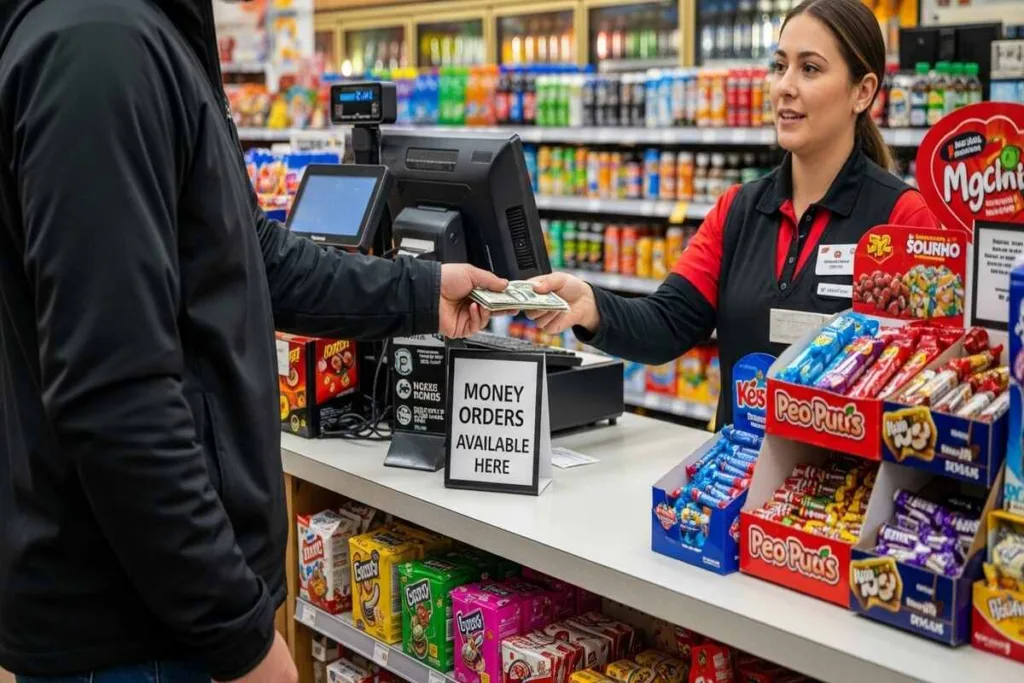
Buying a Money Order at a convenience store is one of the easiest ways to make secure payments without using cash or personal checks. A Money Order is a prepaid document that guarantees funds to the recipient, making it ideal for rent, bills, or mailed payments. Most convenience stores let you purchase one with cash, fill in the recipient’s details, and keep a receipt for tracking.
You must show valid identification for higher amounts and follow simple compliance rules under the Bank Secrecy Act. Using trusted providers like Order Express ensures your transaction stays safe, traceable, and compliant with federal and state money service laws.
Buying a money order at a convenience store is only the first step. Understanding how to fill out, track, and cash a money order safely helps ensure your payment reaches the right recipient without unnecessary delays or mistakes.
Note: Order Express is a licensed Money Service Business (MSB) regulated by FinCEN and complies with federal and state financial laws.

Understanding Money Orders And Their Purpose
Before heading to a convenience store to purchase a money order, it helps to understand how this secure payment option works and why it remains a trusted choice. Money orders give customers a safe way to send funds without relying on cash or personal checks, offering convenience, traceability, and peace of mind for both sender and recipient.
What A Money Order Is And Why People Use It
A Money Order is a prepaid paper form that works like a guaranteed payment. It lets you send money without sharing personal bank details. Because it is prepaid, it helps protect both the sender and the recipient from insufficient funds or fraudulent checks.
Customers often use Money Orders to pay landlords, small businesses, or family members who prefer secure, traceable payments. They can also be used to mail funds safely when electronic payments are unavailable or when payees require a guaranteed instrument.
Benefits And Limitations
Money Orders are widely accepted, easy to track, and safer than sending cash. Most convenience stores charge a small fee, often between one and five dollars. However, each location may set its own fee limits and service hours.
Most stores limit individual Money Orders to $1,000. If you need to pay more, you’ll need to purchase multiple Money Orders and pay separate fees for each. Remember that stores may stop processing these transactions before closing time even if the rest of the store remains open.
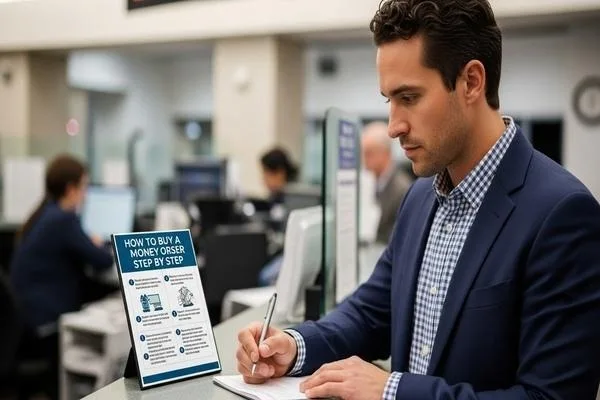
How To Buy A Money Order Step By Step
Buying a Money Order is simple once you know what to expect. This step-by-step guide explains everything from preparation to post-purchase tracking so you can complete your transaction quickly, safely, and without mistakes.
Before You Go: What To Bring
Successful purchases start with preparation. Bring these essentials:
- Valid identification. Most stores require a government-issued photo ID such as a driver’s license, state ID card, or passport.
- Exact payment amount. Calculate the total including the Money Order fee so you bring enough cash.
- Accepted payment form. Most convenience stores only accept cash for Money Orders. Some may allow debit cards, but credit cards are rarely accepted because of cash-advance rules.
- Recipient information. Bring the correct spelling of the recipient’s name and any account number if the Money Order will pay a business or utility.
At The Counter
Once you locate a participating convenience store, go directly to the counter and ask to purchase a Money Order. Specify the amount you need, present your ID, and pay using an approved payment method. The clerk will calculate the fee and issue your Money Order.
You will then fill in:
- The recipient’s name (Pay to the Order Of)
- Your name and address
- Your signature
- The memo line for payment purpose or account number
Never leave any line blank. A partially completed Money Order is like unsigned cash, it can be stolen or altered.
After Purchase: Recordkeeping And Tracking
Always separate and keep your receipt. It includes the tracking number used to verify when the Money Order is cashed. If it’s lost or stolen, you can request a cancellation or replacement, though a processing fee usually applies.
Many issuers provide online or phone-based tracking. Use these services to confirm payment delivery and reduce fraud risk.
Order Express Record Retention Policy: All customer identification and transaction records are securely retained by Order Express for a minimum of five (5) years in compliance with federal and state regulations.
Staying Compliant When Using Money Orders
Buying or sending a Money Order might seem simple, but behind every transaction are important federal rules designed to protect you and the financial system. Understanding these regulations, and how Order Express enforces them, helps ensure your payments remain secure, transparent, and fully compliant.
Order Express Policy – OFAC Sanctions Screening: Order Express screens all transactions and customers against the U.S. Treasury’s Office of Foreign Assets Control (OFAC) sanctions lists. Transactions involving prohibited countries, individuals, or entities are automatically blocked and reported to the Compliance Department.
Federal Rules And Responsibilities
Money Orders are regulated under the Bank Secrecy Act (BSA) and related anti-money laundering (AML) laws. Federal regulations require businesses that issue or sell Money Orders to verify identification for transactions that reach certain thresholds. For example, any single or related transaction totaling $3,000 or more within a short period must include verified ID and recordkeeping.
Customers must provide valid identification for such transactions. Financial institutions and money service businesses file reports, such as Currency Transaction Reports (CTR) or Suspicious Activity Reports (SAR), when they detect unusual or structured activity. Structuring means breaking one large purchase into smaller ones to avoid reporting. This is illegal under federal law.
Key reminders:
- Always provide accurate information when purchasing a Money Order.
- Do not divide transactions to avoid ID checks or reporting requirements.
- Keep your receipt as proof of purchase and compliance.
Order Express Procedures And Customer Expectations
Order Express follows all federal and state requirements for money services businesses. Its agents verify customer identity when required and maintain transaction records for at least five years.
Order Express customers may be asked for identification on transactions of $3,000 or more, or when other regulatory triggers apply. This process ensures compliance with AML laws and helps protect customers from fraud or misuse.
Order Express also monitors transactions to prevent money laundering, terrorist financing, or fraudulent activity. Employees and agents receive annual training to identify and report suspicious patterns as required by the BSA, FinCEN and USA PATRIOT Act.
Order Express Policy Note:
Under Order Express internal procedures, Currency Transaction Reports (CTRs) are filed by the Compliance Department for any cash transaction exceeding $10,000 in a single business day. Customers are not responsible for filing these reports but must provide complete and accurate information.
Similarly, Suspicious Activity Reports (SARs) are filed by Order Express when suspicious transactions or patterns are detected. Employees and agents are trained to identify and report such cases internally, not directly to law enforcement.
Agent Reporting Obligation: Agents and authorized delegates must immediately report any suspicious transaction or customer activity to the Order Express Compliance Department by phone at 1-888-666-1602 or email cumplimiento-usa@orderexpress.com.
Direct reporting to regulators or law enforcement is not permitted without prior authorization.
By following these internal controls, Order Express ensures each transaction remains safe, transparent, and compliant.
Security Considerations For Customers
Once issued, a Money Order functions like cash. Keep it safe and safeguard data until it reaches the recipient. Use these steps to protect your funds:
- Fill in the recipient’s name immediately after purchase.
- Never sign or send a blank Money Order.
- Keep your receipt and record the tracking number.
- Send high-value Money Orders through trackable mail.
- Avoid endorsing the Money Order until you’re ready to deliver or mail it.
Common Mistakes To Avoid
- Writing the wrong recipient name or leaving it blank
- Losing the receipt, which complicates replacement or tracking
- Exceeding the store’s limit and having to purchase multiple Money Orders
- Trying to use a credit card for payment, which can trigger cash-advance fees
Smart Choices And Safe Practices For Using Money Orders
Money Orders can be a practical tool for secure payments, but understanding when to use them, how to avoid scams, and what other financial services are available can help you make smarter choices. By learning how to spot fraud, knowing when a different payment method may work better, and using only verified providers, you can protect your money and ensure every transaction stays safe, traceable, and compliant.
When A Money Order May Not Be Best
Although convenient, Money Orders may not fit every situation. For large or urgent payments, consider a bank check, money transfer, or electronic payment app. Electronic transfers often settle faster, while Money Orders remain ideal for physical or mail-based transactions.
If you need to pay a business that requires traceability but doesn’t accept cash, a Money Order offers a clear record of payment and can be easily verified.
Preventing Fraud And Scams
Fraudsters sometimes use Money Orders or check cashing scams to deceive consumers. Be alert to red flags:
- Someone you don’t know asks you to send or cash a Money Order for them.
- You receive an overpayment Money Order and are told to return part of the money.
- Someone posing as a company representative requests payment for fake fees or prizes.
Never send funds to unknown individuals. If an offer sounds suspicious, contact the issuing company or Order Express customer service before proceeding.
Understanding Related Services
Convenience stores often provide other financial services, such as bill payments, prepaid cards, and check cashing. These services are subject to similar AML and identification rules.
Check cashing businesses must verify customer identity and may require additional documentation when transactions exceed $3,000, depending on state regulations. Order Express maintains limits aligned with federal guidelines and monitors all financial activities to protect consumers and the integrity of the payment system.
Using licensed financial providers like Order Express ensures your transactions meet both regulatory and safety standards.
Conclusion
Buying a Money Order at a convenience store is simple when you prepare properly and understand compliance requirements. Bring valid ID, know your payment amount, and fill out all sections clearly. Keep your receipt and follow safe handling practices.
Whether you’re paying rent, sending funds to family, or making secure payments, a Money Order remains a reliable choice. By following Order Express’s best practices and federal rules, you can complete every transaction with confidence and peace of mind.
Remember: Always provide true information, avoid splitting transactions, and use trusted service providers for all financial services, including check cashing and bill payments.
Disclaimer: This article is for general informational purposes only. It does not replace legal, compliance, or financial advice. Federal and state regulations may vary. Order Express operates in compliance with the Bank Secrecy Act, the USA PATRIOT Act, and applicable state money services laws. Customers should review their own transaction details and contact Order Express for specific questions about identification, recordkeeping, or reporting requirements.
Visit your nearest authorized Order Express location to purchase a Money Order or access other financial services safely and confidently!
Customer Service and Complaint Resolution: Order Express welcomes feedback and complaints regarding our services.
- Call 1-888-666-1602 (toll-free)
- Email customer.service@orderexpress.com
- Mail: 685 W. Ohio St, Chicago, IL 60654
All complaints are reviewed by the Compliance Department in accordance with Section 19 of the BSA/AML Corporate Compliance Manual.
FAQs
What do I need to buy a Money Order at a convenience store?
Bring a government-issued photo ID, exact payment amount (cash or debit), and the recipient’s full name and address.
How do I fill out a Money Order correctly?
Write the recipient’s name, your name, address, and signature. Add any account or memo details, then keep your receipt.
What should I do if my Money Order is lost or stolen?
Use your receipt’s tracking number to request a cancellation or replacement through the issuer’s customer service.
When do I need to show ID for a Money Order?
Federal rules require ID verification for transactions of $3,000 or more, or related purchases within a short period.
How can I avoid Money Order scams?
- Never send funds to strangers.
- Verify payment requests directly with the company.
- Report suspicious activity to customer service or law enforcement.
This content has been reviewed for accuracy and alignment with the Order Express BSA/AML Corporate Compliance Manual v25.1 (January 2025) and applicable federal AML regulations. For questions, contact the Order Express Compliance Department at cumplimiento-usa@orderexpress.com.

John is a Content & SEO Specialist who enjoys breaking down complex financial topics, like cross-border payments and money transfers, into content that’s easy to understand. He focuses on creating practical, search-driven content that helps people find answers and make informed decisions.


