



Yes, Bitcoin and especially stablecoins are increasingly being used to improve cross-border payments by offering faster, cheaper, and more transparent alternatives to traditional systems like SWIFT and wire transfers. OrderExpress provides comprehensive financial services that help businesses navigate the evolving landscape of digital payments and international money transfers. In 2024 alone, stablecoins processed over $32 trillion, with $6 trillion tied directly to payments. These blockchain-based tools can reduce settlement times from days to minutes, lower transaction costs, and provide 24/7 availability. OrderExpress ensures that all blockchain-based services are operated in full compliance with our BSA/AML program, including identity verification, CTR and SAR filing obligations, and OFAC screening.
This article explains how blockchain is transforming international payments, compares stablecoins to traditional rails, and outlines how businesses can integrate these tools while staying compliant with FATCA, IRS rules, and global AML regulations. Whether you’re paying global contractors, settling with international suppliers, or expanding into new markets, blockchain can streamline operations and reduce friction, especially when used through a trusted payment partner.

How Blockchain Is Changing Cross-Border Payments
Blockchain and cryptocurrencies are emerging as real alternatives to traditional cross-border payment systems. As businesses seek faster and more cost-efficient ways to move money across borders, stablecoins are gaining attention for their unique advantages and limitations.
When comparing cross-border payment options, four key factors matter most: speed, cost, reliability, and ease of use. Stablecoins perform well in some of these areas, but there are still trade-offs compared to more established systems.
- Speed: Stablecoin payments can settle globally in seconds. They operate 24/7, unlike ACH or SWIFT transfers, which often take days.
- Cost: Stablecoin transactions are generally low-cost. However, gas fees on some blockchains can spike, making costs less predictable.
- Reliability: Performance depends on the stability of the underlying blockchain. When networks are congested or under stress, reliability can drop.
- Ease of Use: Stablecoin payments require crypto wallets, which many users find unfamiliar. Cards and bank transfers remain more intuitive for most people.
For cross-border business payments, stablecoins can streamline operations. They reduce friction, especially when sending large or frequent payments to international partners. But for everyday consumer use, traditional payment methods, especially cards remain dominant, particularly in countries like the United States. Modern money transfer services are adapting to incorporate both traditional and blockchain-based solutions.
Comparing Payment Methods for Cross-Border Use
| Method | Speed | Cost | Reliability | Ease of Use |
| Stablecoins | Near-instant, global 24/7 | Low fees, but gas fees can spike | High, depends on blockchain | Moderate, wallets required |
| Cards | Instant authorization, 1–3 day settlement | 1–3%, often high for merchants | Very high, widely trusted | Very high, easy to use |
| ACH | 1–3 days (domestic only) | Low fees | High | Common in U.S. |
| Wire Transfers | Same-day domestic, 1–2 days international | $1–$50 per transaction | Very high, but bank-dependent | Reliable, but slower |
In 2025, stablecoins resemble early cloud computing: powerful, but not yet seamless for every business case. Many companies are still learning how to integrate them into existing systems. Concepts like wallets, keys, and blockchains remain complex for newcomers.
Still, just as cloud computing removed the need for companies to manage their own servers, stablecoins have the potential to simplify cross-border payments. They could make money movement as smooth and programmable as sending data. Over time, stablecoins may remove intermediaries, reduce costs, and become the unseen infrastructure powering global commerce.
To use these tools effectively, companies must ensure compliance with regulations like FATCA, follow IRS reporting rules, and stay updated with CFPB guidelines. Clear policies and trusted service providers are essential for secure adoption.

Where the Industry Is Headed
Stablecoins are expanding faster than any other cross-border payment method today. In just five years, total supply grew from $5 billion to over $220 billion.
In 2024, stablecoins processed $32 trillion in transaction volume. Around $6 trillion of that was tied directly to payments, not trading. That’s about 3% of the total estimated $195 trillion global cross-border payments market.
Over the next five years, this share is expected to grow significantly. Experts forecast stablecoins could support up to 20% of all global cross-border payments by 2030. That would represent $60 trillion in annual volume, a massive shift in how international payments are made.
Traditional financial institutions are paying attention. Banks and fintechs alike are now investing in blockchain-based payment solutions. This includes major players like Visa launching tokenized asset platforms, Worldpay enabling stablecoin payouts, and Bank of America planning its own digital currency.
These developments show that blockchain is no longer just for startups. It’s becoming a serious part of the financial system. As stablecoin adoption increases, businesses and financial service providers must stay informed and compliant with global standards, including FATCA and IRS reporting requirements.
For cross-border payments, the industry is entering a new phase, one where speed, transparency, and programmability are becoming standard, not optional. Bitcoin services are helping businesses navigate this transition safely and compliantly.
Understanding Blockchain Options for Cross-Border Payments
Organizations looking into blockchain for cross-border payments will have different needs. These vary based on how much control, customization, or integration they require with traditional banking systems.
Businesses exploring blockchain payments have several paths. They can:
- Partner with a provider that manages blockchain transactions end-to-end
- Use pre-built infrastructure to set up their own payment flows
- Build custom payment solutions directly on public blockchain networks
Each option has different trade-offs in terms of cost, flexibility, and technical complexity. Choosing the right one depends on your payment volume, regions, and compliance requirements.
Four Common Blockchain Payment Models
When selecting a blockchain partner for cross-border payments, most businesses encounter one of four provider types:
- Proprietary Blockchain with Native Token: These providers control their own blockchain and require use of a specific token for payments. Example: A platform that handles settlement using only its native crypto token.
- Proprietary Blockchain, Token-Agnostic: These services also own their blockchain, but support many tokens rather than just one. Example: A network that supports programmable payments without limiting you to one digital currency.
- Blockchain-Agnostic with Native Token: These platforms operate across several blockchains but issue a key token used for transactions. Example: A company that offers a well-known stablecoin and supports payments across many networks.
- Multi-Chain, Multi-Token Providers: These platforms work with multiple blockchains and tokens, offering maximum flexibility. Example: A service that supports both fiat and many stablecoins for cross-border payments.
How Blockchain Supports International Payments
More financial platforms are using blockchain to speed up global money transfers. These systems often combine digital payments with traditional rails to improve efficiency.
- Paying Global Contractors in Stablecoins: Businesses can send stablecoin payments directly to overseas workers or partners. Transactions can be funded from standard business accounts in USD or local currency.
- Accepting Stablecoins from International Customers: Companies can receive customer payments in stablecoins and automatically convert them to local fiat currencies like USD, EUR, or MXN.
- Mixing Blockchain and Fiat Payments: Some platforms use a hybrid model called a “stablecoin sandwich.” Funds start in fiat, move via blockchain, then settle again in fiat. This improves speed and reduces fees.
As blockchain tools evolve, it’s important for businesses to ensure compliance with tax and reporting standards. Following FATCA and IRS guidelines and working with trusted providers can help reduce risks in cross-border transactions.

How Blockchain Enables Cross-Border Payments
Blockchain itself isn’t a payment system, it’s the technology that supports payment applications. In cross-border payments, blockchain provides a neutral, borderless network. Anyone with internet access and a blockchain wallet can send or receive stablecoins, without needing access to local banks.
This makes blockchain useful for global transactions, especially in regions where traditional financial infrastructure is limited or unreliable. Payments over blockchain move directly between parties and settle quickly, often in minutes.
Most individuals set up crypto wallets through centralized platforms like Coinbase. These platforms store users’ digital assets and simplify access to blockchain networks.
Businesses usually work with licensed payment partners to handle blockchain-based cross-border transactions. These partners offer hosted wallets, secure payment tools, and regulatory compliance features.
They also help with key services such as converting stablecoins to local currencies, transaction tracking, and financial reporting. These tools make blockchain more practical and secure for business use in global payments. For all qualifying transactions, OrderExpress requires identification and reporting as outlined in our Know Your Customer (KYC) and Suspicious Activity Reporting (SAR) procedures.
By working with regulated partners, companies can also ensure compliance with cross-border regulations such as FATCA, IRS rules, and local financial laws. This approach reduces risk while enabling faster, cheaper global money movement. Many businesses also utilize check cashing services as part of their comprehensive financial strategy.
How a Cross-Border B2B Payment Works Using Stablecoins
Here’s a simple example of how a business can use stablecoins to pay an international supplier.
A business in the U.S. needs to pay a supplier in Singapore. The supplier chooses to receive payment in USDC, a popular stablecoin.
- The business logs into its digital payments platform such as one provided by a fintech partner. They click “Send,” then enter the supplier’s wallet address, select USDC as the currency, and enter the amount.
- The platform displays any fees. Depending on setup, the business can send the payment using funds from a fiat balance or a stablecoin wallet.
- Once confirmed, the payment is submitted to the blockchain. The network checks that the business holds enough USDC to complete the transfer. The transaction is added to a block and verified by multiple blockchain nodes.
- Within minutes, the transaction is validated and recorded on the blockchain. It becomes visible to both parties, ensuring transparency and traceability.
- The platform updates the payment status and adjusts the business’s account balance. If needed, this whole process can be automated using APIs for seamless integration into internal systems. In accordance with our AML obligations, any business payments exceeding $10,000 in cash equivalent must be accompanied by a Currency Transaction Report (CTR), and any suspicious activity will trigger a Suspicious Activity Report (SAR), even when conducted via stablecoins.
This approach gives businesses faster settlement times, global reach, and better control over payment flows. It also reduces reliance on traditional cross-border banking networks, while remaining secure and auditable.
How a Customer-to-Business Cross-Border Payment Works with Stablecoins
Here’s how a customer can use stablecoins to pay a business across borders:
- At checkout, the business offers a crypto payment option. This is usually enabled through a stablecoin payment provider integrated into their system.
- The customer chooses to pay with digital currency. They select the type of stablecoin such as USDC or USDT and the blockchain network they want to use. The system shows the current exchange rate and a wallet address for the business.
- The customer opens their crypto wallet, enters the business’s public address, and sends the payment. They also pay a small blockchain processing fee.
- The blockchain network checks the transaction to confirm that the customer has enough stablecoins to complete the payment.
- The transaction is added to a block and validated by nodes on the network. After at least three nodes confirm the block, the payment is completed and recorded on the blockchain.
- The customer sees a confirmation message at checkout. Their wallet balance updates to reflect the payment.
This process allows businesses to accept cross-border payments without relying on card networks or banks. It’s fast, transparent, and can reduce transaction costs especially for global e-commerce or remote service payments.
Key Blockchain Features That Support Cross-Border Payments
The unique structure of blockchain technology enables more open and efficient global payment systems. Several core features make blockchain especially well-suited for cross-border transactions.
Decentralized and Open to All
Blockchains aren’t controlled by a single institution. Traditional payments run through banks and card networks that decide who can use them and what fees apply. Businesses or individuals may be excluded without reason. In contrast, decentralized blockchains are open by default. Anyone with internet access and a smartphone or computer can send or receive digital payments globally.
Always Available, Anytime
Blockchains work around the clock, 24 hours a day, 7 days a week, 365 days a year. This allows cross-border payments to be sent at any time, even on weekends or public holidays, unlike traditional banks with limited hours.
Security Through Consensus
Instead of relying on a single central authority, blockchains use consensus mechanisms. Nodes and miners verify each transaction together. This shared responsibility helps ensure data accuracy and keeps the network secure.
Redundant by Design
Blockchain networks are supported by thousands of independent nodes. Each node stores a full copy of the transaction history. Even if many nodes go offline, the system keeps running. This makes blockchains more resilient than centralized databases.
Fully Transparent Records
Each transaction is visible on the public blockchain ledger. Businesses can review payment history at any time, track funds from origin to destination, and verify details for audits or compliance purposes.
Encrypted and Secure
The term “crypto” comes from cryptography, the use of code to protect data. While blockchain payments are encrypted and secure, OrderExpress does not permit anonymous payments. All transactions are subject to identity verification, transaction monitoring, and compliance with applicable BSA/AML regulations, including OFAC screening.
These features make blockchain an effective tool for modern cross-border payment needs. When paired with trusted partners and regulatory oversight, it offers businesses a faster and more accessible alternative to legacy financial systems.
Practical Use Cases for Blockchain and Stablecoins in Cross-Border Payments
Blockchain and stablecoins are reshaping how businesses manage international payments. They provide faster, lower-cost alternatives to traditional banking channels, especially for cross-border transactions.
Here are some of the most common B2B use cases for stablecoins in global payments:
1. Treasury and Intra-Company Transfers
Global companies often need to move funds between their entities to meet liquidity, regulatory, or operational needs. Moving money across national banking systems can be slow and expensive. Stablecoins offer a faster way to transfer value between jurisdictions. They also help reduce the need to prefund bank accounts in different countries, especially in emerging markets where access to foreign currency is limited.
2. Paying International Suppliers
Stablecoins allow businesses to pay global suppliers quickly and securely. Instead of waiting days for wire transfers to clear, companies can use blockchain to settle invoices in minutes. This speeds up supply chain payments and improves cash flow for both parties.
3. Merchant Settlement Across Borders
Fintechs and payment processors may use stablecoins to settle with international merchants. This method can speed up fund delivery while avoiding delays linked to cross-border banking restrictions. It’s especially helpful for merchants operating in regions with limited access to stable financial infrastructure.
4. Payment Service Provider (PSP) Settlement
Stablecoins can also improve settlement between PSPs across countries. In this model, often called a “stablecoin sandwich” one PSP collects local payments and converts them to stablecoins. These are sent instantly to a partner PSP abroad, which converts the funds into fiat and settles with local merchants using domestic rails. This reduces cost and settlement time across the entire transaction chain.
These use cases show how blockchain and stablecoins can streamline cross-border payments in real-world business operations. They help reduce reliance on legacy banking infrastructure while supporting compliance with global financial regulations like FATCA, IRS reporting, and other local standards.
Real-World Uses of Blockchain in Cross-Border Payments
Blockchain and stablecoins support a wide range of international payment use cases from businesses to consumers and everything in between. These tools offer speed, transparency, and lower costs compared to traditional banking channels.
E-commerce and High-Value Online Purchases
Retailers in sectors like luxury goods, travel, and online marketplaces are accepting stablecoin payments. This opens access to global customers, especially crypto-native buyers. Blockchain offers a secure and transparent way to complete high-value purchases without bank delays.
Deposits and Withdrawals on Digital Platforms
Trading platforms and foreign exchange brokers allow users to deposit or withdraw funds in stablecoins. iGaming operators use the same model to let players top up accounts or withdraw winnings across borders, with faster settlement and reduced fees.
Wage Payments to Global Workers
Companies working with international freelancers or remote employees are using stablecoins for payroll. Workers can receive earnings in crypto or stablecoins, allowing for quicker access to wages without relying on local banking systems.
Paying Marketplace Sellers Worldwide
Online marketplaces are using blockchain payments to pay sellers across countries. Instead of waiting for traditional wire transfers, sellers can receive stablecoins quickly, helping improve cash flow and business operations.
Cross-Border Remittances
Blockchain enables faster and cheaper remittance payments to countries where banking access is limited. Many lower-middle-income countries such as the Philippines, Nigeria, and Vietnam, have growing adoption of crypto for person-to-person transfers. Stablecoins offer a secure way to send money home, even without a bank account. Organizations like the National Immigration Law Center provide resources to help immigrant communities understand their financial options.
Enabling Small Transactions (Micropayments)
Blockchain allows secure micropayments, small transfers typically under $10. This supports business models like tips, content paywalls, royalties, or digital ads. Crypto units can be divided into tiny amounts (e.g., one “sat” in Bitcoin is 0.00000001 BTC), enabling transactions that wouldn’t be cost-effective using card or bank fees.
Crowdfunding and Charitable Giving
Stablecoins and crypto can also support global crowdfunding efforts. Donors from any country can send funds directly to a project. Blockchain makes it easy to track how funds are used, increasing transparency and accountability for both creators and donors.
These consumer and business use cases highlight how blockchain is changing global payments. Whether sending wages, collecting sales, or supporting a cause, stablecoins help reduce barriers, speed up access, and improve trust in international money movement.
OrderExpress is dedicated to protecting all customers, including seniors and vulnerable adults, from financial exploitation. If you suspect financial abuse, please contact our compliance team immediately.

Why Use Blockchain for Cross-Border Payments?
Blockchain technology offers unique advantages over traditional banking systems for international payments. Its structure removes many of the barriers found in legacy financial networks. Helping businesses move money across borders more efficiently and securely.
Reach More Customers
Accepting blockchain payments can help businesses expand into new markets. This is especially useful in regions where traditional banking is hard to access. In 2025, an estimated 650 million people worldwide hold cryptocurrency. And 93% of them are open to using it for purchases, not just as an investment.
Major brands like Tesla, Starbucks, and Whole Foods have added crypto as a payment method. Many report that up to 40% of crypto-paying customers are new, and their average purchase value is double that of credit card users. For global businesses, this can mean increased revenue and broader market reach.
Faster, Always-On Payments
Traditional cross-border payments, such as those using SWIFT, can take several days. This delay can create cash flow challenges and require businesses to pre-fund accounts in other countries.
Blockchain solves this with fast settlement usually within minutes and 24/7/365 availability. There are no bank holidays or limited business hours. Stablecoins can replace both the messaging and movement layers used in traditional banking. This speeds up the middle part of the payment journey and reduces delays.
Predictable Outcomes, No Chargebacks
Once a blockchain payment is complete, it cannot be reversed. Transactions are final and recorded permanently on the blockchain ledger. This protects businesses from chargeback fraud and reduces the operational costs of dispute resolution.
With no uncertainty after payment approval, businesses gain better control over finances and fewer interruptions in their payment flow.
Secure Payment Infrastructure
Blockchain is built for secure transactions. It uses encryption to protect payment data and allows two parties to exchange funds without revealing sensitive information. No bank or intermediary is needed to verify the transaction.
Stablecoins are now trusted for billions of dollars in daily transfers. The underlying cryptographic security of blockchain makes it suitable for both large and small transactions worldwide.
Easy to Adopt with Trusted Partners
Businesses don’t need to build or manage blockchain infrastructure themselves. They can work with licensed providers to offer crypto and stablecoin payments. These partners manage wallets, compliance, currency conversion, and risk, so companies get the benefits without the technical or legal burdens.
Transparent and Traceable Transactions
While blockchain payments don’t expose personal details, every transaction is traceable. Each payment is tied to a public wallet address and logged in an immutable ledger. This helps with transaction reconciliation, auditing, and financial reporting.
Blockchain analytics tools can also help detect suspicious activity and ensure compliance with regulations, including FATCA and anti-money laundering (AML) rules.
Reduced Costs
Blockchain reduces the number of intermediaries involved in cross-border payments. Traditional systems often require multiple correspondent banks, each adding time and fees.
Blockchain enables near-direct settlement between sender and recipient. Even when using providers for on- and off-ramping between fiat and stablecoins, businesses can still lower overall costs. One study estimates that blockchain-based cross-border payments could save businesses $10 billion globally by 2030.
In Summary: For businesses moving money internationally, blockchain offers speed, transparency, cost efficiency, and broader access. When used with the right partners and regulatory safeguards, it can reshape how global payments are made. Professional courier services complement digital payment solutions by providing secure physical document delivery when needed.
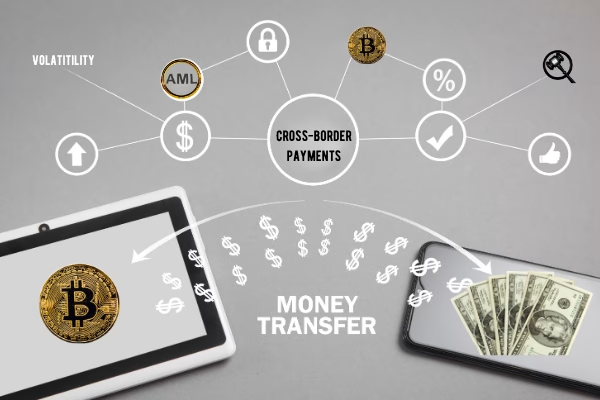
Challenges of Using Blockchain for Cross-Border Payments
While blockchain technology offers clear benefits, it also comes with challenges especially for businesses new to digital payments. Some of these issues are temporary and will improve as the technology matures. Others can be addressed by working with trusted partners who manage complexity and reduce risk.
Volatility and Price Risk
Digital assets can fluctuate in value, which creates risk for businesses holding them on their balance sheet. Stablecoins help limit this risk by being pegged to stable assets like the U.S. dollar. Although some stablecoins have lost their peg briefly, major asset-backed ones have proven reliable. Many companies choose not to hold crypto directly and instead rely on partners who collect, convert, and settle payments in fiat currency.
Limited Network Adoption
Most of the global economy still relies on traditional currencies. While stablecoins can help protect value in inflation-prone regions, everyday expenses like rent and food are still paid in local fiat. For this reason, businesses often need a partner that supports both fiat and stablecoin payments. This flexibility allows them to send or receive stablecoins while still converting to or from major currencies like USD or EUR.
Technical Complexity
Using blockchain payments requires understanding wallets, cryptographic keys, and digital asset security. These technical requirements can be a barrier to adoption. Mistakes such as lost private keys can lead to permanent loss of funds. Businesses can reduce this risk by working with experienced payment providers that manage wallets, security, and onboarding.
Evolving Regulatory Requirements
Regulations for digital assets vary across countries and continue to evolve. Frameworks like MiCA in the EU aim to protect consumers and maintain market stability. Regulators often focus on licensing, crypto promotions, and anti-money laundering (AML) compliance. Businesses can navigate this landscape more easily by working with licensed partners who handle compliance and reporting obligations.
AML Compliance Obligations
AML and counter-terrorism financing rules apply to both fiat and crypto payments. Most jurisdictions follow guidelines set by the Financial Action Task Force (FATF). Crypto service providers must monitor transactions, verify customers, and report suspicious activity. They must also comply with the Travel Rule, which requires sharing sender and recipient details with other providers. With the right tools and partners, AML in crypto can be as effective as it is in traditional finance.
Interoperability Between Systems
Connecting different blockchains or linking blockchain to existing financial systems can be difficult. Some providers operate closed networks using proprietary blockchains or tokens. Others offer multi-chain, token-agnostic platforms that are easier to integrate. Working with a provider that offers flexible APIs can help businesses move money across networks without building everything from scratch.
Energy Use and Sustainability
Some blockchains, like Bitcoin, rely on energy-intensive proof-of-work models. These networks can raise environmental concerns, especially for companies with climate targets. Many newer blockchains use more efficient consensus methods, such as proof-of-stake, which consume far less energy.
In Summary: Blockchain offers many advantages for cross-border payments but challenges remain. These include price volatility, regulatory compliance, and integration with existing systems. Most can be addressed by partnering with licensed providers who offer secure infrastructure, regulatory support, and flexible payment solutions.
Please note: All financial services, including blockchain and stablecoin payments, carry risks such as market volatility, potential for fraud, technical issues, and evolving regulatory requirements. OrderExpress encourages all customers to understand these risks and use our compliance resources before transacting.
How to Add Blockchain to Your Cross-Border Payments Strategy
Businesses exploring blockchain for cross-border payments often face a key challenge: how to unlock the benefits without taking on the risks or complexities of holding crypto assets. Blockchain payments aren’t just about processing transactions, they also require creating seamless user experiences, maintaining regulatory compliance, and managing operational infrastructure. All of this can quickly consume internal resources.
So, how can businesses balance the opportunities of blockchain with the associated risks and overhead?
Partnering to Simplify and De-Risk
Just as traditional fintechs have helped companies simplify card payments and global banking, today’s blockchain payment partners enable businesses to offload complexity and move faster with less risk.
Working with a regulated blockchain payments provider allows businesses to:
- Avoid licensing burdens: Leverage your partner’s regulatory compliance framework so you don’t need to be licensed yourself.
- Keep crypto off your balance sheet: Digital assets can be collected and settled in fiat by your partner.
- Reduce operational overhead: No need to build or manage wallets, blockchain integrations, or compliance tooling in-house.
- Avoid fixed development costs: Partners offer ready-made infrastructure and APIs to get started quickly.
- Protect against volatility: Lock in FX rates and avoid slippage by securing competitive pricing through your provider.
Whether your business wants to dip a toe into crypto or fully embrace digital asset payments, a trusted partner can help you scale at your own pace. Many businesses also leverage vehicle services to ensure secure physical delivery of payment-related documentation.
Choose a Flexible Entry Point
Businesses can choose from different entry points depending on their strategy:
- Accept crypto, settle in fiat: Let customers pay in stablecoins or crypto at checkout, while automatically converting to fiat on the backend.
- Use crypto as a bridge currency: Settle fiat-to-fiat payments using stablecoins to reduce friction in hard-to-reach markets or move funds faster and more affordably.
- Manage wallets and pay partners directly: For advanced users, holding and sending digital assets can unlock full control of treasury and payments across borders.
The key is choosing a partner with the breadth of capabilities to support this entire spectrum.
Adopt a Multi-Rail Payments Approach
Modern payment strategies don’t require choosing between fiat or blockchain. The smartest businesses use multi-rail payments selecting the most efficient route (fiat, stablecoin, or a mix) depending on the currency pair, geography, and speed required.
A capable blockchain partner like BVNK with its Layer1 infrastructure can help orchestrate this, combining traditional payment networks and blockchain rails to optimize global payments for speed, cost, and reliability. Financial education resources from organizations like FDIC Money Smart can help businesses understand the evolving landscape of digital payments.
Conclusion
Blockchain and stablecoins are redefining how businesses handle cross-border payments. These technologies offer faster transactions, lower fees, and global accessibility, key benefits for companies operating in today’s international economy. While traditional systems still play a vital role, stablecoins unlock new levels of efficiency and transparency. Businesses that embrace blockchain now can gain a competitive edge and prepare for the future of digital finance.
To succeed, choose a flexible, regulated partner, ensure regulatory compliance with OFAC sanctions requirements, and adopt a payment strategy tailored to your operational needs. For all digital transactions through OrderExpress, businesses must comply with Customer Identification Procedures, ensure CTR and SAR filings when applicable, and retain transaction records for a minimum of five years per company policy. The global payments landscape is shifting, act today to stay ahead, simplify international money movement, and reduce costs through secure, blockchain-based solutions. Companies can also explore comprehensive other services to build a complete financial ecosystem that supports both traditional and digital payment methods. If you have a complaint or need help with an error or problem, you may contact OrderExpress Customer Service at 1-888-666-1602 or by email at customer.service@orderexpress.com. You can also write to us at 685 W. Ohio St, Chicago, IL 60654.
For questions or consultation, contact us to learn more about implementing blockchain payment solutions for your business.
OrderExpress complies with Consumer Financial Protection Bureau (CFPB) regulations and follows UDAAP rules to ensure that all financial services are provided in a fair, transparent, and lawful manner.
FAQs
1. Is Bitcoin or stablecoins better for cross-border payments?
Stablecoins are better for cross-border payments due to their price stability. Bitcoin’s price fluctuates, creating settlement risk. Stablecoins like USDC are pegged to fiat, reducing volatility. They also process transactions faster and more predictably than Bitcoin. Bitcoin is still useful but mostly for investment or high-value transfers.
2. Do businesses need to hold crypto to use blockchain payments?
No, businesses can avoid holding crypto by using licensed payment providers. These partners convert crypto to fiat instantly. This reduces price risk and regulatory burdens. Businesses simply settle in dollars, euros, or local currencies. It makes adoption easier without changing core financial operations.
3. How do stablecoin payments compare to wire transfers?
Stablecoin payments settle in minutes, while wires take 1–2 days internationally. Stablecoins cost less in most cases. Wires often involve multiple banks, increasing delays and fees. Stablecoins remove middlemen, speeding up settlement. They’re ideal for global partners needing faster payment confirmation.
4. Are blockchain payments secure for international transactions?
Yes, blockchain payments are highly secure due to encryption and consensus mechanisms. Transactions are verified by multiple nodes. This makes them tamper-proof and transparent. Businesses can track every transfer in real time. Partnering with regulated providers ensures full compliance and protection.
5. What are the main challenges of using blockchain in cross-border payments?
Main challenges include crypto price volatility, technical complexity, and evolving regulations. Stablecoins solve volatility but require wallet usage. Regulations vary by country and require expert navigation. Partnering with compliant providers helps manage risks, ensure smooth integration, and avoid legal issues.

John is a Content & SEO Specialist who enjoys breaking down complex financial topics, like cross-border payments and money transfers, into content that’s easy to understand. He focuses on creating practical, search-driven content that helps people find answers and make informed decisions.


