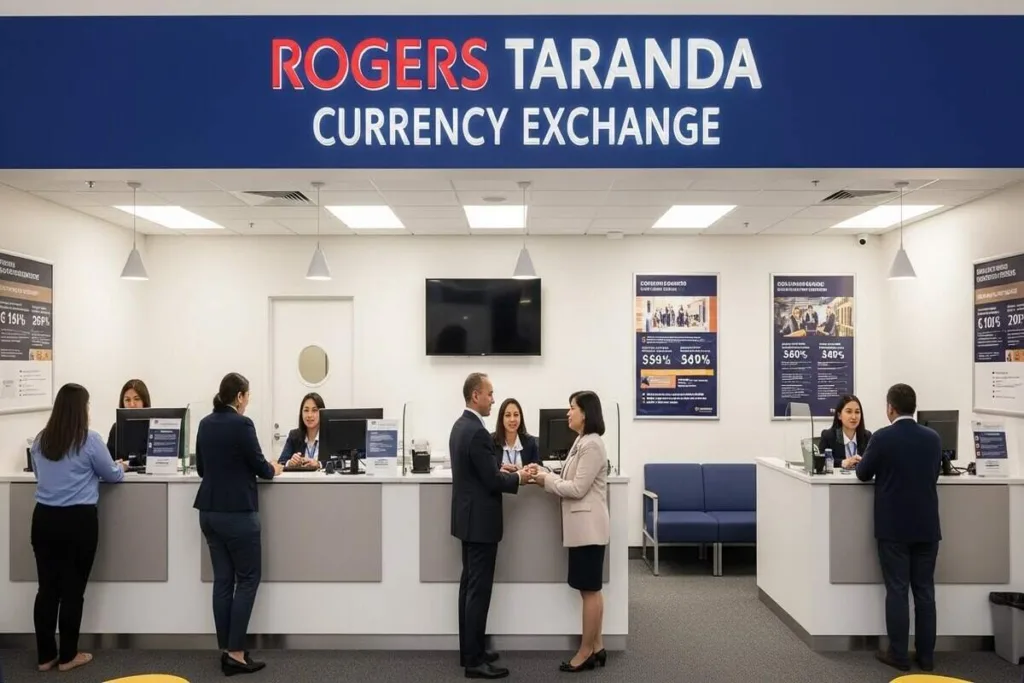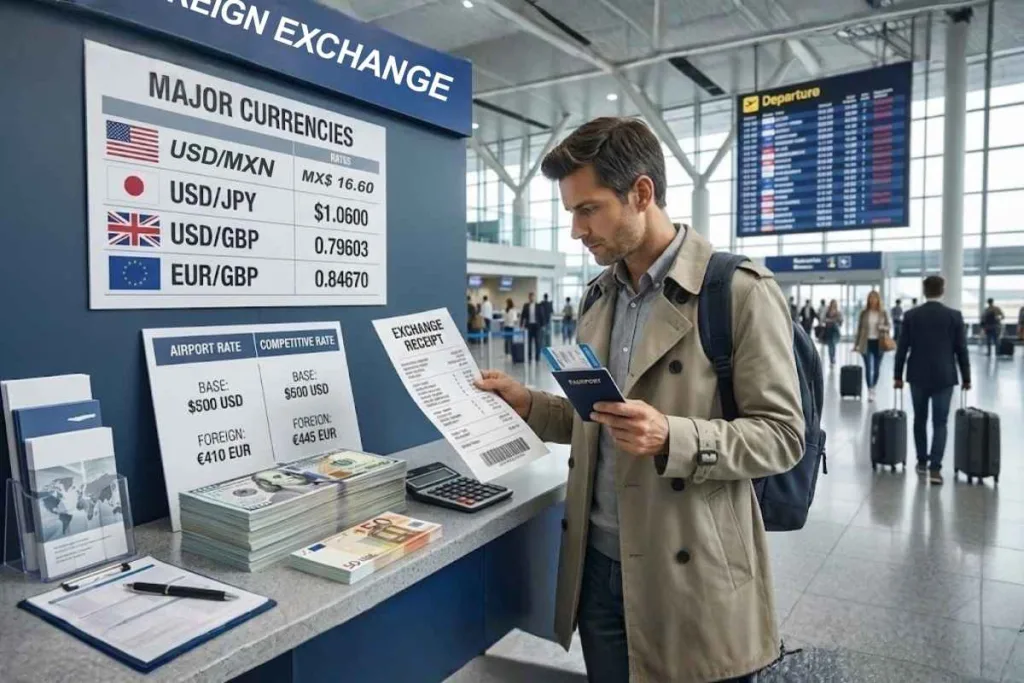
Airport currency exchange rates are often higher because providers incorporate convenience-based pricing and operational costs directly into the rate. While airport exchanges operate within unique terminal environments, customers exploring currency options through Order Express can review rate disclosures in advance and compare exchange spreads before completing a transaction.
Convenience Pricing And Captive Demand Drive Higher Airport Exchange Rates
Airport currency exchange rates increase primarily because providers price for urgency and limited alternatives. When travelers need immediate foreign cash, exchange providers leverage convenience and time pressure.
Travelers Transact Under Urgency And Limited Alternatives
Airports create a captive environment where most customers prioritize speed over rate optimization. Providers understand that departing travelers rarely compare exchange spreads before boarding flights.
When urgency influences the decision, exchange providers may adjust spreads to reflect convenience and operational factors associated with airport locations. Captive demand means customers cannot easily leave to compare rates elsewhere before transacting.
Several behavioral factors reinforce this urgency-based pricing structure:
- Travelers often discover currency needs after clearing security checkpoints inside restricted airport areas.
- Many customers assume airport rates align closely with bank or market exchange rates, despite public benchmarks such as Federal Reserve foreign exchange rate data.
- Departing passengers face boarding deadlines that reduce negotiation or comparison behavior.
Each of these behaviors reduces price sensitivity, allowing operators to maintain consistently higher spreads.
Operators Widen Exchange Spreads Instead Of Charging Visible Fees
Airport currency exchange providers typically advertise zero commission to appear competitive and transparent. However, they embed profit directly inside the exchange rate spread, rather than presenting a separate service charge.
The spread represents the difference between wholesale interbank pricing and retail customer pricing, a structure commonly discussed in public resources such as U.S. Treasury exchange rate analysis guidance. Airport providers widen this difference significantly to capture higher margins per transaction.
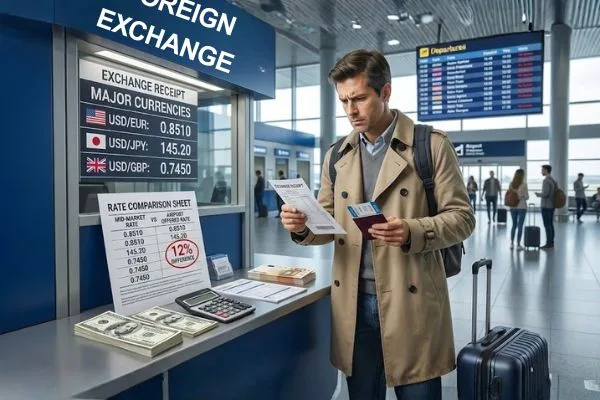
For example, a mid-market rate may show 1.10 dollars per euro in global markets. An airport kiosk may offer 1.03 dollars per euro without explicitly disclosing markup.
Because the markup is incorporated into the exchange rate rather than presented as a separate fee, customers may not immediately recognize the total cost difference compared to mid-market reference rates. Travelers focus on the advertised convenience instead of analyzing the effective rate.
A wider spread means you receive fewer foreign currency units for the same base currency amount.
Before transacting, travelers should always compare:
- The airport’s offered rate.
- The current mid-market reference rate.
- The effective percentage difference between both rates.
This quick comparison immediately reveals the true cost of airport convenience pricing. Customers planning broader travel financial needs may also coordinate services such as Money Transfer services before departure to avoid rushed airport decisions.
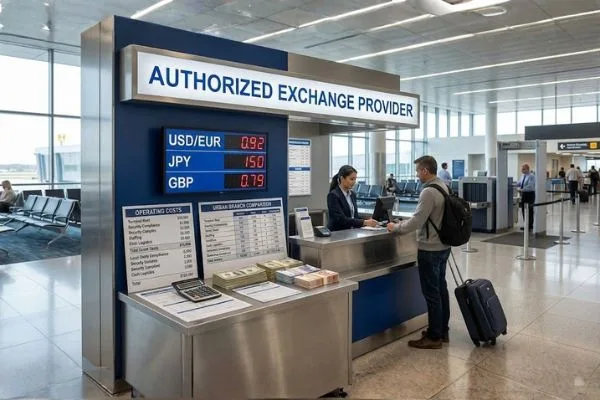
Airport Operating Economics Increase Structural Pricing Pressure
Airport currency exchange rates also rise because the operating environment creates higher structural costs. These costs influence pricing models regardless of customer urgency.
Airport Concession Fees And Rent Increase Cost Per Transaction
Airport authorities charge premium rent and concession fees for terminal retail space. Currency exchange providers must recover these fixed expenses across daily transaction volume.
Unlike street-level financial institutions, airport operators pay for security clearance, extended hours and controlled access infrastructure. These mandatory costs increase the break-even threshold per exchange transaction.
Because currency exchange margins remain thin in competitive environments, airport locations adjust rates upward. This upward adjustment compensates for higher rent and lower transaction frequency compared with urban branches.
Higher fixed costs require higher per-transaction margins to maintain profitability.
These structural cost drivers include:
- Premium terminal leasing agreements negotiated directly with airport authorities.
- Security compliance requirements for cash handling inside controlled zones.
- Extended operational hours aligned with flight schedules, including late nights and early mornings.
Each cost layer increases the minimum revenue required per customer exchange. Consumers seeking foundational rate education can review structured resources such as the FDIC Money Smart financial education program for general financial literacy guidance.
Limited Competition Reduces Downward Rate Pressure
Most airports allow only one or two authorized currency exchange providers per terminal. This restricted licensing environment reduces direct pricing competition inside the airport ecosystem.
Without nearby alternatives, operators face minimal pressure to narrow spreads. Customers inside secured boarding areas cannot easily access banks or off-airport exchange providers.
Competition typically drives rates closer to wholesale benchmarks in urban settings. IIn contrast, airport operators operate within controlled vendor environments that may limit the number of providers available within a terminal.
Fewer competitors inside the same physical space reduce incentive to lower exchange spreads.
This structural limitation reinforces consistently higher airport exchange rates through:
- Controlled vendor licensing agreements limiting market entry.
- Exclusive terminal contracts preventing additional providers from entering.
- Reduced consumer mobility once travelers pass through security checkpoints.
When competition remains constrained, pricing remains elevated relative to non-airport exchange environments. Travelers who anticipate currency needs may also explore complementary services such as Check Cashing solutions or other available financial services options before arriving at the airport.
For a broader understanding of how exchange spreads, retail pricing and transaction strategy work together, review our guide on currency exchange fundamentals for everyday transactions. That resource explains rate mechanics without focusing specifically on airport pricing dynamics.
Additional consumer education resources are available through the Consumer Financial Protection Bureau resource on sending money which provides general guidance on sending money and related financial topics.
Key Takeaways
- Airport currency exchange rates are higher because providers price convenience and urgency directly into widened exchange spreads.
- Structural airport costs including premium rent and limited competition reinforce consistently elevated retail exchange rates.
- Travelers receive fewer foreign currency units because captive demand reduces price sensitivity inside airport terminals.
Frequently Asked Questions
Q: Are Airport Currency Exchange Rates Always Worse Than Bank Rates?
A: Airport rates are often less favorable than non-airport options because providers incorporate convenience and operational costs into the exchange spread.
Q: Why Do Airport Kiosks Advertise Zero Commission But Still Offer Poor Rates?
A: They build profit into the exchange rate spread rather than charging a visible service fee.
Q: Can I Negotiate A Better Exchange Rate At An Airport Kiosk?
A: Negotiation rarely succeeds because pricing remains standardized across terminal transactions.
Q: How Can I Quickly Check If An Airport Rate Is Unfavorable?
A: Compare the offered rate with the current mid-market rate and calculate the percentage difference.
Q: Do Airport Exchange Rates Change Throughout The Day?
A: Rates may update periodically but typically remain consistently wider than non-airport alternatives.
Conclusion
Airport currency exchange rates remain higher because convenience pricing and structural airport economics combine to widen retail spreads in commercial market settings. Travelers transact under urgency inside controlled environments, which reduces price comparison behavior. Operators face elevated rent, security and licensing costs that require higher per-transaction margins. Limited competition inside terminals further reduces incentive to narrow pricing. As a result, customers receive fewer foreign currency units for the same base amount. Understanding these two core mechanisms allows you to evaluate airport offers with clarity. When planning everyday currency needs, review exchange rates before arriving at the terminal whenever possible.
Compare rates carefully and choose a provider that clearly discloses pricing structures and exchange spreads so you can make an informed decision.
Disclaimer: Exchange rates fluctuate based on market conditions and provider pricing policies. Rates may vary by location and are subject to availability. Service terms and conditions apply. Always confirm current rates before completing any transaction.
Note: Order Express is a registered Money Services Business (MSB) and complies with applicable federal and state regulations, including FinCEN requirements and applicable anti-money laundering (AML) obligations.

John is a Content & SEO Specialist who enjoys breaking down complex financial topics, like cross-border payments and money transfers, into content that’s easy to understand. He focuses on creating practical, search-driven content that helps people find answers and make informed decisions.