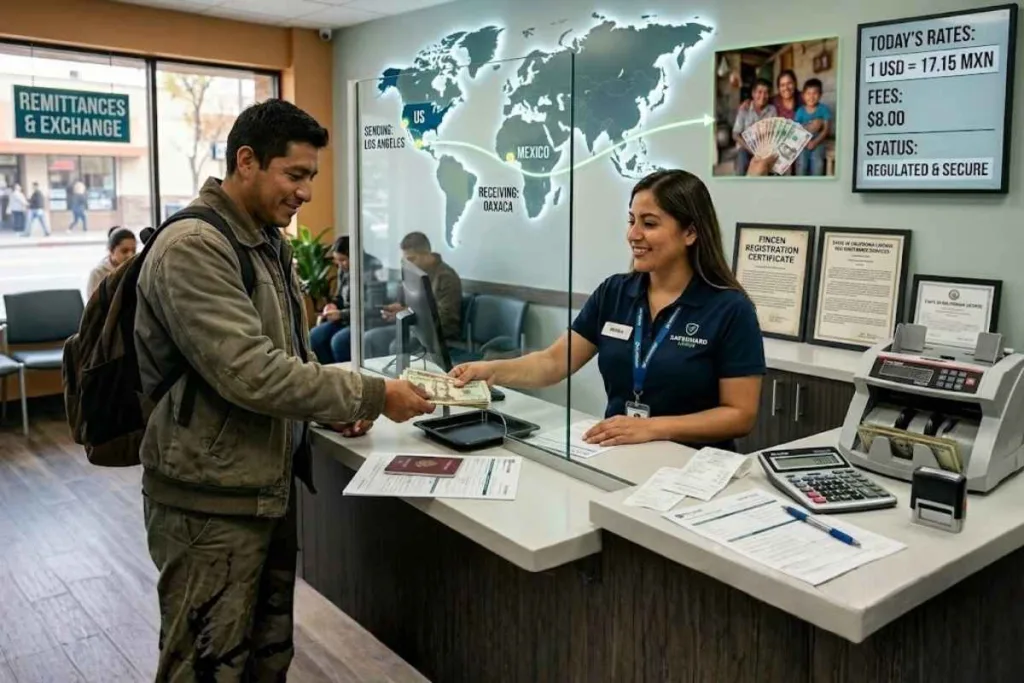
Exchange services support migrant workers sending money abroad by converting U.S. dollars into local currency and securely delivering funds to recipients. They combine currency exchange and money transfer processes to help families receive usable local funds quickly and transparently.
Direct Answer: Exchange services support migrant workers by converting currency at disclosed rates and transmitting funds through regulated money transfer networks designed for cross-border delivery.
Exchange rates, transfer speed, fees and service availability may vary based on destination country, payout method, transaction details, regulatory requirements and the time the transfer is processed. Customers should review the applicable transaction disclosures before completing a transfer.
Migrant workers often prioritize reliability, exchange rate clarity and predictable fees when preparing to send funds home. Retail financial services providers like Order Express structure transactions to meet these practical needs.
For readers exploring broader location options and rate comparisons, the parent resource on Currency Exchange Near Me: Find Locations And Compare Rates provides additional context.
Order Express provides money transfer and related financial services through company-owned retail locations in accordance with applicable federal and state regulatory requirements. This article is intended to help customers better understand how currency exchange supports international money transfers.
Currency Exchange Enables Accurate Cross-Border Value Transfer
Currency exchange forms the foundation of any international money transfer involving different national currencies. It determines how much local currency a recipient ultimately receives.
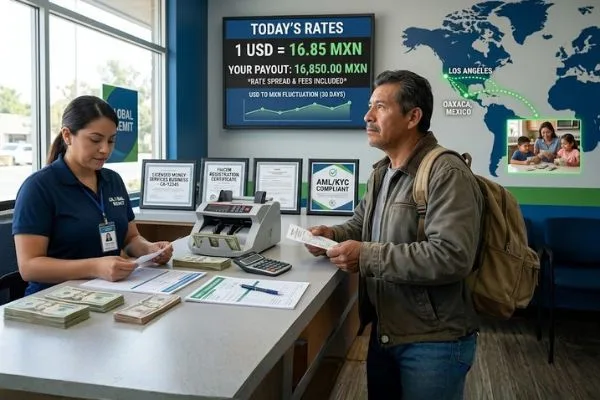
Exchange Rate Transparency Helps Workers Plan Remittances
Exchange rates fluctuate daily based on global market conditions and currency demand. Public data such as the Federal Reserve’s H.10 exchange rate releases illustrate how currency values move over time. Migrant workers benefit when providers clearly display current exchange rates before transaction confirmation.
Example: A worker sending part of each paycheck to family overseas may compare exchange rates before visiting a branch. Even small differences in exchange rates can affect how much local currency the recipient receives.
A transparent rate presentation allows customers to estimate how much local currency their family may receive. Workers often compare displayed rates before choosing a branch location to plan their transfer confidently.
When preparing a transfer, customers should confirm:
- The exchange rate applied to the transaction
- Whether a spread or markup affects the converted amount
- The total local currency payout expected
This preparation supports informed decision-making without requiring complex financial knowledge. Consumer education programs such as the FDIC’s Money Smart financial education resources reinforce the importance of understanding transaction terms before committing funds.
Spread Awareness Supports Realistic Expectations
The exchange rate used for customer transactions may include a spread over the wholesale market rate. Federal policy context from the U.S. Treasury’s exchange rate analysis guidance explains how governments monitor currency conditions without setting retail transaction pricing.
Understanding this concept helps migrant workers avoid confusion about payout differences. Transaction outcomes depend on the applied rate at the time of processing.
Exchange rate variability means the final local amount may change if rates move between visits. Many customers complete transactions promptly after reviewing displayed rates to manage that variability.
Order Express operates as a registered Money Services Business (MSB) with FinCEN and, where applicable, is licensed in jurisdictions that require money transmitter licensing. Its money services are provided within applicable federal and state regulatory frameworks, including compliance with the Bank Secrecy Act (BSA) and FinCEN requirements. FinCEN registration is a regulatory requirement and does not constitute government endorsement.
Regulated Money Transfer Infrastructure Delivers Funds Securely
Currency conversion alone does not move funds across borders. Regulated financial networks connect senders with recipients and support cross-border money transfers.
Money Transmission Networks Connect Senders And Recipients
Money transmission services route funds through authorized payout partners in destination countries. This infrastructure allows recipients to receive local currency in person or through designated channels. Customers using Order Express money transfer services rely on this network to support cross-border remittances.
For migrant workers, this process typically includes:
- Providing recipient information accurately
- Presenting valid identification when required
- Confirming transaction details before final approval
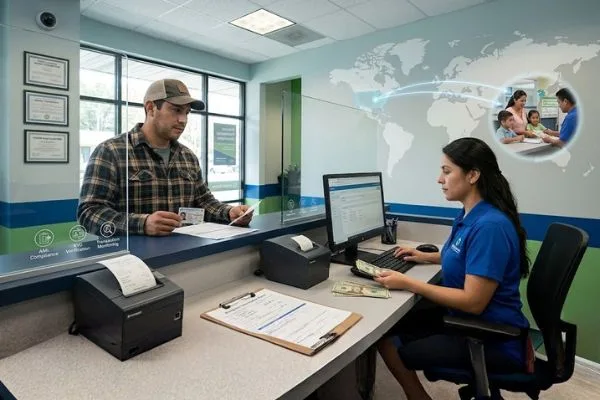
Identity verification may apply depending on transaction amounts and aggregation thresholds. These measures reflect high-level anti-money laundering controls that apply to regulated money services businesses. Separate consumer protection guidance, such as information provided by the Consumer Financial Protection Bureau on sending money abroad, helps customers understand their rights and disclosures.
Order Express provides money transmission and related retail financial services at company-owned branches. Additional in-person financial tools are available through its broader retail financial services offerings. These services integrate currency exchange functionality where applicable to international transfers.
Compliance Controls Support Transaction Continuity
Regulated providers implement identity verification and transaction monitoring as part of standard oversight practices. High-level requirements may include recordkeeping and reporting under the Bank Secrecy Act framework, overseen by federal regulators such as FinCEN.
Depending on the transaction, applicable laws, internal compliance procedures and other risk-based factors, customers may be asked to provide additional identification or supporting documentation before a transfer is completed. Preparing identification in advance can help reduce delays at the point of service.
Retail financial services providers may also monitor transaction patterns for compliance review. These processes are designed to support lawful cross-border fund movement. Customers seeking assistance with documentation or transaction preparation can reference official Order Express contact information for branch-level guidance.
Migrant workers sending recurring support often benefit from consistent transaction preparation habits. Bringing identification and verifying recipient details in advance helps streamline each visit.
Key Takeaways
- Exchange services convert U.S. dollars into local currency at disclosed rates before funds reach recipients abroad.
- Exchange rate variability and applied spreads influence the final payout amount families receive.
- Regulated money transmission networks deliver converted funds through authorized payout partners in destination countries.
- Identity verification and compliance reviews may apply depending on transaction size and patterns.
- Preparing recipient details and identification helps reduce delays when sending money internationally.
Frequently Asked Questions
Q: How Does Currency Exchange Affect How Much My Family Receives?
A: The applied exchange rate determines the final local currency amount. Rates fluctuate daily and may include a spread over wholesale market pricing.
Q: Do I Need Identification To Send Money Abroad?
A: Identification may be required depending on transaction size and aggregation thresholds. Bringing valid identification helps avoid processing delays.
Q: What Is The Difference Between Currency Exchange And Money Transfer?
A: Currency exchange converts one currency into another. Money transfer moves those converted funds to a recipient in another location.
Q: Can Exchange Rates Change Between Visits?
A: Yes. Exchange rates fluctuate based on market conditions. The rate applied depends on the time of transaction processing.
Q: Do Regulated Money Services Businesses Follow Compliance Requirements?
A: Registered Money Services Businesses and, where applicable, state-licensed money transmitters operate within applicable federal and state regulatory frameworks, including Bank Secrecy Act requirements.
Conclusion
Exchange services support migrant workers by combining transparent currency conversion with regulated money transmission infrastructure. The exchange rate applied to each transaction determines the final local currency amount families receive abroad. Understanding exchange rate variability and spread impact helps workers plan remittances more accurately. Regulated money transfer networks then deliver converted funds through authorized payout partners in destination countries. Identity verification and transaction monitoring may apply depending on transaction size and patterns. Preparing identification and confirming recipient information in advance can help reduce delays. Regulated Money Services Businesses, including Order Express, structure their services to support transparent cross-border transactions while complying with applicable federal and state regulatory requirements.
Review current rates or visit a nearby Order Express location to prepare your transaction with greater clarity and confidence.
Disclaimer: This content is for informational purposes only and does not constitute financial advice. Exchange rates, fees, availability and verification requirements may vary by provider, transaction type and location.
Compliance Review: This article has been reviewed for accuracy against applicable public regulatory guidance and current Order Express policies at the time of publication. It is provided for general educational purposes only and does not constitute legal or financial advice.

John is a Content & SEO Specialist who enjoys breaking down complex financial topics, like cross-border payments and money transfers, into content that’s easy to understand. He focuses on creating practical, search-driven content that helps people find answers and make informed decisions.