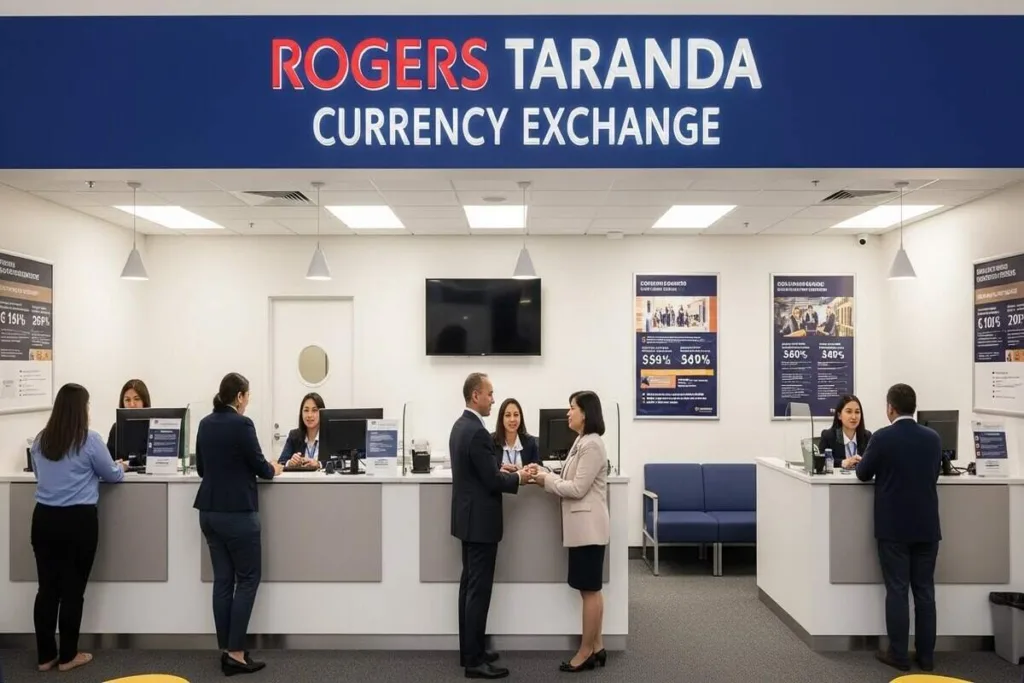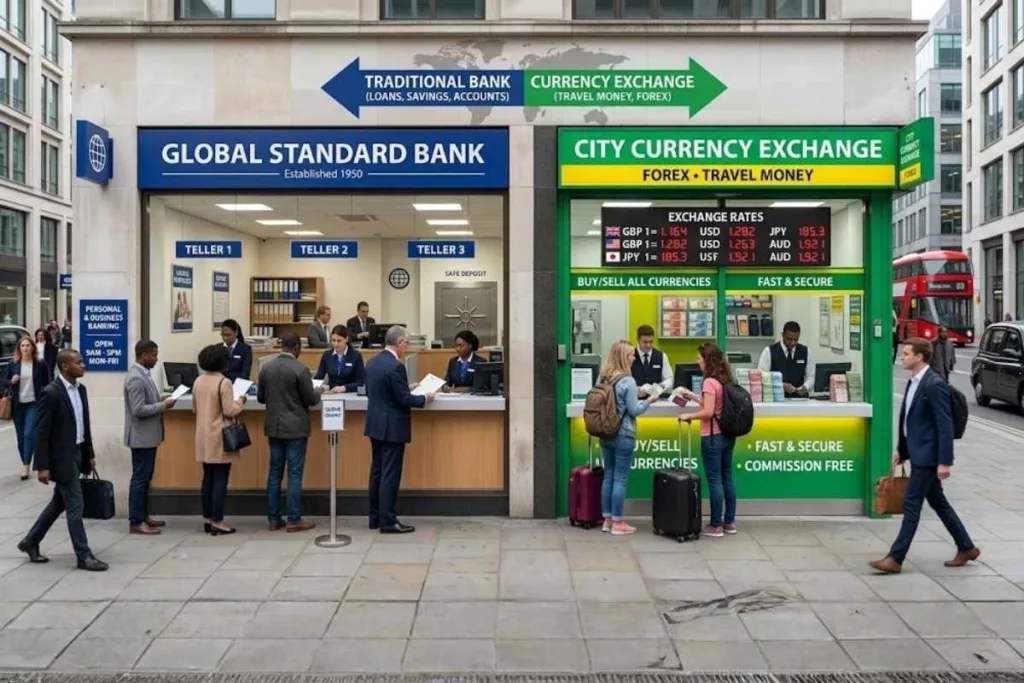
A currency exchange store focuses on immediate foreign currency transactions, while a bank provides broader financial account services alongside exchange access. The main difference involves service scope and transaction structure, especially when you prepare to exchange physical currency quickly.
Direct Answer: A currency exchange store specializes in retail foreign currency transactions and related services, while a bank centers on deposit accounts and lending, offering currency exchange as one of many banking features.
When deciding where to exchange money, understanding the differences between a currency exchange store and a bank helps you choose the option that best fits your transaction needs, preferred level of convenience and timing expectations.
If you are searching for options, start with our Currency Exchange Near Me: Find Locations And Compare Rates resources to compare local availability and prepare accordingly.
Key Differences In A Currency Exchange Store Vs Bank
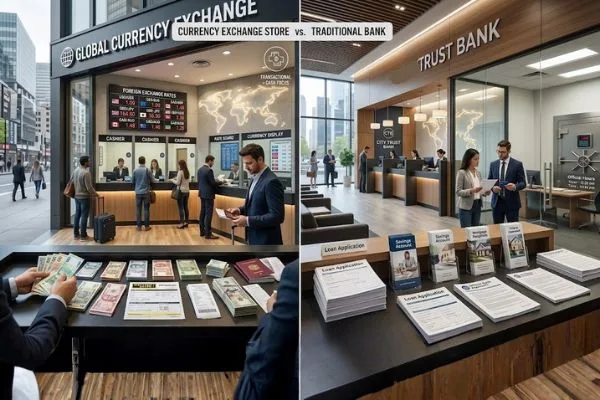
Currency exchange stores and banks operate under different business models that shape how each delivers exchange services. Understanding this distinction helps you select the provider that aligns with your immediate transaction objectives.
Currency Exchange Stores Focus On Retail Financial Transactions
A currency exchange store centers its operations on transactional financial services rather than deposit-based account management. These locations typically provide currency exchange, Order Express money transfer services, money orders, bill payment services and other retail financial services. Order Express offers many of these services through its licensed Money Services Business locations.
Because they specialize in over-the-counter transactions, the process usually emphasizes speed, rate transparency and cash handling procedures. Customers often visit when they need immediate access to foreign currency before travel or after returning home.
Currency exchange stores may also serve customers sending funds to family abroad, exchanging leftover travel currency or preparing for international business expenses. The appropriate provider depends on the purpose of your transaction, the currencies available and the provider’s operating procedures.
You typically complete transactions in person and pay based on the displayed exchange rate and service fee. Exchange rate variability depends on market movement and the provider’s spread or markup at the time, as reflected in Federal Reserve H.10 foreign exchange rate data.
Order Express operates as a licensed Money Services Business and follows applicable requirements designed to support compliant financial transactions. As a registered Money Services Business, Order Express operates within the federal framework that includes Bank Secrecy Act and FinCEN anti-money laundering oversight requirements applicable to money services businesses.
Banks Integrate Currency Exchange Into Broader Account Services
A bank primarily manages deposit accounts, loans, credit products and long-term financial relationships with customers. Currency exchange appears as an added service, often linked to an existing checking or savings account.
Some banks may require you to hold an account before accessing foreign currency exchange services. Processing times may vary because some branches order foreign currency rather than keeping it readily available.
Banks generally structure pricing differently, sometimes embedding exchange costs within account relationships or posted rates. Broader valuation context can be reviewed through U.S. Treasury exchange rate policy guidance.
If you already maintain a banking relationship and prefer managing multiple financial services in one place, a bank may suit your needs. If you need walk-in currency exchange without opening an account, a licensed currency exchange store may better match your immediate transaction needs.
Access, Pricing Structure And Compliance Procedures Shape The Customer Experience
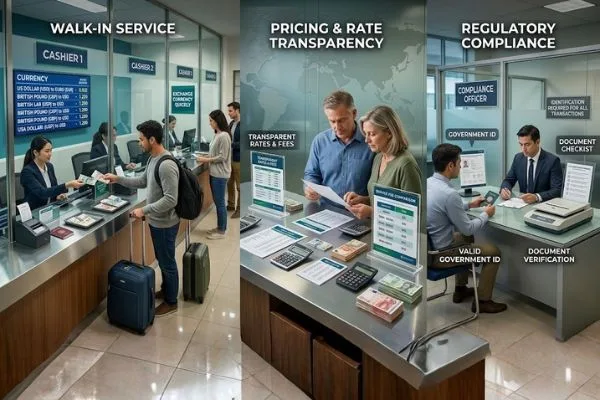
Beyond service scope, the customer experience differs based on pricing presentation, access requirements and transaction controls. These practical factors directly affect how you prepare before visiting either location.
Walk-In Availability And Immediate Fulfillment
Currency exchange stores typically support walk-in transactions without requiring a preexisting banking relationship, making them a practical option for customers who need to exchange foreign currency quickly. This structure can assist customers who need immediate fulfillment for travel or remittance purposes, and you can review additional support options through Order Express other financial services.
Banks sometimes require advance notice or currency preordering for less common denominations or larger amounts. Availability depends on branch inventory policies and operational procedures.
When preparing to exchange currency, confirm inventory availability and acceptable payment methods before arriving. For money transfer or money order transactions, bring required identification to avoid delays and consider reviewing consumer remittance guidance from the Consumer Financial Protection Bureau sending money resources.
Exchange Rate Transparency And Spread Awareness
Both banks and currency exchange stores apply a spread between wholesale market rates and retail transaction rates. The effective cost depends on the posted exchange rate and any applicable service fees.
Exchange rate variability reflects ongoing currency market movement and may change throughout the business day. Always review the displayed rate and calculate the total currency amount you will receive before confirming the transaction, using benchmarks such as Federal Reserve exchange rate releases.
Some providers itemize fees separately, while others incorporate pricing into the quoted rate. Understanding how markup or spread functions helps you compare providers more accurately, and general consumer education is available through the FDIC Consumer Resource Center.
If you plan to exchange a significant amount, compare exchange rates from more than one provider on the same day whenever possible, since retail rates may differ between financial institutions and licensed Money Services Businesses. Transaction-dependent outcomes mean the final amount depends on timing, rate and any applicable compliance review.
Identity Verification And Regulatory Oversight
Both banks and licensed Money Services Businesses operate under federal anti-money laundering frameworks. High-level requirements include identity verification, transaction monitoring and reporting obligations.
For certain transaction thresholds, you may need to provide government-issued identification and basic customer information. These controls reflect federal requirements under the Bank Secrecy Act and FinCEN reporting standards applicable to financial service providers.
Order Express, as a registered Money Services Business, maintains customer identification and record retention practices consistent with regulatory expectations for licensed providers, and additional background information is available on the Order Express company background page. These procedures may include verification steps depending on transaction type and amount.
Preparing valid government-issued identification in advance helps streamline your currency exchange or money transfer transaction and may reduce processing delays when additional verification is required. Review timing related to applicable regulatory requirements may vary depending on transaction size and structure.
How To Choose Between A Currency Exchange Store And A Bank
Consider the following questions before deciding where to exchange your money:
- Do you need foreign currency immediately or can you wait several business days?
- Do you already have a banking relationship that includes currency exchange services?
- Have you compared the exchange rate, fees and total amount you will receive?
- Does the provider offer the currency you need?
- Are you prepared to complete any required identity verification?
Answering these questions can help you select the provider that best aligns with your travel plans, payment needs and transaction preferences.
Key Takeaways
- A currency exchange store specializes in retail currency transactions, while a bank integrates exchange into broader account services.
- Service scope and transaction focus represent the primary structural difference between these two financial providers.
- Pricing differences often reflect exchange rate spreads, fee transparency and provider-specific markup structures.
- Access requirements and identity verification procedures may vary depending on provider type and transaction size.
- Choosing between them depends on immediacy needs, account relationships and preferred service environment.
Frequently Asked Questions
Q: Is The Exchange Rate Better At A Bank Or A Currency Exchange Store?
A: Exchange rates vary by provider, timing and markup structure. Always compare the posted rate and total amount received before completing your transaction.
Q: Do I Need A Bank Account To Exchange Currency?
A: Many banks require an account relationship. Currency exchange stores typically allow walk-in transactions without account requirements.
Q: Are Currency Exchange Stores Regulated?
A: Yes. Licensed Money Services Businesses follow Bank Secrecy Act and FinCEN requirements, including identity verification and transaction monitoring.
Q: Can I Send Money Internationally At A Currency Exchange Store?
A: Many currency exchange stores also provide money transfer services, subject to verification and transaction limits.
Q: Why Might A Bank Require Advance Notice For Foreign Currency?
A: Some banks do not keep all currencies in branch inventory and may need to order them in advance.
Q: Can I Exchange Any Foreign Currency At Either Provider?
A: Availability varies by provider. Some banks and currency exchange stores offer a wider selection of currencies than others. Contact the location before visiting to confirm that your requested currency is available.
Conclusion
A currency exchange store differs from a bank primarily in service focus and transaction structure. Currency exchange stores concentrate on retail financial services such as currency exchange, money transfer and money orders. Banks center on deposit accounts and lending, offering currency exchange as one component within broader account relationships. Practical differences involve walk-in access, exchange rate presentation and transaction procedures tied to compliance requirements. Your decision depends on factors such as transaction urgency, account relationships, currency availability and the type of financial services you need. Preparing identification, reviewing exchange rates and understanding spread structures can help you approach either provider with greater clarity and confidence.
Visit a nearby Order Express location to prepare your transaction with greater clarity and confidence.
Disclaimer: This content is for informational purposes only and does not constitute financial advice. Exchange rates, fees, availability and verification requirements may vary by provider, transaction type and location.

John is a Content & SEO Specialist who enjoys breaking down complex financial topics, like cross-border payments and money transfers, into content that’s easy to understand. He focuses on creating practical, search-driven content that helps people find answers and make informed decisions.