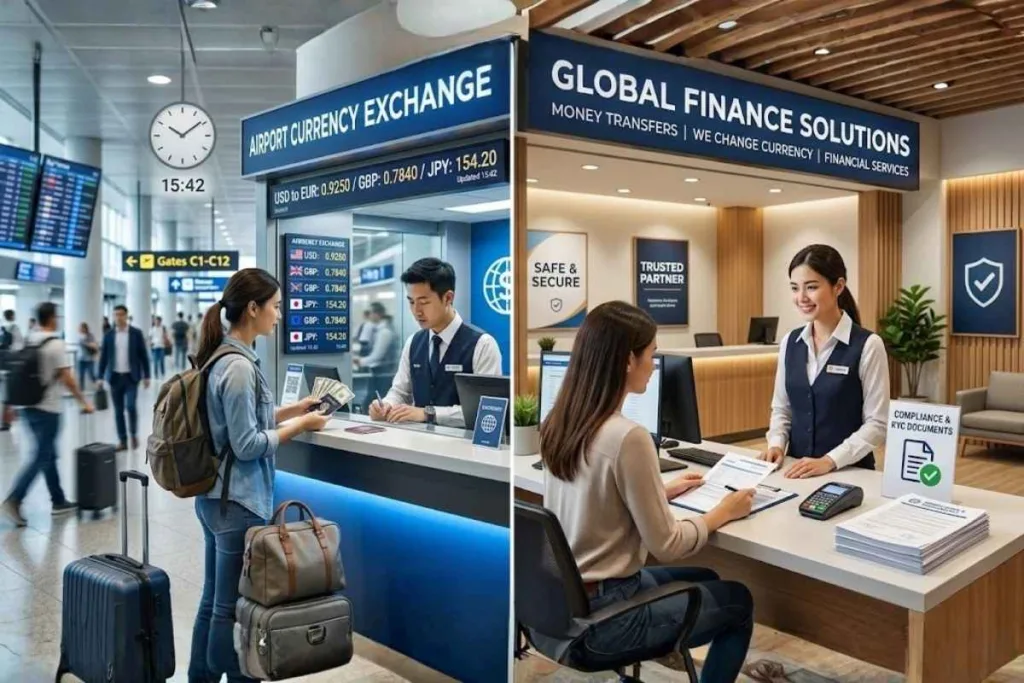
You should choose a currency exchange kiosk for speed and convenience, and choose a retail store for pricing clarity and broader service support. The right option depends on your transaction size, urgency and whether you need additional financial services.
Direct Answer: Use kiosks for quick, small exchanges when timing matters, and use retail financial service locations when rate transparency and transaction support matter more.
Customers preparing to exchange currency, send money or purchase money orders should evaluate both pricing structure and service depth before deciding.
For readers exploring broader currency exchange fundamentals for everyday transactions, our currency exchange fundamentals guide provides additional context.
Pricing Structure And Rate Transparency
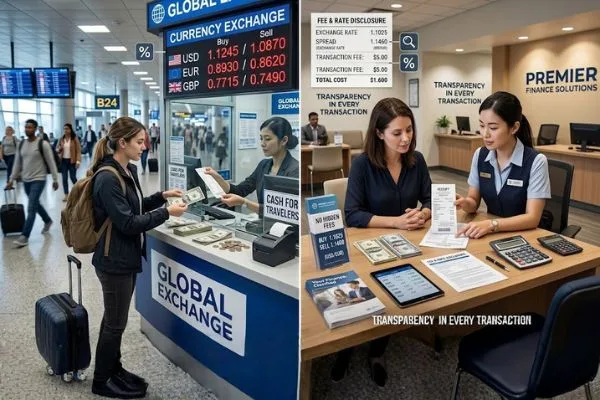
The first deciding factor involves how each location structures exchange rates, spread and service-related pricing. Your effective outcome depends not just on the posted rate but on how markup affects your final currency total.
How Exchange Rate Spread May Differ Between Locations
Currency exchange kiosks often operate in airports or high-traffic environments where convenience influences pricing models. These locations may apply wider spreads between buy and sell rates to offset operating and location costs.
Retail currency exchange stores typically provide more opportunity to review rate details before completing the transaction. When visiting a licensed Money Services Business such as Order Express, staff can explain how exchange rate variability affects your payout using reference data such as the Federal Reserve H.10 exchange rate release.
Exchange rates fluctuate throughout the day based on market conditions and provider pricing adjustments. Larger transactions may feel the impact of spread differences more noticeably than smaller exchanges, particularly when compared against publicly available benchmarks.
Clarification Block: Your effective exchange value equals the posted rate adjusted for spread or markup at the time of transaction.
Example: Small vs Large Currency Exchanges
Consider two travelers exchanging money:
- A traveler exchanging $200 for immediate travel expenses may prioritize speed and convenience over small rate differences.
- A traveler exchanging $5,000 may pay closer attention to exchange rate spread and transparency because even minor differences in pricing can have a larger impact on the final amount received.
This is why comparing rates and understanding transaction costs becomes increasingly important as exchange amounts grow.
Fee Visibility And Transaction-Dependent Outcomes
Some kiosks advertise simplified pricing, yet the effective cost often depends on embedded rate markup. Retail stores generally provide printed receipts showing transaction amount, applied rate and resulting foreign currency delivered.
This becomes especially important when combining services such as currency exchange and Order Express money transfer services. The total outcome may depend on exchange rate timing and transaction amount, and consumer disclosure expectations are outlined by the Consumer Financial Protection Bureau sending money abroad resources.
Customers who want clearer documentation often prefer retail environments designed for broader financial services. These regulatory frameworks are designed to protect consumers and promote transparency in financial transactions, helping customers better understand pricing, disclosures and transaction outcomes. Greater transparency may help you compare providers more confidently before committing funds, especially when reviewing pricing structures against general consumer education materials such as the FDIC Consumer Resource Center.
How To Choose Based On Pricing Priorities
If your priority is immediate access to foreign currency, kiosks may satisfy that need efficiently. If your priority involves reviewing rate details carefully, retail locations may provide more clarity.
Consider these decision points before selecting a location:
- Are you exchanging a small amount for immediate travel expenses?
- Are you exchanging a larger amount where spread differences materially affect outcomes?
- Do you want a detailed receipt explaining applied rates and totals?
Your answers will guide whether convenience or pricing transparency carries more weight.
For example, an airport kiosk may offer quick access to foreign currency before a flight, while a neighborhood financial services location may provide more time to review rates, fees and available services before completing the exchange.
Service Depth And Transaction Support
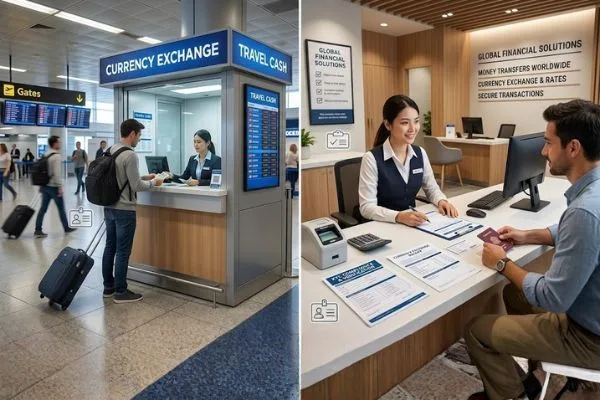
The second deciding factor involves service scope, compliance context and post-transaction assistance. Retail financial service locations generally support more complex or multi-service needs.
Support For Multi-Service Financial Transactions
If you plan to exchange currency alongside a money transfer or money order purchase, retail stores offer practical advantages. These locations are structured to manage multiple services within one coordinated transaction.
Customers often appreciate completing currency exchange and remittance services during one visit. Retail environments are designed for integrated retail financial services rather than single-function exchanges, and you can review available offerings under Order Express other financial services.
Kiosks typically focus on straightforward currency conversion without extended service capabilities. When your needs extend beyond exchange alone, service depth becomes a deciding factor.
Identity Verification And Compliance Context
Licensed Money Services Businesses are required to follow Anti-Money Laundering (AML) and Know Your Customer (KYC) regulations, which may include identity verification, transaction monitoring and recordkeeping depending on the transaction. Some transactions may require additional verification based on transaction amount, service type and risk factors. High-level frameworks such as the Bank Secrecy Act establish requirements for regulated financial institutions, and federal oversight responsibilities are administered by agencies such as the Financial Crimes Enforcement Network (FinCEN).
Retail Money Services Businesses operate within applicable identity verification and recordkeeping requirements. Order Express operates as a licensed Money Services Business and complies with applicable federal and state regulatory requirements. Additional company background is available through the Order Express About Us page.
Certain transactions may trigger additional regulatory requirements based on transaction amount and risk profile. Financial institutions and Money Services Businesses are required to maintain records and monitor transactions to support compliance with applicable regulations.
Kiosks may also request identification based on provider policy or transaction thresholds. However, retail stores typically provide clearer explanations when verification is required.
Clarification Block: Identity verification, recordkeeping and transaction monitoring requirements may depend on transaction amount, service type, risk profile and applicable regulatory obligations.
How To Choose Based On Transaction Support Needs
If you anticipate questions about exchange timing, documentation or combined services, retail support may feel more reassuring. In-person assistance can help clarify transaction-dependent outcomes after completion.
Ask yourself the following before choosing a location:
- Do you need support for money transfers or money orders during the same visit?
- Would you prefer in-person assistance if you later have receipt or rate questions?
- Are you comfortable with a quick standalone exchange without extended service interaction?
Your level of desired support often determines which option aligns with your comfort level.
Why Customers Choose Order Express
Order Express has been providing financial services since 1993, serving customers through a network of licensed locations across the United States. As a licensed Money Services Business, the company operates within a regulated framework designed to support compliance, consumer protection and transaction transparency. As a licensed Money Services Business, Order Express operates within a regulated financial services framework that includes AML compliance, customer identification procedures and consumer protection requirements.
Key Takeaways
- Choose kiosks for immediate small exchanges where speed outweighs detailed rate review.
- Choose retail stores when spread transparency and service depth matter more.
- Exchange rate variability and markup influence your final currency outcome.
- Retail locations better support combined services such as money transfers and money orders.
- Your transaction size and support expectations should guide your decision.
Frequently Asked Questions
Q: Is A Kiosk Appropriate For Larger Currency Exchanges?
A: Larger exchanges may benefit from retail stores where spread impact and documentation receive clearer explanation.
Q: Do Retail Stores Offer More Than Currency Exchange?
A: Yes, many retail locations support money transfers, money orders and other retail financial services.
Q: Does Exchange Rate Timing Affect My Outcome?
A: Yes, rates fluctuate based on market conditions and provider pricing at the transaction moment.
Q: Will Identification Be Required At Both Kiosks And Retail Stores?
A: Identification may be required depending on transaction size and provider policies.
Q: Which Option Is More Convenient For Travel Emergencies?
A: Kiosks located in airports or transit hubs may offer faster immediate access to foreign currency.
Q: Why Might A Retail Currency Exchange Location Request Identification?
A: Licensed Money Services Businesses must comply with AML and KYC regulations. Depending on the transaction amount, service type and risk profile, customers may be asked to provide identification and supporting information as part of standard compliance procedures.
Conclusion
You should choose between currency exchange kiosks and retail stores based on pricing transparency and service depth. Kiosks serve customers who prioritize immediate convenience for smaller exchanges.
Retail financial service locations better support customers who want clearer rate discussions and integrated services. Exchange rate spread and markup can influence outcomes, especially for larger transactions, and public policy context is outlined by the U.S. Treasury exchange rate policy overview.
Retail environments also provide structured assistance when combining currency exchange with money transfers or money orders. Identity verification requirements may apply depending on transaction size and service type.
Order Express operates as a licensed Money Services Business and complies with applicable federal and state regulatory requirements. AML and KYC obligations may include identity verification, transaction monitoring and recordkeeping depending on the transaction type and amount. Evaluating your transaction amount, urgency and support preferences will help you choose confidently.
Review current rates or visit a nearby Order Express location to prepare your transaction with greater clarity and confidence.
Disclaimer: This content is for informational purposes only and does not constitute financial advice. Exchange rates, fees, availability and verification requirements may vary by provider, transaction type and location.

John is a Content & SEO Specialist who enjoys breaking down complex financial topics, like cross-border payments and money transfers, into content that’s easy to understand. He focuses on creating practical, search-driven content that helps people find answers and make informed decisions.