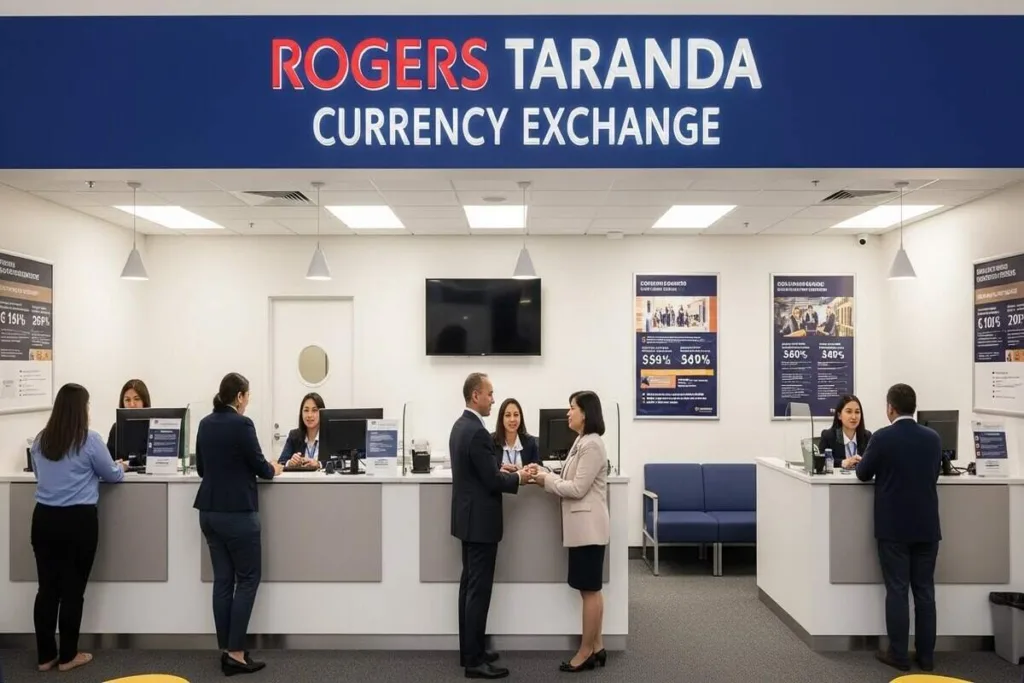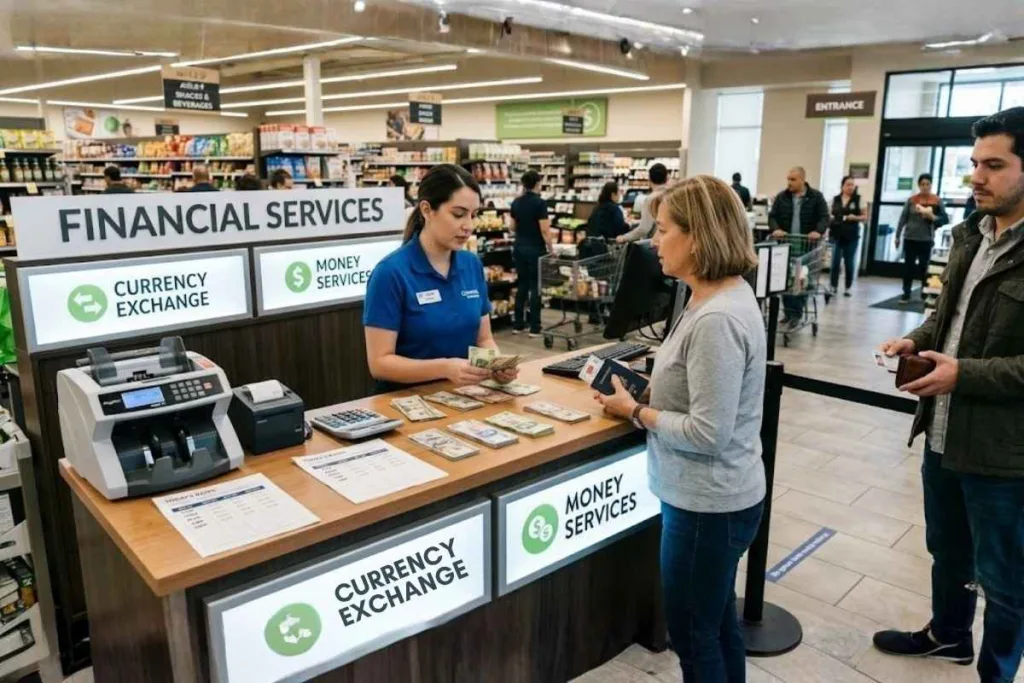
Yes, some grocery and retail stores offer currency exchange services through licensed providers, but availability, exchange rates, identification requirements, and supported currencies vary by location.
Many stores offer currency exchange through licensed money services businesses, though services, rates and limits depend on the provider operating inside the store.
Some grocery and retail stores provide currency exchange services, typically through a licensed Money Services Business operating at the location. However, not all stores offer this service, and rates, identification requirements and limits may vary.
If you are preparing to exchange currency, understanding how these retail-based financial services operate can help you plan more effectively and avoid unexpected delays.
For a broader understanding of currency exchange fundamentals for everyday transactions, review our guide to currency exchange fundamentals for everyday transactions, which explains how to evaluate your options before visiting a provider.
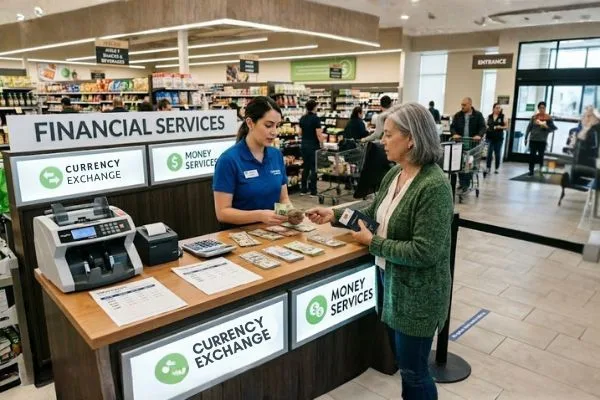
Do Grocery Stores Offer Currency Exchange Services?
Not every grocery or retail store offers currency exchange directly, even if it provides other financial services. Availability depends on whether the store hosts or operates a licensed Money Services Business.
Some Retail Stores Host Licensed Money Services Businesses
Many grocery and retail locations partner with licensed Money Services Businesses to provide regulated financial services. These may include currency exchange, money transfer services, money orders and check cashing services.
In these cases, the exchange service operates under financial compliance standards rather than standard retail policies. Licensed providers such as Order Express operate as Money Services Businesses and follow applicable regulatory requirements designed to support compliant financial transactions. Licensed Money Services Businesses operate within oversight frameworks administered by the Financial Crimes Enforcement Network (FinCEN).
This structure affects how transactions are processed, documented and reviewed during your visit.
Availability Often Varies By Location And State
Currency exchange availability depends on local licensing permissions and store-level service offerings. A national grocery chain may offer exchange services in one state but not another location.
Some stores focus primarily on money transfer or money orders and may not handle foreign currency exchange. Others may offer limited currency pairs or maintain restricted inventory levels based on demand.
For example, some grocery chains may host a financial services counter operated by a licensed provider that offers currency exchange, money transfers, and money order services. Availability varies by location and provider.
Before visiting, confirm that the specific location offers currency exchange services rather than assuming availability. If you need assistance confirming service availability, you can review contact information for location-specific guidance.
Currency Inventory May Be Limited
Retail-based currency exchange counters typically maintain limited foreign currency inventory compared to banks or airport kiosks. This means high-value exchanges or uncommon currencies may require advance notice or special ordering.
Inventory constraints can influence both availability and exchange rate spreads at smaller retail locations. Exchange rate movement itself reflects broader currency market dynamics, which are publicly tracked in sources such as the Federal Reserve H.10 foreign exchange rate data.
If you plan to exchange a larger amount, contacting the location ahead of time may help streamline your visit.
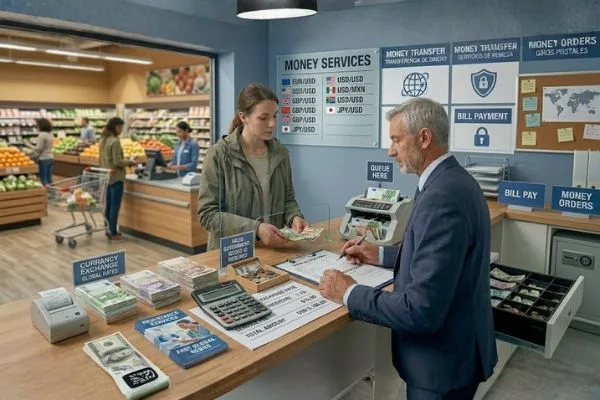
What Do You Need To Exchange Currency At A Grocery Store?
Exchanging currency at a grocery or retail store involves financial compliance procedures, not just a simple checkout transaction. Identification requirements, applicable regulatory thresholds and rate calculations may influence the experience depending on transaction details.
Identification Requirements May Apply
- Currency exchange transactions may require identity verification depending on the transaction amount and state rules. Licensed Money Services Businesses operate under Bank Secrecy Act and anti-money laundering frameworks when processing certain transactions, as outlined by the Financial Crimes Enforcement Network (FinCEN).
- Licensed providers are required to follow Know Your Customer (KYC) and Anti-Money Laundering (AML) procedures, which may include identity verification, transaction monitoring, recordkeeping, and regulatory reporting obligations when required by law.
- Certain transactions may trigger additional documentation or reporting requirements under federal and state regulations.
- For example, identification may be required once a currency exchange transaction reaches certain dollar amounts within a defined time period, depending on applicable federal and state requirements. Staff may request a government-issued photo identification before completing qualifying exchanges.
These procedures support compliance obligations rather than retail store policies.
Exchange Rates Include A Spread Or Markup
Retail currency exchange services apply an exchange rate that includes a spread or markup over the wholesale market rate. This spread helps cover operational costs, inventory risk and compliance oversight.
Rates may vary between locations, even within the same brand or service network. Because exchange rate variability depends on market movement and provider pricing, confirming the quoted rate before completing your transaction is important. Government policy context around exchange rate analysis is available through the U.S. Treasury exchange rate policy overview.
Unlike shelf pricing, exchange rates fluctuate throughout the day based on currency markets.
Fees And Final Amounts Should Be Confirmed Before Completion
Some retail exchange services incorporate pricing into the rate, while others may disclose separate service fees. Reviewing the total amount you will receive before confirming the exchange helps you avoid misunderstandings.
When using broader retail financial services such as money transfer or money orders, similar transparency practices apply. Consumer disclosure expectations for certain remittance transactions are explained by the Consumer Financial Protection Bureau’s sending money resources. Broader financial literacy guidance is also available through the FDIC Money Smart consumer education program.
Licensed providers typically present the final transaction details for review before completing the service.
Key Takeaways
- Some grocery and retail stores offer currency exchange through licensed Money Services Businesses operating onsite.
- Availability depends on the specific location, state permissions and foreign currency inventory levels.
- Identification may be required for certain exchange amounts under federal compliance frameworks.
- Exchange rates include a spread or markup and may vary between providers and locations.
- Confirming the final rate and total payout before completing the transaction supports better financial planning.
Frequently Asked Questions
Q: Do All Grocery Stores Offer Currency Exchange?
A: No. Only certain locations host licensed Money Services Businesses that provide currency exchange services.
Q: Can I Exchange Large Amounts Of Foreign Currency At A Retail Store?
A: Possibly, but inventory limits may apply and advance notice may be required for larger transactions.
Q: Will I Need Identification To Exchange Currency?
A: Identification may be required depending on the transaction amount and applicable compliance requirements.
Q: Are Exchange Rates At Retail Stores Competitive?
A: Rates vary by provider and include a spread or markup, so comparing quoted rates beforehand is advisable.
Q: Can I Exchange Currency And Send A Money Transfer In The Same Visit?
A: Many retail financial service counters offer both services, depending on the licensed provider operating onsite.
Q: Is It Cheaper To Exchange Currency At A Grocery Store Or A Bank?
A: Costs vary by provider, exchange rate, and fees. Comparing quotes before completing a transaction can help determine the best option.
Q: Do Grocery Stores Charge Fees For Currency Exchange?
A: Some providers include costs within the exchange rate, while others may charge separate service fees. Always review the final amount before completing the transaction.
Q: Can I Exchange Foreign Coins Or Only Paper Currency?
A: Policies vary by provider. Some locations only accept banknotes, while others may accept certain coins depending on operational policies and currency availability.
Conclusion
You can exchange currency at some grocery or retail stores, but availability depends on the financial services provider operating at that location. Stores that host licensed Money Services Businesses can process currency exchanges within established regulatory and compliance frameworks. Inventory levels, exchange rate spreads, and identification requirements may influence how your transaction proceeds.
Before completing a currency exchange transaction, compare available exchange rates, confirm identification requirements, and verify that the location offers the currencies you need. Licensed providers such as Order Express may offer currency exchange services depending on location availability.
Disclaimer: This content is for informational purposes only and does not constitute financial advice. Exchange rates, fees, availability and verification requirements may vary by provider, transaction type and location.

John is a Content & SEO Specialist who enjoys breaking down complex financial topics, like cross-border payments and money transfers, into content that’s easy to understand. He focuses on creating practical, search-driven content that helps people find answers and make informed decisions.