Currency exchange rates shift throughout the day because global wholesale currency markets are constantly trading, causing reference prices to move in real time. Separately, licensed money transfer providers such as Order Express offer services within established industry frameworks, while regulatory bodies publish guidance that helps explain how the broader financial system operates.
Order Express has been serving customers since 1993 and is a licensed Money Services Business (MSB) registered with FinCEN. We operate in compliance with applicable federal and state regulations, maintaining established anti-money laundering (AML) and consumer protection standards across our network of company-owned and authorized agent locations.
When completing a transfer, customers may be asked to provide certain details depending on the product, transaction amount, and delivery method. Independently, comparing a live mid-market reference rate can help you understand how broader market conditions compare with any quoted rate you see.
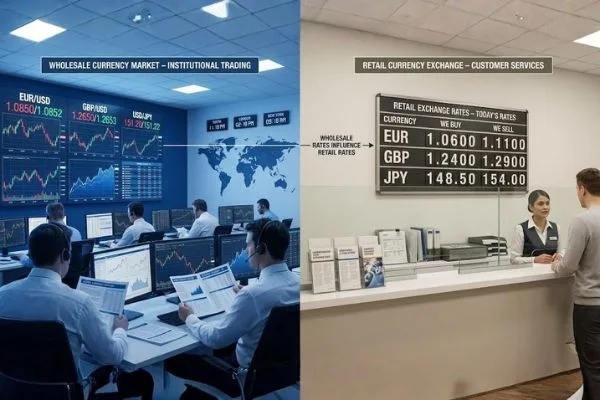
How Wholesale Market Dynamics Move Retail Rates
Wholesale currency trading operates nearly around the clock because global financial centers open and close in sequence, causing reference exchange rates to update continuously. Public data sources, including Federal Reserve foreign exchange publications, help illustrate how benchmark rates move over time. Retail providers monitor these market benchmarks when generating quotes. Retail rates may include a margin or spread over the mid-market rate as part of the provider’s pricing structure. This margin supports operational costs, regulatory compliance requirements, and service delivery infrastructure.
Separately, regulatory agencies such as FinCEN publish anti money laundering guidance designed to address financial crime risks within the broader financial system. These regulatory frameworks operate independently from day to day market pricing movements.
Because at least one major financial hub is active at any given time, wholesale price discovery continues throughout the day. As trading activity shifts between Asia, Europe, and North America, liquidity levels and transaction volumes change, influencing short term fluctuations in widely referenced mid market rates. Retail pricing systems track these benchmarks and refresh quotes accordingly. Consequently, even small wholesale fluctuations can ripple quickly into consumer facing screens and posted rate boards.
1. Continuous Wholesale Market Trading Creates Minute By Minute Reference Shifts
Major banks and electronic brokers execute enormous volumes every second, discovering prices through fiercely competitive bids and offers. Because participants adjust positions in real time the consensus midpoint, often called mid market, oscillates thousands of times daily.
Three observable wholesale patterns help explain why your noon quote differs from the morning figure you initially considered.
- European trading desks become most active during their opening hours, expanding liquidity and sometimes narrowing spreads relative to Asia.
- Lunch hour lulls reduce deal flow, allowing isolated transactions to skew benchmarks until New York volume reenters the market.
- Late afternoon fixes encourage portfolio managers to square books, occasionally triggering brisk directional moves ahead of overnight session turnover.
Because providers track these market rhythms automatically, retail screens refresh frequently as wholesale price feeds update throughout the day.
2. Liquidity Variations Between Sessions Influence Spreads Offered To Consumers
When available counterparties shrink temporarily market makers widen spreads to compensate for higher risk holding unbalanced inventories overnight. Your provider passes part of that wider spread into the final rate meaning conversions cost slightly more during thin periods. Conversely, deep liquidity hours are often associated with narrower spreads, although the retail rate available at any given time depends on each provider’s pricing structure.
Retail systems fetch aggregated liquidity from multiple partners, so when large banks temporarily withdraw quotes, customers may see sharper movements. In practice, competitive market forces typically limit how wide consumer spreads become during these periods.
Market calendars and publicly available trading resources can help illustrate when liquidity is typically higher for specific currency pairs. Remember that buy and sell rates shown publicly already incorporate these changes so negotiation opportunities remain slim for small transactions.
Why News Events Create Sudden Retail Rate Swings
Fresh economic information instantly shifts supply and demand expectations, prompting wholesale dealers to adjust prices before those changes flow through pricing systems. As a result, retail customers often see rapid quote variations around official data releases, central bank statements, or unexpected geopolitical headlines.
1. Economic Data Releases Cause Immediate Price Recalculations By Market Makers
Figures like unemployment, inflation and retail sales surprise forecasters altering interest-rate outlooks that strongly influence relative currency attractiveness. Within seconds electronic trading venues reprice affected currencies and retail platforms subsequently fetch fresh streams reflecting the new equilibrium. If you quote a transaction moments before the release expect a confirmation to differ if processed even one minute later.
2. Central Bank Remarks Rapidly Reshape Expectations And Quoted Retail Margins
When a governor hints at tightening policy speculative money floods into that currency lifting wholesale prices and retail conversion costs. Alternatively dovish signals can depress valuations so proactive travelers sometimes pause transfers until policymakers finish scheduled speeches first. Providers often widen precautionary spreads minutes before major announcements then gradually tighten margins once immediate volatility dissipates again. Viewing an economic calendar helps you sidestep these protective mark-ups by booking transfers outside anticipated turbulence windows.
Unexpected political comments such as surprise election announcements can spark similar volatility because markets rapidly reassess fiscal policy prospects. News-driven moves frequently unwind partially after initial exaggeration creating opportunities for calm buyers to exploit temporary mispricing. Set alerts fifteen minutes after major releases rather than chasing the immediate spike unless urgent settlement overrides savings considerations. If transfers support commercial invoices, some businesses coordinate payment timing strategies with suppliers to help manage currency exposure.
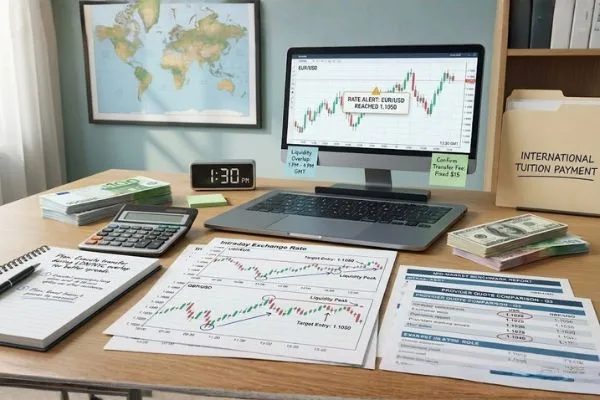
Timing Strategies When Currency Exchange Rates Fluctuate
Armed with knowledge of wholesale dynamics and news schedules, you can better understand why rates change at different times of day and how market conditions influence the quotes you see. These approaches help explain how timing and market awareness can influence the rates consumers see across the industry.
1. Monitor Mid Market Benchmarks Before Instructing Your Transfer Provider
Websites publishing real-time interbank midpoints let you gauge whether a provider’s quote sits near current fair value. If the difference exceeds your provider’s usual margin waiting a few minutes may see the wholesale side revert. Several respected data feeds issue mobile alerts whenever the midpoint moves beyond preset thresholds for the chosen pair. Enable notifications before initiating your transaction so you can respond quickly if a favorable market movement occurs.
2. Use Rate Alerts And Flexible Settlement Windows To Capture Favorable Intraday Swings
Some digital currency platforms offer tools such as rate alerts that notify users when certain market levels are reached. Scheduling settlement for the same day, rather than instant execution, often lets you exploit midday volatility for better pricing. After understanding these tools, apply the following practical steps to secure advantageous rates without unnecessary complexity throughout daily transactions.
- For personal planning, some consumers monitor exchange rates online before completing transactions such as money transfer or check cashing, choosing timing that aligns with their expectations.
- For larger money transfer needs tied to future obligations such as tuition or property payments, some financial institutions offer longer-term pricing arrangements.
- Split large sums into timed tranches during liquid overlaps, smoothing peaks and troughs while preserving clear audit documentation trails.
- Comparing providers on rates, fees, speed, and service quality is widely encouraged by consumer education resources such as those published by the Consumer Financial Protection Bureau and the FDIC Money Smart program.
- Confirm beneficiary banks will not deduct incoming charges that could erode hard-won savings from your carefully timed transfer.
Executing these steps alongside a live benchmark feed helps convert with confidence and avoid regrets about missed intraday opportunities. Combining transparent fees with tactical timing consistently delivers better outcomes than relying solely on spot luck at checkout. For additional insight into currency exchange fundamentals consult our comprehensive guide.
Conclusion
Intraday currency shifts need not be a guessing game. By watching mid-market benchmarks, understanding liquidity cycles, and using available tools, consumers can make more informed decisions about timing. Map upcoming economic releases, keep settlement windows flexible and split larger sums into timed tranches to average favorable rates. Always compare specialist providers on total cost, not headline quotes, and confirm recipient fees before you click send. Together these habits can trim hidden margins and protect your budget, whether you are paying tuition, funding invoices or planning a holiday.
If questions remain, please Contact Us for tailored guidance. As a regulated and licensed MSB operating since 1993, Order Express is committed to transparency, compliance, and responsible financial service delivery.
When you are ready to transfer funds, choose a provider that aligns with your priorities for transparency, service, and reliability.
Disclaimer: This article is for general informational purposes only. Exchange rates are determined by market conditions and may vary at the time a transaction is completed. Rates, fees, and service terms vary by provider and may change without notice.
Frequently Asked Questions
Q: Why Do Currency Exchange Rates Change Throughout The Day?
A: Three factors drive intraday moves:
- Continuous wholesale trading reshapes mid-market benchmarks
- Liquidity widens or narrows spreads between sessions
- Economic or political news instantly changes supply, demand and provider margins.
Q: When Is The Best Time To Exchange Everyday Amounts?
A: High liquidity periods, often during overlapping global trading sessions, are commonly associated with narrower wholesale spreads. However, the retail rate you receive depends on the provider’s pricing model at the time of the transaction.
Q: How Do I Set Rate Alerts For Better Deals?
A:
- Choose a provider offering customizable alerts
- Input your target rate
- Select same-day settlement
- Receive a notification or automatic execution when the threshold hits.
Q: Do Economic Announcements Affect The Retail Rate Shown To Me?
A: Yes. Market makers reprice currencies within seconds of data releases or central bank remarks and retail platforms refresh feeds immediately, so your quote can shift before you finalize a transaction.
Q: How Can I Reduce Hidden Fees On Small International Transfers?
A:
- Compare total cost, not headline rate
- Choose specialists with transparent pricing
- Avoid thin-liquidity hours
- Confirm recipient bank charges upfront

John is a Content & SEO Specialist who enjoys breaking down complex financial topics, like cross-border payments and money transfers, into content that’s easy to understand. He focuses on creating practical, search-driven content that helps people find answers and make informed decisions.