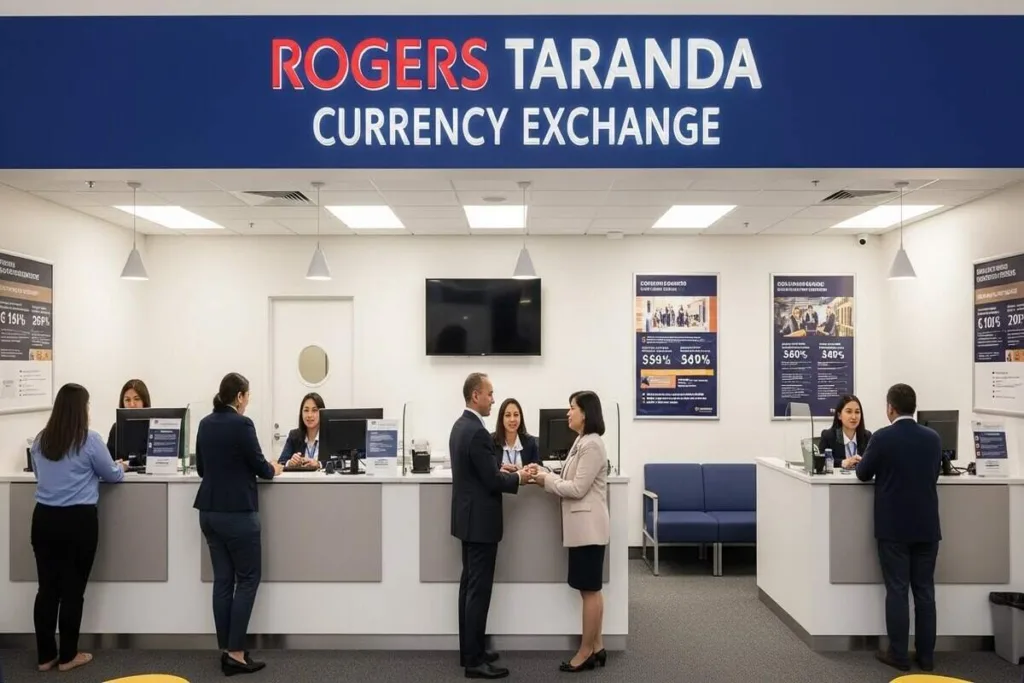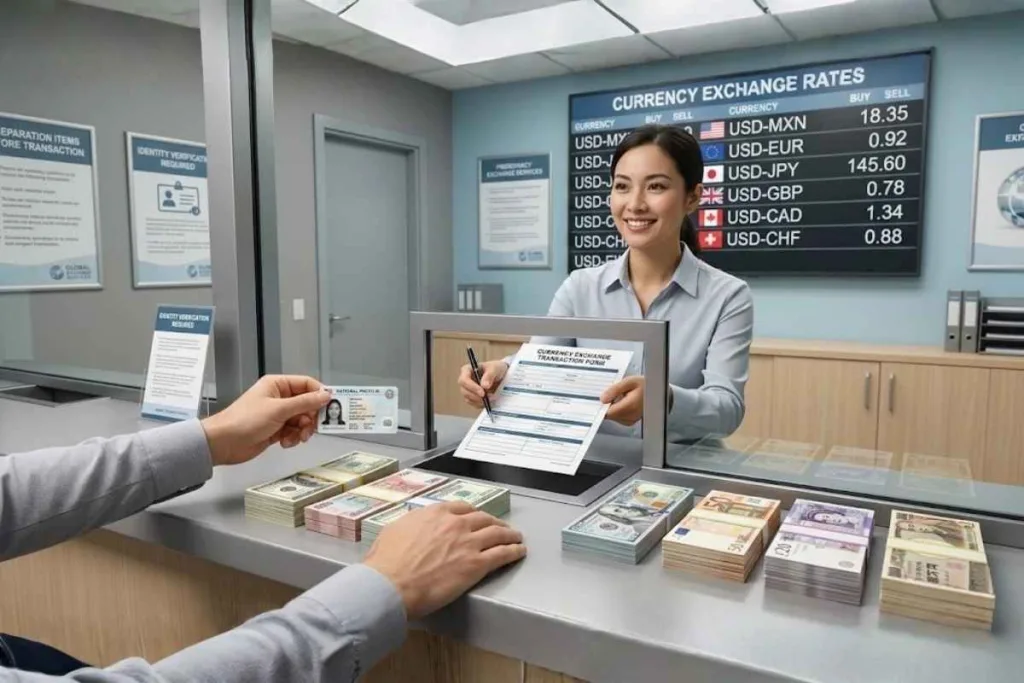
You should bring a valid government-issued photo ID and your transaction funds when visiting a currency exchange location. You may also need supporting information depending on the transaction amount and service requested. Preparing these items in advance prevents delays and helps you complete your exchange quickly and confidently.
For a broader overview of how exchange services work in everyday situations, review our guide on Currency Exchange Fundamentals For Everyday Transactions.
Identity Verification Requirements For Currency Exchange Transactions
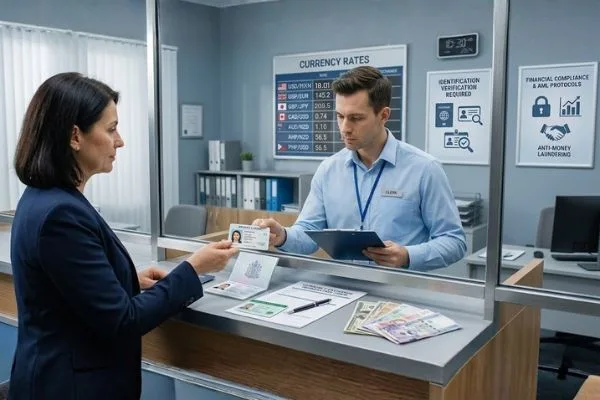
Currency exchange locations verify your identity to process transactions accurately and securely. Bringing proper identification ensures staff can complete your exchange without unnecessary interruptions.
Bring A Valid Government-Issued Photo Identification
A valid government-issued photo ID is the primary document required for most currency exchange transactions. The identification must be current, unexpired and clearly display your full legal name and photograph.
Acceptable forms of identification commonly include:
- A state-issued driver’s license
- A state identification card
- A U.S. or foreign passport
- A permanent resident card
Some locations may accept additional identification types, but expired or damaged IDs are typically not accepted.
If your identification is expired, altered or illegible, the transaction may be delayed or declined.
Always check that your ID matches the name you plan to use for the transaction.
Understand When Additional Customer Information Is Required
Currency exchange providers must collect additional customer information once certain transaction thresholds are reached. These thresholds often apply when exchanging $1,000 or more within a short period. Federal reporting standards for large cash transactions are outlined in official guidance such as the FDIC Currency Transaction Reporting requirements for financial institutions, which explain how institutions document qualifying activity.
When applicable, you may be asked to provide:
- Your current residential address
- Your date of birth
- Your Social Security number or taxpayer identification number
This information helps document higher-value exchanges and prevents structuring of transactions to avoid reporting requirements. Broader anti-money laundering oversight is administered by the Financial Crimes Enforcement Network under the Anti-Money Laundering Act of 2020, which establishes compliance frameworks for financial institutions operating in the United States.
If multiple transactions occur within 48 hours, the amounts may be aggregated for documentation purposes.
Bringing complete and accurate information helps avoid repeat visits or extended processing times. If you are coordinating identification for other services such as international remittances, you can review documentation expectations for money transfer services before your visit.
Transaction Documentation And Payment Preparation
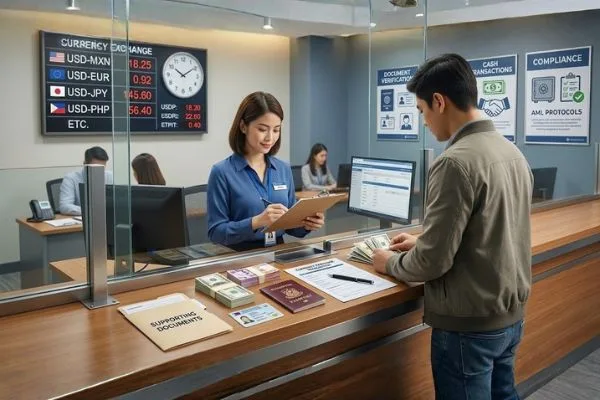
Bringing proper identification alone is not enough to complete your currency exchange smoothly. You must also prepare the correct payment method and understand transaction thresholds.
Bring The Exact Funds For The Currency Exchange
Currency exchange services typically require payment in cash for immediate conversion. Bringing the exact amount you intend to exchange reduces delays at the counter.
Before visiting, confirm:
- The currency you want to buy or sell
- The total amount you plan to exchange
- Whether small denomination bills are required
If you are exchanging a larger amount, the provider may request clarification regarding the source of funds. Having supporting documentation available can speed up the process. Current foreign currency movement and valuation trends are published regularly through Federal Reserve H.10 foreign exchange rate data, which provides reference information on major currency rates.
Large cash transactions completed in one business day may require the service provider to collect additional documentation in accordance with internal policies and applicable regulations.
Planning the transaction amount in advance prevents confusion during processing. If you also plan to convert funds received from payroll or tax refunds, review identification expectations for check cashing services before combining transactions.
Be Prepared For Aggregated Or Higher-Value Transactions
Currency exchange providers monitor transactions that exceed specific daily or multi-day thresholds. Even smaller exchanges can be combined if completed within 24 to 48 hours.
For example, transactions totaling $1,000 or more within 48 hours may require identification and recordkeeping. Cash transactions exceeding $10,000 in one business day may require financial institutions to complete formal reporting documentation under federal reporting standards. Exchange rate policy oversight and macroeconomic monitoring are explained in the U.S. Treasury exchange rate policy overview, which outlines how the government evaluates currency markets.
To stay prepared:
- Avoid splitting transactions to bypass identification requirements
- Bring all required identification for the full intended amount
- Be ready to explain the purpose of your exchange if asked
Breaking up large transactions intentionally to avoid reporting is considered structuring and may result in refusal of service.
Understanding these thresholds helps you plan a single, compliant transaction rather than multiple incomplete attempts. If you have questions about documentation before arriving, you can contact the service team through the Order Express contact page for clarification.
Key Takeaways
- Bring a valid government-issued photo ID that is current, unexpired and clearly legible.
- Provide additional personal information when your transaction meets documentation thresholds.
- Bring the exact funds you intend to exchange to avoid delays or incomplete processing.
- Understand that multiple transactions within 48 hours may be aggregated for recordkeeping purposes.
- Prepare for additional documentation if exchanging large amounts in one business day.
Frequently Asked Questions
Q: Do I Need Identification For A Small Currency Exchange?
A: Many locations require a valid photo ID for exchanges of $1,000 or more within 48 hours, and policies may vary.
Q: Can I Use An Expired Driver’s License For A Currency Exchange?
A: No. Most currency exchange providers require a current, unexpired government-issued identification document.
Q: What Happens If I Split My Exchange Into Smaller Transactions?
A: Transactions within 24 to 48 hours may be combined for documentation purposes, and intentional structuring may result in refusal.
Q: Should I Bring Proof Of Where My Money Came From?
A: For larger exchanges, you may be asked to clarify the source of funds, so supporting documentation can help.
Q: Can Someone Else Complete The Exchange On My Behalf?
A: Generally, the person conducting the exchange must present their own valid identification at the time of service.
Conclusion
Visiting a currency exchange location requires preparation that centers on identification and transaction readiness. Bringing a valid government-issued photo ID and the exact funds you intend to exchange ensures a smooth and efficient experience. Larger or aggregated transactions may require additional personal information or supporting documentation. Understanding these requirements before you arrive prevents delays, protects your transaction and supports proper recordkeeping standards. Reporting and documentation responsibilities are handled by financial institutions in accordance with applicable laws and internal compliance procedures. Consumer education resources such as the FDIC Money Smart financial education program provide additional guidance on handling cash transactions responsibly. Every successful exchange begins with preparation and accurate information.
Bring your valid ID and funds today and complete your currency exchange quickly with confidence at your nearest Order Express location.
Disclaimer: This content is provided for general informational purposes only and does not constitute financial, legal or tax advice. Identification and documentation requirements may vary by provider and transaction amount.

John is a Content & SEO Specialist who enjoys breaking down complex financial topics, like cross-border payments and money transfers, into content that’s easy to understand. He focuses on creating practical, search-driven content that helps people find answers and make informed decisions.