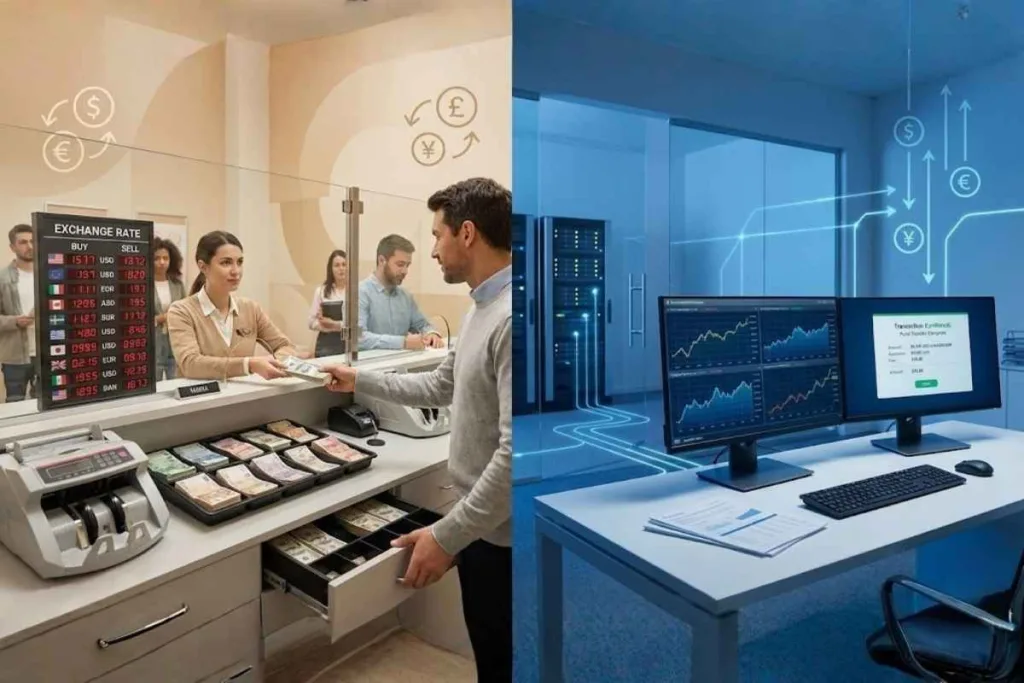
Currency exchange works differently for cash and digital funds because each method follows a distinct pricing and settlement mechanism. When using Order Express, customers can choose the method that aligns with their timing and liquidity needs. Cash exchange relies on physical inventory and retail spread pricing, while digital exchange uses electronic rate feeds and network-based settlement systems.
Understanding these two mechanisms helps you determine which option may best align with your transaction needs and timing preferences before completing your transaction.
Exchange rates offered for transactions may include a margin or spread above the wholesale market rate, and additional service fees may apply. Customers will always see the total exchange rate and any applicable fees before authorizing a transaction. Services, transaction limits, and currency availability may vary by location and state regulatory requirements.
Physical Cash Exchange Mechanism
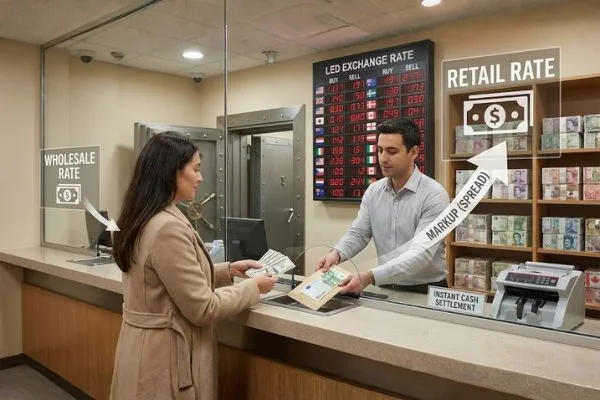
Foreign cash exchange operates through on-hand currency inventory and retail rate spreads. Providers must physically hold foreign banknotes before selling them to customers, which directly influences pricing and availability.
How Exchange Rates Apply To Physical Currency
Cash exchange rates include a retail spread built into the quoted rate. The provider purchases foreign currency at a wholesale rate and resells it at a marked-up retail rate to cover operational costs. This retail margin is commonly referred to as the currency exchange rate spread or FX spread. According to Federal Reserve H.10 foreign exchange rate data, benchmark rates reflect interbank pricing rather than retail transaction rates.
When you exchange physical banknotes, the provider immediately delivers the converted currency. The transaction finalizes instantly because settlement occurs at the counter using available inventory.
Cash exchange rates often differ from online rate charts because providers price in inventory risk and handling costs. Federal policy perspectives on currency valuation are outlined in U.S. Treasury exchange rate policy guidance, which explains how governments monitor foreign currency value trends for macroeconomic oversight.
Several Factors Influence The Final Cash Rate You Receive:
- Local supply and demand for specific foreign banknotes
- Transportation and insurance costs for currency inventory
- Counterfeit detection and physical handling expenses
These cost drivers explain why airport kiosks frequently display wider spreads than branch locations in metropolitan areas.
Settlement And Liquidity In Cash Transactions
Cash transactions settle instantly because both parties exchange physical value simultaneously. Once you hand over domestic currency, you immediately receive the foreign banknotes.
However, liquidity depends entirely on available vault inventory at that specific location. If a branch does not hold sufficient foreign currency, you may face limits or delayed fulfillment.
Cash Exchange Typically Involves The Following Steps:
- Present your domestic currency and valid government-issued identification. We may require customer identification and additional information to comply with applicable federal and state laws.
- Lock in the displayed retail exchange rate.
- Receive foreign banknotes after verification and counting.
Because the transaction completes immediately, the rate does not fluctuate after execution.
Risk And Pricing Considerations For Cash Exchange
Cash exchange pricing reflects operational and inventory risk absorbed by the provider. Holding foreign banknotes exposes the provider to rate volatility before resale.
Security costs also influence pricing because physical cash requires storage, surveillance and insurance coverage. These structural costs remain embedded within the quoted exchange spread.
For travelers needing immediate spending power, cash offers certainty and instant usability. Customers preparing for international payments may also evaluate related services such as money transfer options when planning digital transactions.
Understanding these mechanisms, along with broader currency exchange fundamentals explained in our guide to currency exchange fundamentals for everyday transactions, helps you determine which option may best align with your transaction needs and timing preferences before completing your next transaction.

Digital Fund Exchange Mechanism
Digital currency exchange operates through electronic conversion and network-based settlement systems. Instead of transferring banknotes, the provider adjusts account balances using real-time rate feeds.
How Digital Exchange Rates Are Determined
Digital exchange rates derive from live interbank or liquidity provider pricing feeds. Providers update rates dynamically throughout the business day based on global currency markets.
When you exchange digital funds, the provider converts balances electronically rather than distributing physical currency. Because no physical inventory is involved, pricing structures often differ from retail cash rates.
Digital rates adjust continuously because they connect directly to global currency trading infrastructure. Consumer protection and transparency standards for international transfers are explained by the Consumer Financial Protection Bureau sending money abroad resource.
Digital Exchange Pricing Typically Reflects:
- Real-time wholesale rate feeds
- Platform processing costs
- Network settlement fees
These components create a more market-linked exchange structure compared to physical currency counters.
Electronic Settlement And Transfer Systems
Digital exchange settles through banking networks, remittance rails or payment platforms. Once the conversion executes, funds move electronically to the destination account.
Settlement timing depends on the payment channel selected during the transaction. Some digital conversions settle within minutes, while others complete within one business day.
Digital settlement time depends on the payment network selected and may vary based on processing cutoffs, banking hours, and destination country requirements.
Unlike cash exchange, liquidity rarely limits digital transactions in common currencies. Electronic systems source funds through institutional liquidity pools rather than vault inventory. Financial literacy programs such as the FDIC Money Smart consumer education program help individuals understand how electronic payments function within the broader financial system.
A Standard Digital Exchange Process Follows These Steps:
- Submit the transfer or conversion request through the platform.
- Confirm the displayed exchange rate before authorization.
- Receive electronic confirmation once settlement completes.
Because rates update in real time, locking the rate typically requires immediate authorization.
Liquidity, Volatility And Execution Timing
Digital exchange pricing reacts quickly to market volatility throughout the trading day, and displayed rates may change prior to transaction authorization. If currency markets move sharply, displayed rates adjust automatically before confirmation.
Execution timing therefore matters more in digital transactions than in cash counter exchanges. Delays between quote and confirmation may result in minor rate differences.
However, digital systems reduce physical handling risk and eliminate storage expenses. These efficiencies can produce tighter exchange spreads depending on the provider. Customers who need to convert funds connected to payroll or deposited instruments may also explore related services like check cashing support before initiating digital conversions.
For everyday transactions such as international transfers or account conversions, digital exchange often delivers convenience and operational flexibility. Customers seeking additional assistance may review available services or reach out through the Order Express contact page for transaction-specific guidance.
Key Takeaways
- Cash exchange relies on physical inventory and retail spreads, resulting in instant settlement but potentially wider pricing margins.
- Digital exchange uses real-time rate feeds and electronic settlement networks, creating dynamic pricing tied closely to currency markets.
- The core difference lies in physical delivery versus electronic balance adjustment, which directly affects liquidity, timing and rate structure.
Frequently Asked Questions
Q: Is The Exchange Rate Better For Digital Funds Than Cash?
A: Digital exchange often reflects live market pricing, while cash includes retail spreads for inventory and handling. The exact rate depends on provider structure and timing of execution.
Q: Why Do Cash Exchange Rates Differ From Online Rates?
A: Cash rates include physical handling, storage and inventory costs. Online or digital rates connect more directly to wholesale currency pricing feeds.
Q: Does Digital Currency Exchange Settle Instantly?
A: Some digital conversions settle within minutes, while others require up to one business day depending on the payment network used.
Q: Can Cash Exchange Rates Change During My Transaction?
A: Once the provider confirms and processes your cash exchange at the counter, the rate locks immediately and does not change.
Q: Is Liquidity Ever An Issue With Digital Exchange?
A: Liquidity rarely limits common currency pairs digitally because providers source funds through institutional liquidity pools rather than physical vault inventory.
Conclusion
Currency exchange works through two distinct mechanisms depending on whether you use cash or digital funds. Cash exchange depends on physical inventory, retail pricing spreads and immediate counter settlement. Digital exchange relies on real-time rate feeds, electronic balance adjustments and network-based settlement systems. For travelers needing instant banknotes, cash provides certainty and immediate usability. For transfers, account funding or remote transactions, digital exchange offers flexibility and market-linked pricing.
Ready to complete your currency exchange? Review your available rate, applicable fees, and delivery options before authorizing your transaction.
Note: Order Express is a registered Money Services Business and complies with applicable federal and state regulations, including the Bank Secrecy Act and related anti-money laundering requirements.
Disclaimer: This article is provided for general informational purposes only and explains how currency exchange functions for cash and digital fund transactions. Exchange rates may include a margin or spread above wholesale market rates, and additional service fees may apply. Rates fluctuate based on market conditions and are disclosed prior to transaction authorization. Services, transaction limits, and currency availability may vary by state and location. Nothing in this article constitutes financial, legal, or investment advice. Customers should carefully review all transaction details before authorizing any exchange or transfer.

John is a Content & SEO Specialist who enjoys breaking down complex financial topics, like cross-border payments and money transfers, into content that’s easy to understand. He focuses on creating practical, search-driven content that helps people find answers and make informed decisions.