


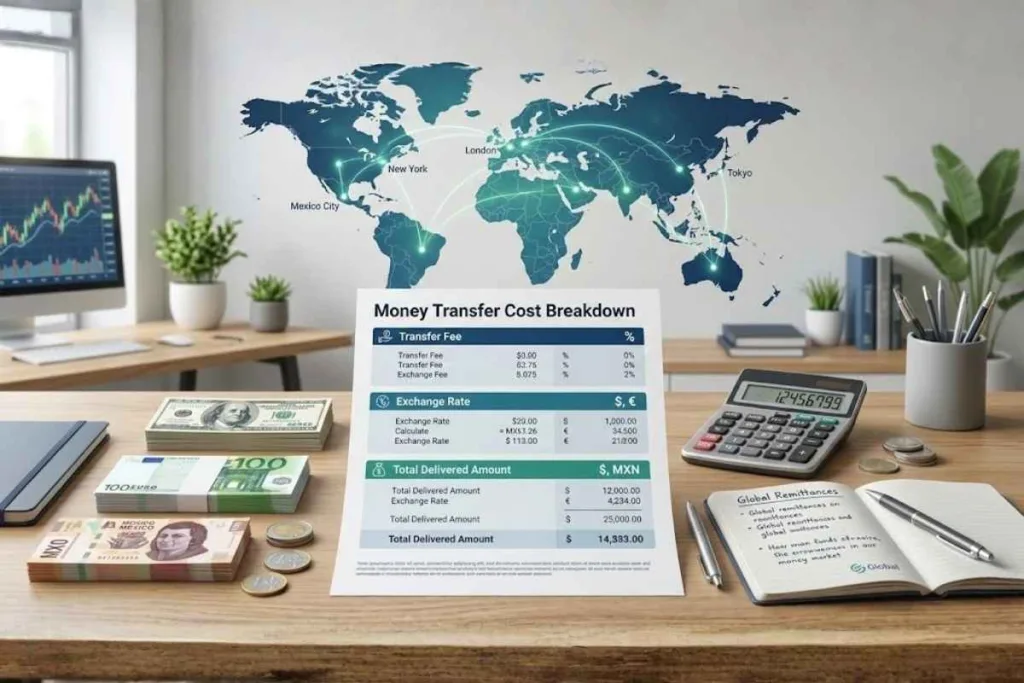
When sending money internationally, the advertised fee is only part of the total cost. Exchange rates, delivery methods and pricing margins can significantly change the final amount your recipient receives.
Money transfer fees, costs and exchange rates determine the true price customers pay when sending funds domestically or internationally. Understanding how these elements interact helps customers compare providers confidently and avoid unnecessary expenses.
Order Express has provided money transfer services to customers across the United States since 1993. As a licensed Money Services Business, we are committed to transparency and regulatory compliance.
A money transfer includes more than a visible service charge at checkout. The total cost reflects fees, exchange rate margins, delivery method pricing and economic conditions affecting currency value.
This guide explains how pricing works, how exchange rates influence outcomes and where customers can find meaningful savings. Each section introduces key frameworks that support deeper resources across our money transfer education center.

Understanding The Real Cost Of A Money Transfer
The real cost of a money transfer includes visible service fees and less visible pricing components. Customers often focus only on the upfront charge, overlooking how exchange rate margins and delivery structures affect totals.
Service Fees And Pricing Structures
Service fees represent the most visible portion of a money transfer transaction. Providers may charge flat fees, percentage based fees or variable pricing tied to destination corridors.
Flat fees offer predictable costs for larger transfers but may disadvantage smaller payments. Percentage based pricing adjusts automatically but can increase sharply as transaction amounts grow.
Pricing also differs based on funding method, payout speed and delivery channel selection. Most Money Transfer Services display the total cost and delivered amount before a transfer is confirmed.
Customers should compare the total delivered amount instead of evaluating fees in isolation. The net amount received often reveals meaningful differences between similar advertised service charges.
Exchange Rate Margins And Currency Conversion
Exchange rates convert one currency into another during international transfers. Providers apply a margin to the mid market rate, creating revenue through currency conversion differences.
Even small exchange rate adjustments can meaningfully change the recipient’s final payout amount. Customers who ignore the exchange rate may underestimate the true transfer cost.
When comparing options, review both the stated fee and the offered exchange rate. A lower fee combined with a weaker rate may result in higher overall costs.
Currency values fluctuate daily based on market supply and demand dynamics published through the Federal Reserve H.10 Exchange Rate Data. Financial institutions reference these benchmarks when establishing internal rate frameworks, though each provider applies its own margin.
Dedicated resources explore how providers calculate rates and how customers evaluate rate competitiveness. Understanding this framework strengthens decision making without requiring technical currency expertise.
Speed, Delivery Method And Corridor Differences
Transfer pricing also reflects delivery speed and payout method. Instant cash pickup services typically cost more than standard bank deposit transfers.
Geographic corridors influence regulatory environments, liquidity costs and partner network expenses. High volume corridors often benefit from tighter spreads due to market competition.
Remote destinations may carry higher pricing due to operational complexity. Customers sending funds regularly to specific countries should monitor recurring cost patterns carefully.
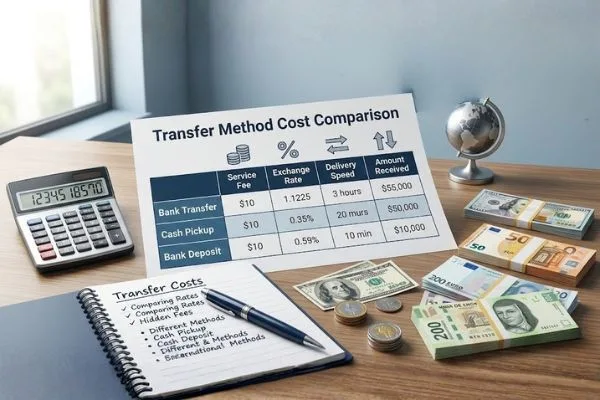
Choosing The Most Cost Efficient Transfer Method
Selecting the right transfer method requires balancing price, convenience and reliability. Understanding how different transfer channels structure fees and exchange rates can help customers evaluate available options.
Bank Transfers Versus Digital Money Transfer Providers
Traditional banks often include layered pricing within international transfer structures. Wire transfer fees, intermediary charges and wider exchange spreads can increase total cost.
Digital money transfer providers typically specialize in cross border corridors and optimize pricing efficiency. Their business models often rely on technology infrastructure rather than correspondent banking networks.
However, pricing varies by corridor and transaction size. Customers should evaluate each provider using a consistent comparison framework.
Cash Pickup, Bank Deposit And Wallet Delivery
Delivery format influences total transfer expense and user experience. Cash pickup offers accessibility but may include higher service and liquidity charges.
Bank deposit options generally reduce handling costs and streamline payout processes. Many online transfer platforms allow senders to choose payout methods based on recipient needs and corridor availability.
Digital wallet transfers may provide competitive pricing in mobile centric markets. Customers should assess recipient preferences alongside cost considerations. A slightly higher fee may provide faster access or greater convenience for the beneficiary.
Comparing Total Cost Instead Of Advertised Fees
Advertised fees rarely reflect the complete cost of a transaction. Customers should compare total sent amount against final delivered amount in destination currency.
A practical comparison checklist includes reviewing:
- The upfront service fee disclosed before payment.
- The exchange rate applied to the conversion.
- Any receiving bank or payout partner deductions.
- The expected delivery time and payout method.
Structured comparison protects customers from focusing on only one pricing element. Strategic evaluation reduces unexpected differences between estimated and final delivery amounts.

How Exchange Rates, Inflation And Markets Influence Transfers
Currency markets directly affect the value of international money transfers. Economic conditions influence exchange rates daily, sometimes creating noticeable differences in payout value.
Currency Fluctuations And Market Volatility
Exchange rates fluctuate due to supply, demand and macroeconomic indicators. Political events, central bank decisions and trade balances often move currency values rapidly.
Customers sending large amounts may experience significant differences within short timeframes. Monitoring rate trends helps customers understand timing implications without attempting currency speculation.
Educational resources explore how rate volatility works and what influences major currency pairs. This pillar introduces the concept without providing investment advice or market predictions.
Inflation And Purchasing Power
Inflation reduces purchasing power within an economy over time. When inflation differs between countries, currency value adjustments often follow.
Higher inflation in a destination country can reduce real purchasing power for recipients. Understanding inflation context helps senders interpret how much value transfers truly provide.
Long term transfer patterns benefit from awareness of economic stability and currency resilience. Customers supporting family members abroad should consider broader economic conditions affecting living costs.
Regulatory And Disclosure Requirements
Money transfer providers operating in the United States must follow federal consumer protection and financial transparency regulations.
The Consumer Financial Protection Bureau Remittance Transfer Rule requires providers to disclose key information before payment, including transfer fees, exchange rates and the expected delivery amount.
Financial institutions must also maintain anti money laundering programs designed to detect and monitor suspicious financial activity. These programs are governed by federal requirements such as eCFR 31 CFR 1022.210.
Suspicious activity reporting obligations are outlined under eCFR 31 CFR 1022.320. These reporting requirements apply to financial institutions and are part of broader safeguards intended to protect the financial system.
Understanding the regulatory framework helps explain why pricing disclosures and transparency requirements exist across the industry.
Note: Regulatory references are provided for informational purposes and do not represent a comprehensive overview of all applicable financial regulations.

Practical Strategies To Reduce Money Transfer Costs
Customers can lower money transfer costs through informed planning and comparison. Strategic behavior often reduces expenses without sacrificing reliability or security.
1. Plan Transfer Timing Thoughtfully
Exchange rates move throughout the day and across weeks. Customers sending recurring transfers may observe patterns that influence total delivered value.
Monitoring exchange rates may help customers understand how market fluctuations affect transfer values, particularly for recurring or planned transfers. Customers should avoid speculative timing based on short term volatility alone.
For urgent transfers, prioritize reliability and delivery confirmation over marginal rate improvements. Balancing urgency with cost awareness protects both sender and recipient expectations.
2. Consolidate Transfers When Appropriate
Frequent small transfers may accumulate higher total fees over time. Consolidating payments when feasible can reduce repeated fixed service charges.
Before consolidating transfers, consider how larger payments may involve additional verification or documentation depending on the provider and payment method.
For general reference, U.S. financial regulations require financial institutions to report certain large cash transactions under eCFR 31 CFR 1010.311.
Review disclosure documents carefully before completing high value transactions. Transparency helps customers anticipate documentation requests and processing timelines.
3. Compare Providers Regularly
Pricing structures evolve as competition and market conditions shift. A provider offering competitive pricing last year may not lead current corridor comparisons.
Customers should revisit comparisons periodically rather than relying on past assumptions. Technology driven platforms frequently update rates, spreads and fee models.
When evaluating providers, focus on total delivered amount and service reliability. Cost savings should not compromise reliability, transparency or transaction security.
Key Takeaways
- The true cost of a money transfer includes service fees, exchange rate margins and delivery structure pricing.
- Comparing total delivered amount provides clearer insight than evaluating advertised fees alone.
- Exchange rate fluctuations and inflation influence how much value recipients ultimately receive.
- Different transfer methods carry distinct pricing implications based on speed and payout format.
- Strategic planning and periodic comparison can meaningfully reduce long term transfer costs.
Frequently Asked Questions
Q: What Determines The Total Cost Of A Money Transfer?
A: Total cost includes the service fee, exchange rate margin and any payout partner deductions affecting the delivered amount.
Q: Why Do Exchange Rates Vary Between Providers?
A: Providers apply different currency conversion margins based on liquidity, corridor competition and internal pricing models.
Q: Are Bank Transfers Always More Expensive Than Digital Providers?
A: Not always, but banks often include layered fees and wider spreads that increase overall transfer costs.
Q: How Can I Compare Money Transfer Options Effectively?
A: Review the total amount delivered in destination currency after fees and exchange rates, not just the upfront charge.
Q: Do Regulations Require Money Transfer Fee Disclosure?
A: Yes, U.S. remittance rules require providers to disclose fees, exchange rates and expected delivery timing before payment.
Conclusion
Money transfer fees, exchange rates and delivery structures collectively determine the true price customers pay. Understanding these components empowers customers to compare providers confidently and reduce unnecessary expenses.
Transparent disclosures improve visibility, yet informed comparison remains essential for cost efficiency. Customers who evaluate total delivered amount gain clearer insight into real transaction value. Economic conditions, currency volatility and corridor dynamics further influence payout outcomes. Awareness of these factors supports smarter long term transfer planning.
Before sending funds, review fees, exchange rates and delivery expectations carefully. Choosing a provider with clear pricing and reliable service can help reduce uncertainty when sending money.
Before sending funds, review fees, exchange rates and delivery expectations carefully. Compare transfer costs and visit an Order Express branch or authorized agent to send money with transparent pricing.
Disclaimer: This article provides general educational information about money transfers and financial regulations. It does not constitute legal, financial, tax or investment advice and should not replace consultation with qualified professionals.

John is a Content & SEO Specialist who enjoys breaking down complex financial topics, like cross-border payments and money transfers, into content that’s easy to understand. He focuses on creating practical, search-driven content that helps people find answers and make informed decisions.


