


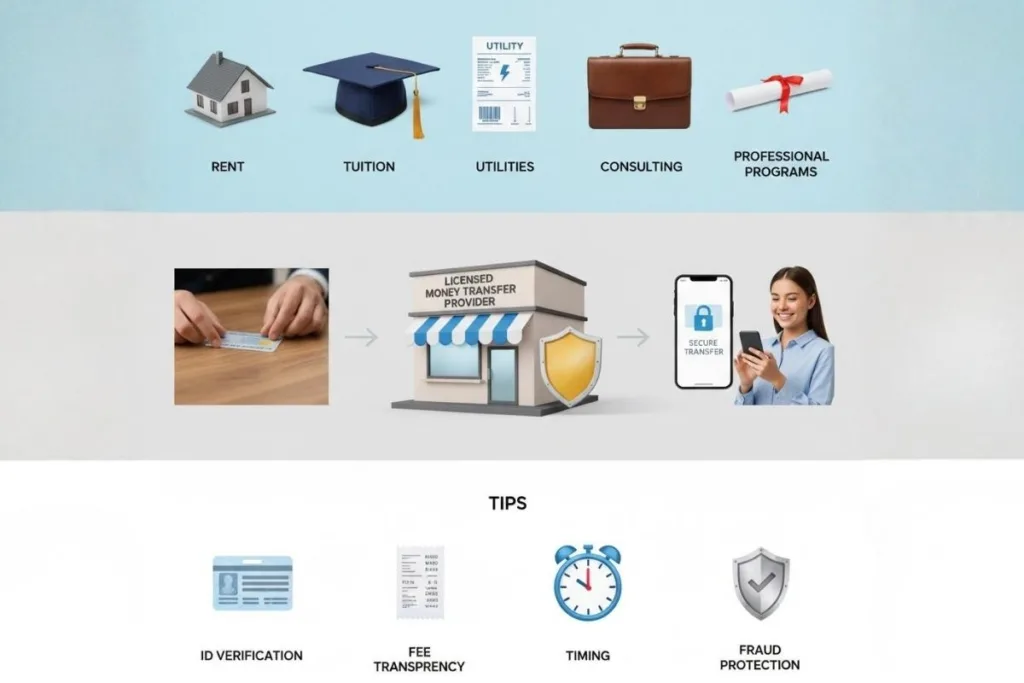
A Money Transfer lets customers pay for services through a licensed money transfer provider using regulated financial systems. Many customers rely on Order Express to move funds securely for personal and professional needs through its nationwide network of financial services.
Order Express operates within established compliance frameworks designed to support secure transfers and transparent disclosures. Customers who understand verification requirements, fees, and timing reduce delays and avoid common transaction errors.
People send money for services such as rent, tuition, utilities, consulting, and professional programs. Knowing how licensed providers verify transactions and follow regulatory standards helps customers choose safe payment options.
This guide explains how money transfers work, why compliance matters, and what steps customers should take before sending funds. The information supports informed decisions and safer transactions through regulated financial services.
Understanding A Money Transfer Process
A money transfer follows a regulated process designed to move funds securely and accurately. Understanding each stage helps customers know what happens after they submit a transaction.
1. How The Process Works From Start To Finish
A money transfer begins when a customer chooses a provider and destination. You enter sender information, recipient details, and the transfer amount. Order Express processes transactions through established financial networks that support accuracy and efficiency through its dedicated money transfer services.
The process includes authorization, verification, and funds movement. Federal regulations require money services businesses to apply customer identification and verification controls under 31 CFR §1022.210, which is administered by the Financial Crimes Enforcement Network.
Once authorized, funds move through settlement channels. Some transactions qualify as international remittance, while others remain domestic depending on the destination. Processing time may vary based on these factors.
Customers often use funds transfer services for service-related payments such as educational fees or professional services. As required under federal anti-money laundering regulations (31 CFR Chapter X), money services businesses must maintain written AML programs and may monitor and report certain transactions in accordance with applicable law.
A money transfer follows predictable steps. Clear expectations help customers plan payments, especially when timing matters.
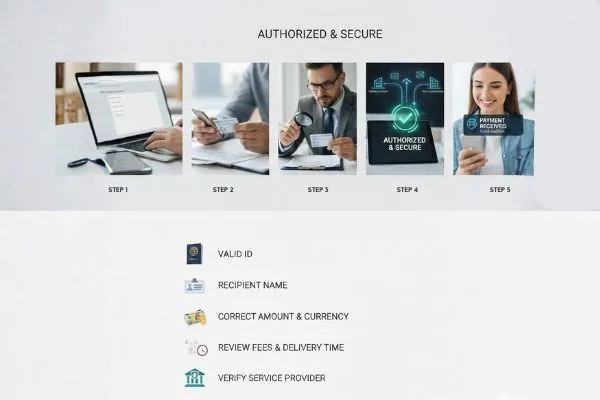
2. Information You Need Before Sending Funds
Customers must provide accurate information before completing a transaction. Federal regulations, including the Anti-Money Laundering Act of 2020 enforced by FinCEN, establish requirements for how money services businesses process transactions securely.
Before sending funds, customers should prepare the following details:
- Valid personal identification, when required
- Correct recipient name and destination
- Accurate payment amount and currency
Customers should also confirm the legitimacy of the service provider before sending funds. This practice aligns with fraud prevention principles described by the FDIC Consumer Resource Center.
Before payment, the system displays transaction details clearly. Customers can review fees, totals, and estimated delivery time before confirming payment. This step allows customers to decide whether to proceed.

What To Expect When Sending Money Transfer
Sending a money transfer includes clear disclosures, processing timelines, and post-payment confirmation. Knowing what to expect helps customers avoid surprises and plan payments confidently.
1. Fees, Exchange Rates, And Timing Transparency
Order Express provides transaction disclosures before payment. Customers see applicable fees, exchange rates, and total costs upfront. This transparency supports informed decision-making and aligns with consumer protection standards described by the Consumer Financial Protection Bureau remittance transfer rules.
Exchange rates apply to certain international transactions. Rates depend on destination, payout partner, and payment method. Customers can review rate information during the transaction process.
Processing times vary based on destination and service requirements. Some transactions complete quickly, while others may require additional time due to local regulations or payout partner rules.
After payment, customers receive a transaction receipt. The receipt includes reference information and expected delivery timing. Customers should keep this document for records and future support inquiries. For certain international transfers that qualify as remittance transfers under federal law (12 CFR Part 1005, Subpart B), customers may receive pre-payment disclosures, receipt disclosures, and specific consumer protections. These may include the right to cancel within 30 minutes of payment (where applicable) and the right to report certain errors within designated timeframes. Customers should review their transaction receipt for full details regarding cancellation and error resolution procedures.
This money transfer experience focuses on clarity and accountability at every stage.
2. Using Transfers For Professional And Educational Services
Money transfers support more than everyday household payments. Many customers rely on financial services to pay for professional or educational programs across borders.
For example, businesses expanding internationally may need to manage cross-border payments when investing in professional development programs such as leadership training. These transactions often involve cross-border payments that require reliable processing.
Organizations may also invest in leadership coaching to support management development and team performance. In some cases, companies support participation in women in leadership programs offered by institutions outside their home country.
These types of service payments require accuracy, reliability, and secure processing. Customers depend on financial service providers to ensure funds reach the intended recipient without unnecessary delays.
Order Express supports a range of customer needs beyond transfers through its broader other financial services.
Making Informed Decisions With Order Express
Making informed decisions helps customers send money safely and confidently. Understanding safety practices and available support reduces risk and improves transaction outcomes. Order Express is registered as a Money Services Business (MSB) with the Financial Crimes Enforcement Network (FinCEN) and complies with applicable federal and state regulations governing money transmission services.
Safety Awareness And Customer Responsibility
Order Express operates within established compliance frameworks. Federal agencies publish examination manuals and regulatory guidance describing compliance expectations for financial institutions and money services businesses.
Customers also play an important role in transaction safety. Responsible behavior helps reduce errors and potential fraud. Awareness supports smoother transactions and better outcomes.
Customers should follow these best practices:
- Send funds only to trusted individuals or service providers
- Review transaction details carefully before confirming payment
- Protect personal and payment information at all times
These steps help reduce fraud risk and transaction errors. Financial awareness supports safer use of services, alongside regulatory safeguards that apply to financial institutions.
Support, Errors, And Resolution Options
Customers may report transaction concerns within applicable timeframes. Order Express reviews reported issues through structured resolution processes designed to support fairness and transparency.
If an issue occurs, customers should contact customer support promptly. Providing the transaction reference number helps speed up the review process and improves resolution efficiency through the company’s contact and support resources.
Order Express offers accessible support channels before and after transactions. Customers can ask questions, request clarification, or report concerns at any stage of the transaction.
Clear communication between customers and support teams helps resolve issues efficiently. Reliable support strengthens trust and improves the overall service experience.
Why Understanding The Process Matters
Understanding how a money transfer works helps customers avoid unnecessary delays. Prepared customers complete transactions more smoothly and experience fewer follow-up requests.
Education also helps customers recognize the importance of accurate information. Small errors can affect processing time, especially for international transactions.
By knowing what to expect, customers feel more confident when sending funds. This confidence supports better financial decisions and reduces stress during the transaction process.
Order Express values transparency and customer education as part of its service approach, alongside additional offerings such as its check cashing services.
Conclusion
Sending money for services works best when you understand each step before you begin. By preparing accurate information, reviewing fees and timing upfront, and confirming recipient details, you reduce delays and protect your funds. Knowing how verification, processing, and delivery work also helps you plan payments with confidence, especially for cross-border services.
Order Express supports this process with transparent disclosures, secure systems, and accessible customer support. Use these insights to make informed decisions, avoid common errors, and move funds responsibly.
The regulatory framework establishes legal requirements applicable to money services businesses. Order Express also maintains internal compliance policies designed to support adherence to those requirements. Internal policies do not replace federal or state law.
Ready to send funds with confidence? Choose Order Express for regulated money transmission services designed to support transparency and compliance with applicable laws.
Disclaimer: This content is for educational purposes only. It does not replace official Order Express policies or federal regulatory requirements. Fees, availability, and processing times may vary by service and location.
Frequently Asked Questions
Q: What Information Do I Need Before Sending A Money Transfer For Services?
A: Prepare these details:
- Sender identification, if required
- Recipient name and destination
- Amount and currency
Accurate information helps avoid delays.
Q: How Long Does A Money Transfer Usually Take?
A: Timing depends on:
- Destination country
- Payment method
- Local payout rules
Some transfers are fast, others take longer.
Q: How Can I Reduce The Risk Of Fraud When Sending Money?
A: Follow these steps:
- Send funds only to trusted providers
- Review details before payment
- Protect personal information
Q: Are Fees And Exchange Rates Shown Before Payment?
A: Yes. Customers see fees, exchange rates, and total costs before confirming the transaction.
Q: What Should I Do If There Is An Error With My Transfer?
A: Act quickly:
- Contact customer support
- Provide the transaction reference
- Explain the issue clearly

John is a Content & SEO Specialist who enjoys breaking down complex financial topics, like cross-border payments and money transfers, into content that’s easy to understand. He focuses on creating practical, search-driven content that helps people find answers and make informed decisions.


