


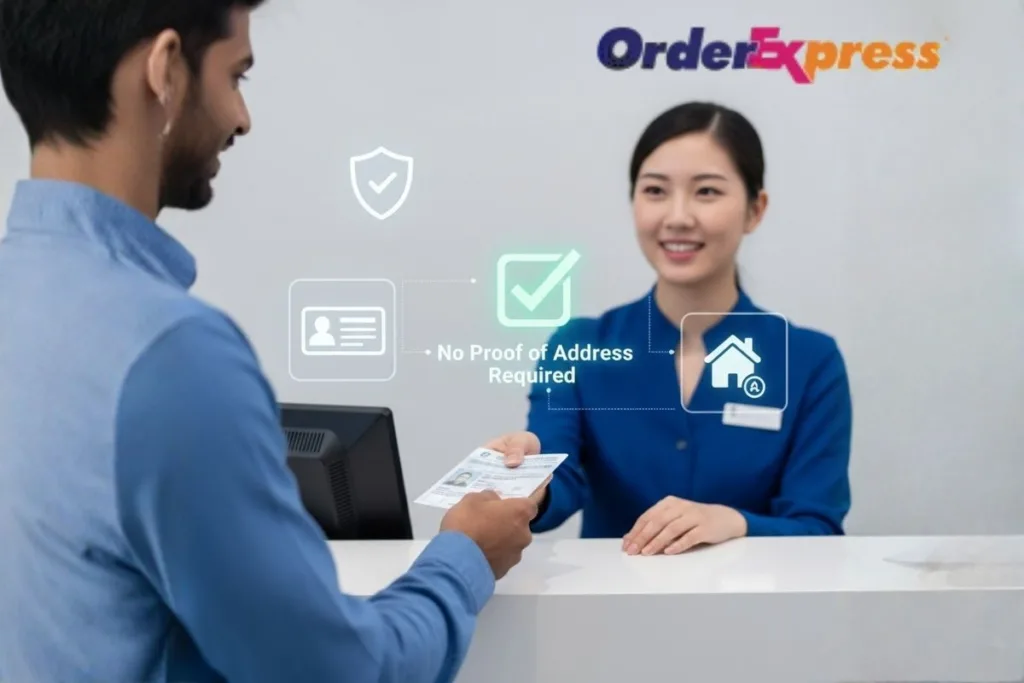
You can cash a Money Order without proof of address in most domestic cases, but you must provide valid identification and accurate address information.
Order Express, a licensed money transfer provider, follows strict verification and compliance standards to ensure secure transfers and prevent fraud. Customers often want to know exactly what documents they need, why identification matters, and how regulators shape these requirements.
This guide explains how address verification works, when proof of address applies, and what steps customers should take before visiting a payment location. You will learn how Order Express records your information, how federal rules influence verification, and how to prepare for fast and compliant service.
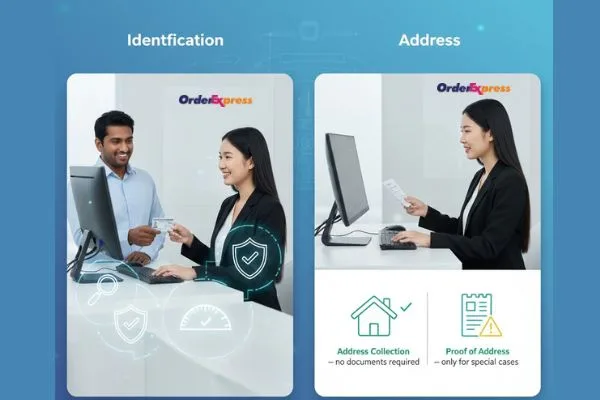
Understanding Requirements For A Money Order At Order Express
Order Express uses clear identification and address procedures to support secure transactions. These steps protect customers, prevent fraud, and ensure all information complies with company policies and federal expectations. The sections below explain how identification works, why address information matters, and how customers can prepare.
How Order Express Collects Customer Identification
Why Identification Is Required
Order Express follows documented procedures for customer identification. These procedures appear in the company’s internal BSA and AML compliance manual. They help protect customers and support secure remittance and money transfer activity.
You can learn more about available transfer options by visiting the Order Express money transfer services page.
At Order Express, collecting identification helps to:
- Verify the customer presenting the transaction
- Prevent unauthorized or fraudulent activity
- Detect and report suspicious behavior when required
- Maintain accurate and compliant records
Identification Thresholds
Identification becomes mandatory when a transaction meets specific dollar levels. These thresholds are set by Order Express internal policy, which is designed to meet or exceed federal requirements. Federal rules governing recordkeeping can be found in FinCEN’s official guidance for money services businesses.
The cashier reviews the amount and informs the customer when identification is required. For certain transactions totaling three thousand dollars or more within seven days, federal recordkeeping rules require additional identification from the customer. These requirements apply to financial institutions and do not replace Order Express internal policy, which remains separate and may be stricter.
Financial institutions may review multiple smaller transactions completed within a short period to determine whether they should be treated as a combined amount. This review process is called aggregation. Aggregation helps institutions meet federal monitoring and reporting requirements. Customers may be asked for identification again if combined activity reaches internal or federal thresholds.
For certain transactions totaling three thousand dollars or more within seven days, federal recordkeeping rules require additional identification. These requirements apply to financial institutions and do not replace Order Express internal policy, which remains separate and may be stricter.
Acceptable Forms Of Identification
Order Express accepts several primary identification types:
- Government-issued photo IDs
- Driver’s licenses
- Passports
The cashier enters:
- The ID number
- The ID type
- The issuing region
This entry occurs even for smaller transactions when verification is needed.
Identification For Smaller Transactions
Customers often ask if they need ID for lower dollar amounts. Cashiers may still request ID because Order Express uses internal procedures to maintain a strong compliance program and prevent unauthorized activity. Consumers can learn more about fraud awareness through the FDIC Consumer Resource Center.
How Customers Can Prepare
Customers can speed up the process by:
- Bringing a valid government photo ID
- Confirming the ID is current
- Preparing sender information before arrival
Prepared customers experience faster and smoother transactions.
Why Order Express Records A Customer’s Address
The Purpose Of Address Collection
Order Express records customer address information during many transactions. Address details help verify identity and support transaction history records. You can explore related services, such as secure check processing, through the Order Express check cashing page.
Collecting a customer’s address does not always mean they must provide proof of address.
Address information supports:
- BSA and AML recordkeeping
- Identity confirmation
- Transaction monitoring
- Accurate, long-term logs
Address Collection Vs Proof Of Address
Customers often confuse these two requirements.
Address Collection:
- Cashier asks for your address
- Information is typed into the system
- No document required
Proof Of Address:
- Customer shows a document verifying their residence
- Examples include utility bills or bank statements
Routine Money Order transactions require only address collection, not proof.
When Proof Of Address Is Not Required
Most domestic transactions at Order Express do not require proof of address. The company only records the address provided by the customer. This supports fast service and avoids unnecessary delays.
Importance Of Accurate Information
Customers should provide complete and accurate address information. Incomplete details slow down transactions because the cashier cannot finalize the entry. Accurate information helps both the customer and staff maintain efficient service.
Address Collection Compared With Address Proof
Why The Distinction Matters
Customers sometimes believe they cannot complete a transaction without proof of address. This misunderstanding causes stress and unnecessary preparation. You can explore additional day-to-day services through the Order Express other services page.
Order Express policies for domestic Money Orders focus on address collection. Customers do not need documents like utility bills or bank statements for routine requests.
When Proof Of Address Might Be Required
Some financial services require formal proof of address. These typically involve:
- International activity
- Account openings
- Country-specific regulations
- Higher-risk transactions
Routine domestic Money Orders do not fall into these categories.
How Customers Can Avoid Confusion
Before visiting a payment location, customers should:
- Know whether their transaction is domestic or international
- Bring valid identification
- Confirm their current address
- Ask the cashier if any special requirement applies
Understanding these differences reduces confusion and ensures a smoother experience.
Proof Of Address And Money Order Policies
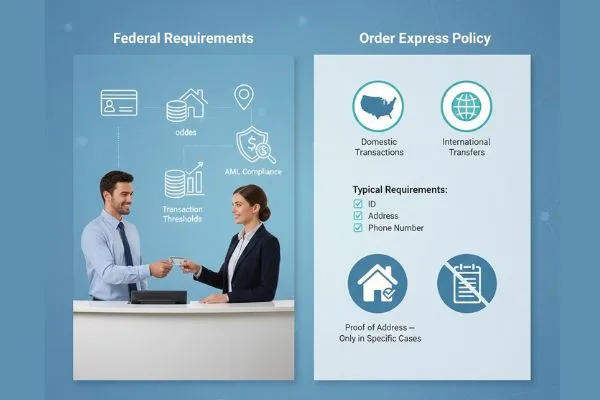
Understanding when proof of address is required helps customers prepare for fast and compliant service. Federal rules and Order Express policies serve different purposes, so this section explains how each standard works and what customers must bring.
When Federal Rules Require Identification Or Address Details
How Federal Rules Apply
Federal rules differ from Order Express policies. Federal rules establish national minimums for identification and recordkeeping, and Order Express maintains its own internal policies that are separate and may be stricter than those federal minimums. These rules follow national law and include standards under the Bank Secrecy Act. A detailed breakdown of these standards can be found in the FFIEC BSA/AML Examination Manual Appendix.
Businesses must follow these rules when transactions meet federal thresholds.
Federal rules require:
- Identification for certain transaction amounts
- Accurate customer information for monitoring
- Complete records for reporting purposes
These rules help prevent illegal activity and support AML controls. Additional details appear in 31 CFR §1022.210 Customer Identification Program requirements. Financial institutions must file a Currency Transaction Report when cash transactions meet the federal threshold listed under 31 CFR 1010.311. Institutions must also file a Suspicious Activity Report when activity meets the reporting triggers outlined in 31 CFR 1022.320. These reporting requirements apply only to institutions and not to customers.
Federal regulations require financial institutions to retain specific BSA records for five years, as described in 31 CFR 1010.430. This retention requirement applies to institutions and does not apply to customers.
Identification And Address Requirements
Customers completing larger transactions must show valid identification. Federal rules also require businesses to collect a customer’s address when a transaction meets reporting levels. Further guidance is available in CTR reporting guidance under 31 CFR §1010.311.
These rules do not require proof of address for most domestic Money Orders.
Customers may bring a utility bill or similar document if they choose, but federal rules do not require it. Identification and accurate personal information remain the main requirements. Consumer-facing education is also provided by the CFPB Consumer Resources.
Shared Goals Between Federal Rules And Order Express
Both federal standards and Order Express policies aim to:
- Protect the financial system
- Prevent fraud
- Ensure accurate verification
- Support customer safety
These aligned goals help maintain secure and transparent services.
When Order Express Requires Proof Of Address
How Order Express Determines When Proof Is Needed
Order Express requires proof of address only in specific cases. These situations occur mainly during certain international remittance services. For general account and cross-border information, customers can visit Order Express KYC and cross-border guidance.
Some countries require address verification for the sender or the beneficiary. These requirements depend on foreign compliance rules, not domestic policy.
Situations Where Proof Of Address Does Not Apply
The following transactions do not require proof of address:
- Domestic Money Orders
- Routine payment services
- Most basic financial services at Order Express
Order Express requests additional documents only when the service type clearly requires them.
Acceptable Proof Of Address Documents
When needed, customers may present:
- Utility bills
- Rental agreements
- Phone bills
- Government letters or official correspondence
The cashier will inform customers before starting the transaction if proof of address is required.
Why Domestic Money Orders Do Not Require Proof
For domestic Money Orders, customers only need to:
- Provide their address verbally
- Present valid identification when required
This approach supports convenience and internal accuracy.
What Customers Actually Need To Bring
Essentials For Domestic Money Order Transactions
Most customers only need three items:
- A valid government photo ID
- Their current address
- Their phone number
A utility bill is not required for routine domestic activity.
How To Prepare For A Faster Transaction
Customers can speed up their visit by:
- Bringing a valid, current ID
- Knowing the exact amount they plan to send
- Preparing beneficiary details for transfers
- Having accurate personal information ready for entry
Prepared customers experience shorter wait times and smoother processing.
Additional Steps For International Transfers
Customers handling cross-border transactions should bring:
- Government ID
- Beneficiary information
- Proof of address if required by the destination country
The cashier will inform customers when foreign regulations require extra documents. Customers may also contact Order Express for personalized guidance using the Order Express contact page.
Confidence In The Process
Order Express cashiers receive detailed training to follow each procedure correctly. Customers can expect consistent guidance and clear instruction at every payment location. With the right information and documents, customers complete transactions in minutes.
Conclusion
You can complete a Money Order transaction confidently when you understand what Order Express requires. Most domestic transactions need only your identification and accurate address, with no proof of address needed. When you arrive prepared, you reduce delays and move through the process quickly. Order Express follows clear procedures that protect you, support secure payments, and keep your information handled with care. If you ever need extra documents for international services, the cashier will guide you before the transaction begins. Use this information to plan your next visit and complete your financial request with ease.
Note: The information in this guide applies specifically to Money Order transactions. Other services such as money transfers or bill payment may have different identification or documentation requirements under Order Express policies.
Ready To Complete Your Transaction?
Visit any Order Express location today and complete your Money Order, money transfer, or financial service request quickly and securely. Our team stands ready to help you complete your transaction with confidence.
Disclaimer: This article provides general informational content for customers and reflects Order Express procedures at the time of writing. It does not replace official requirements, legal standards, or federal regulations. Transaction requirements may change based on service type, country rules, or policy updates.
Frequently Asked Questions
Q: Can I Cash A Money Order Without Proof Of Address?
A: Yes. For most domestic transactions, you only need valid ID and your address. Proof of address is only required for certain international services.
Q: What Identification Do I Need For A Money Order?
A: Bring a valid government photo ID. Cashiers may enter the ID number, issuing region, and your address for recordkeeping.
Q: What Documents Count As Proof Of Address If Required?
A: Utility bills, rental agreements, phone bills, or government letters. These apply only when specific countries require them.
Q: How Can I Speed Up My Money Order Transaction?
A: Bring a valid ID, know your address, know the amount, and provide accurate sender information.
Q: When Does Order Express Require Proof Of Address?
A: Only for certain international remittance transactions when foreign regulations demand it. Domestic Money Orders do not require it.

John is a Content & SEO Specialist who enjoys breaking down complex financial topics, like cross-border payments and money transfers, into content that’s easy to understand. He focuses on creating practical, search-driven content that helps people find answers and make informed decisions.


