


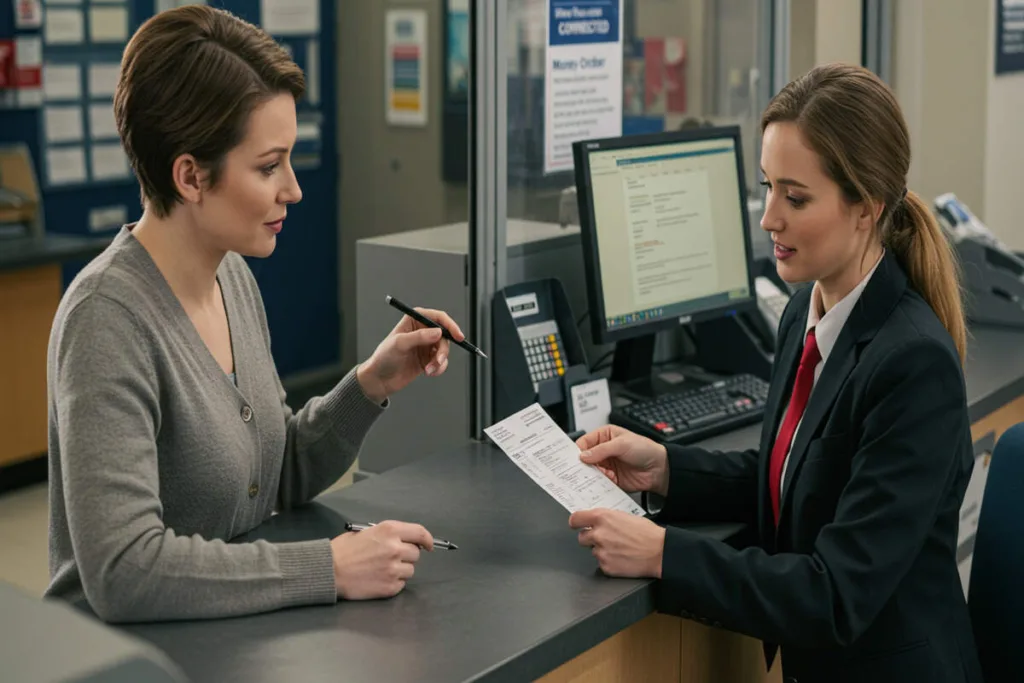
A money order is a prepaid financial document that works like a secure check. Because the funds are paid upfront, money orders cannot bounce and are widely accepted for payments such as rent, bills, or sending money by mail. Offered through banks, post offices, and other providers of financial services, money orders are a convenient way to make guaranteed payments. However, accuracy is critical when filling one out. Even small mistakes, like misspelling a name or entering the wrong amount, can make the money order invalid.
If you make an error, most issuers do not allow direct corrections. Instead, the safest option is to cancel the money order and request a replacement using your receipt. This protects against fraud, ensures the payment reaches the correct recipient, and avoids delays. Knowing how correction policies work, what to do if a money order is lost or stolen, and how federal rules differ from provider policies helps you handle problems quickly and with confidence.
Note: Order Express, as a registered Money Services Business (MSB) under FinCEN, complies with all federal and state regulations concerning money transfers and financial reporting.
Understanding The Role Of Money Orders In Everyday Finance
Money orders are more than just pieces of paper; they serve as reliable financial tools for individuals who need secure, prepaid payment options. Unlike personal checks, they eliminate the risk of bounced transactions since funds are collected upfront. Their accessibility at banks, convenience stores, and check cashing centers ensures that even those without a bank account can safely send or receive money. This combination of security, convenience, and proof of purchase makes money orders an important part of modern financial services.
However, the effectiveness of a money order depends on how it is completed and used. Clear, accurate information protects both the sender and the recipient from errors or fraud. At the same time, money orders continue to be a practical choice for paying rent, sending money through the mail, or handling other trusted transactions. By understanding their purpose, recognizing why accuracy matters, and knowing the common ways they are used, individuals can take full advantage of the stability and protection money orders provide.
When a money order mistake requires cancellation or replacement, it helps to understand the broader issue-resolution process. Money Order Problems, Refunds, Replacements & Fraud explains how customers can address errors, lost documents, refund requests, and fraud concerns.
What Is A Money Order?
A money order functions like a prepaid check. The purchaser pays in advance using cash, a debit card, or another accepted method. The recipient can then cash or deposit the money order, much like a check. Because funds are prepaid, money orders reduce the risk of bounced payments.
People purchase money orders at financial institutions, convenience stores, and check cashing centers. This wide availability makes them a common choice for individuals who may not have a bank account. A money order also provides a receipt for proof of purchase, which helps with tracking and security.
Why Accuracy Matters When Filling One Out?
Accuracy is critical when completing a money order. Processors rely on clear information to ensure the payment reaches the correct recipient. If the document shows scratches, scribbles, or unclear writing, the issuer may reject it. These restrictions help protect against fraud and misdirected funds.
When filling out a money order, always write legibly, use black or blue ink, and double-check names and amounts. Taking a few extra seconds to review the details reduces the risk of needing to cancel or replace the document.
Typical Uses For Money Orders
Money orders remain one of the most trusted tools for secure transactions. Many people rely on them for everyday payments because they do not require a bank account, making them widely accessible. Compared to carrying cash, they also provide a safer alternative with added proof of purchase.
Here are the most common ways people use money orders:
- Paying rent or housing-related costs
- Covering small purchases without using cash
- Sending money safely through the mail
- Handling personal transactions where trust is key
- Paying bills or recurring expenses
- Sending money internationally with added security
Beyond these uses, money orders offer peace of mind because the funds are prepaid and guaranteed. This gives recipients confidence that the full amount will be honored without risk of bouncing. For individuals who value security and convenience, money orders are a reliable option. They also serve as a practical solution for anyone seeking to avoid high fees, maintain privacy, or manage payments outside of traditional banking channels.

Correcting Mistakes On A Money Order
Handling errors on a money order can be more complicated than many people expect. Because these financial instruments are built with fraud prevention in mind, even small alterations are often treated as invalid. Institutions generally prefer cancellation and reissuance rather than corrections, making it important for customers to understand what steps to take if a mistake occurs. This approach not only safeguards the issuer but also ensures that both the sender and recipient remain protected throughout the process.
Correction policies vary, but most follow the same guiding principle: security comes first. Some issuers may allow minor spelling adjustments, while others insist on a full replacement regardless of the error’s size. Knowing the limits of correction options helps avoid unnecessary delays and costs, especially when funds are urgently needed. Keeping receipts and reviewing instructions at the point of purchase are key practices that can make resolving mistakes faster and less stressful.
Can You Correct Mistakes on Money Order?
In most cases, you cannot correct a mistake directly on a money order. The reason is security. Issuers design these documents to reduce fraud, and alterations can raise red flags. Some institutions may allow very minor corrections, such as a small spelling fix, but most treat errors as invalid.
When an error occurs, the safest option is usually to cancel the money order and request a replacement. While this may cause some inconvenience, it protects both the purchaser and the recipient from problems later in the transaction process.
Common Money Order Mistakes and How to Handle Them?
Correcting a money order isn’t as simple as erasing or crossing something out. Because issuers build strict safeguards against fraud, even small mistakes often make a money order invalid. To help you understand what can and cannot be fixed, here’s a quick-reference table that breaks down the most common errors, what actions you should take, and why they matter.
| Mistake | Can It Be Corrected | What To Do Instead | Why This Matter |
| Wrong payee name | Usually not allowed | Cancel and request a replacement using receipt | Prevents fraud and ensures correct recipient |
| Incorrect payment amount | Cannot be corrected | Cancel and reissue a new money order | Protects funds and avoids rejection |
| Minor spelling error | Sometimes allowed | Depends on issuer, may still require cancel | Issuers often reject altered documents |
| Cross-outs / overwriting | Treated as invalid | Request cancellation and replacement | Alterations raise fraud concerns |
| Lost or stolen money order | Cannot be corrected | File a claim with issuer using receipt | Replacement prevents unauthorized use |
| Missing receipt | Harder to resolve | Provide alternative proof (ID, transaction info) | Without receipt, replacement may take longer |
As the table shows, most mistakes require canceling and reissuing the money order rather than trying to correct it. Keeping your receipt is the single most important step, since it allows you to request a refund or replacement quickly. By double-checking details before you leave the counter, you save time, avoid extra costs, and ensure your payment reaches the right recipient without delays.
What Happens If You Fill It Out Incorrectly?
Filling out a money order incorrectly can create serious issues. In most cases, an error makes the document unusable, which means the payment will not go through. This often leads to frustrating delays, especially when the funds are needed quickly. Common mistakes like writing the wrong payee name or entering the wrong amount usually cannot be corrected. Instead, issuers will often require you to cancel the money order and request a new one.
Here is what typically happens when a mistake occurs:
- An invalid money order cannot be cashed or deposited
- Most issuers require cancellation and reissuance if errors involve names or amounts
- A receipt is usually required to process refunds or replacements
- Some issuers may charge a small fee, while others allow a free replacement if reported quickly
To resolve the issue, you usually need to return the incorrect document with your receipt and complete a replacement request. Keeping your original receipt is the most important step, as it proves you are the purchaser and speeds up the process. Without it, recovery can be difficult and may require additional proof of purchase. Acting quickly not only prevents delays but also ensures your funds remain protected. By double-checking your details before submitting the money order, you can save time, avoid extra costs, and keep your transaction stress-free.
How Correction Policies Usually Work in Money Order?
Correction policies vary by institution. Financial service providers generally follow similar rules, though details may differ. For example, some may allow slight spelling adjustments while others require a full cancellation.
Most policies emphasize preventing fraud. Cross-outs, overwriting, and changes to the amount raise concerns for processors. Because of this, many issuers instruct customers to request a replacement rather than attempt corrections. Always review the instructions provided at the point of purchase to avoid complications later.
Best Practices For Handling Mistakes On Money Order
Handling money orders with care is essential to ensure smooth transactions and protect both the sender and the recipient. Even a minor error can cause unnecessary delays, create complications during processing, or result in outright rejection. Knowing when to redo a money order, how to request a replacement, and what steps to take to prevent mistakes altogether can save time, money, and stress.
By understanding these simple but effective practices, you can build trust with recipients and avoid the frustration of repeated visits to the service provider. From correcting errors with confidence to preventing them in the first place, this guide will help you navigate money order transactions more efficiently and with greater peace of mind.
Is It Better To Redo A Money Order?
Yes. If a money order contains an error, the most reliable solution is to cancel and redo it. This ensures clarity and reduces the chance of rejection. While it may involve a fee or another trip to the service provider, reissuing is better than facing problems when cashing or depositing.
Even if a policy allows small corrections, a clean document builds trust. Recipients are more likely to accept a money order without hesitation if it has no alterations.
How To Cancel Or Replace A Money Order?
Canceling a money order typically requires returning to the location of purchase. You present the incorrect document and the receipt, then request a replacement. Depending on the issuer, you may need to fill out a cancellation form.
Having the receipt makes the process faster. Without it, you may need to provide other proof of purchase, such as identification or transaction details. Policies vary, so always confirm what documentation is necessary.
Order Express Policy Reminder: For money order transactions of $3,000 or more within 48 hours (most states) or $1,000 or more within 24 hours in Arizona or Oklahoma, you must present valid government-issued identification. This is part of Order Express’ compliance with the Bank Secrecy Act (BSA) and Know Your Customer (KYC) requirements. Always keep your receipt, as it is required for cancellation and replacement.
How To Avoid Mistakes In The First Place
The best way to handle errors is to prevent them from happening. Here are actionable tips:
- Write clearly and use permanent ink.
- Fill in all required fields before leaving the counter.
- Double-check the spelling of names and the accuracy of the amount.
- Review the memo line if you are including a purpose for the payment.
- Keep your receipt in a safe place until the money order is cashed.
By following these steps, you can avoid extra trips and costs.

Money Orders Explained: Protection, Loss, And Legal Boundaries
Money orders continue to serve as a reliable financial tool for individuals seeking security and accessibility in transactions. Unlike personal checks, they offer prepaid assurance, making them less prone to fraud and rejection. Their wide availability through post offices, retailers, and banks allows people without traditional bank accounts to handle payments with confidence. For these reasons, money orders are often favored in situations where trust and guaranteed funds are essential.
At the same time, using money orders comes with rules and responsibilities that every consumer should understand. From knowing how they compare to checks, to taking the right steps if one is lost or stolen, to understanding how federal regulations differ from provider-specific policies, awareness is key. These distinctions protect both purchasers and institutions, helping to reduce fraud while ensuring fairness in financial transactions. By grasping these essentials, consumers can use money orders more effectively and avoid costly mistakes.
Order Express Compliance Note: Order Express is required to file Currency Transaction Reports (CTRs) for any cash transactions over $10,000 in one business day, and Suspicious Activity Reports (SARs) for transactions of $2,000 or more that may appear suspicious. These filings are mandatory under federal law and cannot be waived. Customers should be aware that unusual activity may be reported to regulatory authorities as required by law.
How Money Orders Compare To Checks?
Money orders provide more security than personal checks. Unlike a check, a money order does not bounce because funds are prepaid. Check cashing centers and banks often prefer money orders because they reduce risk.
Cashier’s checks also provide secure payments, but money orders remain more accessible for individuals without bank accounts. Both options help replace cash in high-value transactions, but money orders are often easier to obtain.
What To Do If A Money Order Is Lost Or Stolen?
If a money order is lost or stolen, you can usually request a replacement or refund. You must provide the original receipt and complete the required paperwork. If you no longer have the receipt, recovery becomes more difficult, but some issuers allow alternate proof.
Replacing a lost or stolen money order may involve a waiting period while the issuer verifies that it has not already been cashed. This protects the purchaser and prevents fraud.
Federal Rules Versus Provider Policies
Federal financial regulations set broad standards for consumer protection and fraud prevention. However, each provider establishes its own correction and cancellation rules. This means one institution may allow limited corrections, while another requires reissuance.
It is important to recognize that federal rules apply at a higher level, while provider policies govern individual transactions. Always separate these two areas when understanding your rights and responsibilities.
Conclusion
Correcting a mistake on a money order is rarely possible, which is why accuracy matters from the start. If you make an error, the safest action is to cancel the document and request a replacement. This prevents delays, protects your funds, and ensures the payment reaches the intended recipient without issue.
Always double-check names, amounts, and details before submitting the form. Keep your receipt secure in case you need to cancel or track the transaction. Money orders remain one of the most secure ways to transfer funds, but only when filled out correctly. Take a few extra moments to review your information carefully and trust Order Express for reliable financial services that prioritize security, speed, and customer care.
Take the time to complete your money order carefully. If you need financial services that prioritize speed, accuracy, and customer support, visit Order Express today.
Customer Support and Complaints: If you ever experience an issue with a money order, you can contact Order Express directly.
- Call: 1-888-666-1602
- Email: customer.service@orderexpress.com
- Mail: Order Express, Inc., 685 W. Ohio St., Chicago, IL 60654
Our compliance and customer service teams will review and address your concern promptly, in line with our formal Complaint Policy.
Disclaimer: This article provides general educational information only. It does not constitute legal, financial, or compliance advice. Federal rules and provider policies may change. Always confirm the current policy with the financial institution that issues your money order.
FAQs
Can you correct a mistake on a money order?
No. Most issuers do not allow corrections. Instead, cancel the incorrect money order and request a new one.
What happens if you fill out a money order incorrectly?
The document usually becomes invalid. You must return it with your receipt and request a replacement.
How do you cancel a money order with an error?
To cancel:
- Return to the purchase location
- Provide the money order and receipt
- Complete cancellation paperwork
- Request a refund or replacement
How can you avoid mistakes on a money order?
Write clearly, use permanent ink, double-check names and amounts, fill out all fields, and keep your receipt.
What should you do if a money order is lost or stolen?
Contact the issuer immediately with your receipt, complete a replacement form, and wait for verification before refund or reissue.

John is a Content & SEO Specialist who enjoys breaking down complex financial topics, like cross-border payments and money transfers, into content that’s easy to understand. He focuses on creating practical, search-driven content that helps people find answers and make informed decisions.


