


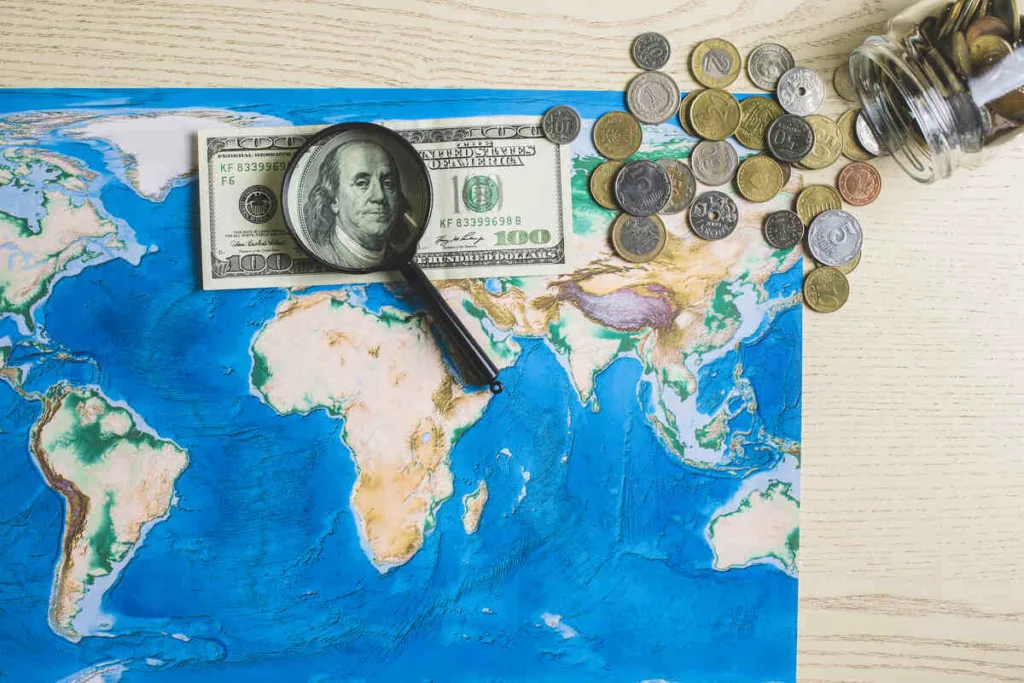
Every day, vast sums of money move between different currencies worldwide, facilitated by banks and other financial institutions. This is the largest market on the planet, far exceeding global GDP. That’s a massive flow of money happening constantly.
If you are new to foreign exchange, the process can feel overwhelming. Many people feel stressed waiting for funds to arrive. You’re wondering if your Money Transfer will reach the recipient. You may question how much they will actually receive. You might also be unsure about the fees and who takes them. This guide will help you understand it clearly.

Understanding the Process and Costs of International Money Transfer
Sending money in another currency involves multiple steps, systems, and institutions. Understanding how it works and the costs involved can help you make smarter decisions and avoid unnecessary fees.
Why Sending Money in Different Currencies Feels Complicated
Foreign exchange is not as simple as mailing cash. All transactions exist only in digital form, moving through secure banking networks. You are not sending paper bills or coins, nor shipping gold to another country. Instead, numbers representing value are transferred between accounts. These numbers must be recorded, verified, and matched accurately to prevent errors or fraud.
A Money Transfer often passes through multiple banks before it reaches the recipient. Each institution may use different systems, time zones, and regulations. At every step, the amount must be checked, converted to the correct currency, and cleared through compliance procedures. Exchange rates also play a role. They can change within seconds, which means banks must lock in the rate and apply any fees.
This complexity adds both time and cost to the process. By understanding how digital transfers work, senders can plan better, choose the right timing, and avoid unexpected delays or charges when moving money across currencies.
Why It Can Cost More Than You Expect
The cost of sending money across different currencies is influenced by several factors. Exchange rates change every moment, and even small shifts can affect the final amount the recipient receives. Many banks and money transfer services set their own rates, which may include a margin above the market rate. This margin is often an unseen cost.
Processing fees also vary between countries and institutions. Some banks charge flat fees, while others take a percentage of the transfer amount. If a Money Transfer passes through multiple banks, each may deduct its own fee. These extra charges can add up quickly, especially for smaller transfers.
Additional costs may come from intermediary or correspondent banks, which help connect institutions without a direct relationship. Understanding these possible charges allows you to compare services and choose the most cost-effective option. By knowing the true cost upfront, you can plan better and ensure more of your money reaches its intended destination.
How Money Transfer Works Between Countries
Moving money between countries involves several coordinated steps. The process often requires converting one currency into another, such as U.S. dollars into Japanese yen.
In most cases, two banks are involved. Each bank may keep foreign currency in special accounts to make transfers easier. A nostro account is money held by one bank in another country. The word “nostro” means “our” in Latin. A vostro account is the opposite. It is money a foreign bank holds in the sender’s country, meaning “your” in Latin.
When a Money Transfer is initiated, the sending bank uses the Swift system. Swift is a secure messaging network for banks. It communicates the transfer details, including the amount, currency, and accounts involved. The receiving bank then moves funds from the nostro account into the recipient’s account at one of its branches.
This process is smooth when both banks have a direct relationship. However, not all banks are connected. In those cases, correspondent banks act as intermediaries. These banks hold accounts with multiple institutions worldwide. A transfer may pass through one or more correspondent banks before reaching its destination.
Each additional step can increase processing time and fees. Currency conversion rates can also affect the final amount the recipient receives. Understanding these factors can help individuals and businesses plan better.
International Money Transfer relies on secure systems, trusted relationships, and accurate record-keeping to ensure funds arrive safely.
What Is a Correspondent Bank and How It Works
A correspondent bank is a third-party bank that helps complete an international Money Transfer when two banks do not have a direct relationship.
If the sending bank does not hold a nostro account with the receiving bank, it uses a correspondent bank that does. A nostro account holds the sender’s currency in the recipient’s country. A vostro account holds the recipient’s currency in the sender’s country. These accounts make cross-border transfers possible.
The correspondent bank facilitates the transaction between the two banks. It determines the exchange rate to use for the transfer. Often, the rate includes a markup that becomes part of the bank’s profit. For example, if the real rate is 1 U.S. dollar to 140 yen, the correspondent bank might offer 137 yen per dollar. The 3-yen difference becomes an indirect fee.
Once the rate is set, the correspondent bank moves funds between its accounts to complete the transfer. This process ensures that money reaches the recipient even when the original two banks have no direct connection.
Correspondent banks are essential for linking financial institutions worldwide. However, their involvement can add time and cost to a Money Transfer. Understanding their role helps individuals and businesses make informed decisions when sending money abroad.
Factors That Influence Exchange Rates
Exchange rates are the price of one currency compared to another. They can change several times a day. One major factor is supply and demand. If demand for a currency rises, its value often increases. Inflation rates also affect currency strength. Lower inflation usually supports a stronger currency, while high inflation can weaken it. Interest rates set by central banks play a key role as well.
Higher rates often attract foreign investment, increasing currency demand. Political stability and economic performance also influence exchange rates. A country with a strong economy and stable government tends to have a stronger currency. Global events, such as trade agreements, natural disasters, or conflicts, can also create sudden changes.
For anyone making a Money Transfer, even small rate changes can affect the final amount received. Understanding these factors helps in choosing the best time to send money and in anticipating potential costs linked to currency conversion or even exploring alternatives like Bitcoin.
Please note: exchange rates fluctuate, fund availability may vary by country, and all transactions are subject to regulatory verification. We safeguard consumer rights and personal data under GLBA and, where applicable, GDPR, ensuring lawful, transparent, and secure services.

Challenges, Delays, and Security in Cross-Border Transfers
International Money Transfer can face delays due to regulations, time zones, or technical issues. Knowing the common challenges and security measures in place will help you plan better and protect your funds.
Why Money Transfers Overseas Can Be Slow
Many expect a Money Transfer to work as quickly as sending a message online. Messages move instantly because they use the same systems and protocols. Money transfers are different. They involve multiple banks, secure networks, and sometimes several countries.
Even though funds are digital, they pass through centralized parties that each follow their own schedules. In the United States, many transfers use Fedwire, which closes daily at 7:00 PM Eastern Time. If a transfer starts after this, it waits until the next business day.
International transfers face more hurdles. Correspondent banks or recipient banks may be closed due to weekends or public holidays. Different time zones create more delays. Commonly traded currencies move faster, while less common ones can take longer to process. Each step adds time to the journey.
Extra Checks and Rules Affect Transfer Speed
International Money Transfer systems must meet strict legal and regulatory requirements. Large transactions over set limits often face extra verification to prevent fraud and money laundering. Both the sending and receiving banks may require proof of the transfer’s purpose before processing.
This can include documentation or formal declarations. Some countries also enforce strong currency controls, restricting how much money can move in or out. These rules can create additional layers of review. Security measures ensure funds are handled correctly and lawfully, but they can slow the process. Every participant in the transfer chain, sending bank, correspondent bank, and receiving bank, has its own compliance checks.
Each stage can introduce waiting periods, especially if documentation needs approval. By understanding these steps, customers can better anticipate how long a transfer may take. Awareness of time zones, holidays, and regulations can help in planning when to send funds, ensuring the process is smoother and more predictable.
Security Measures in Money Transfers
Banks and Money Transfer services use several layers of security to protect funds. One of the most important is encryption, which scrambles data so only authorized systems can read it. Strong identity verification is another key measure. This can include personal identification, account passwords, and sometimes two-factor authentication codes.
Banks also use anti-fraud systems that monitor transactions in real time, much like secure courier services ensure safe delivery.. If unusual activity is detected, the transfer may be paused for verification. Compliance with anti-money laundering (AML) and know-your-customer (KYC) laws ensures that funds are sent and received by legitimate parties. Secure banking networks like SWIFT are designed to prevent tampering during transmission. Staff training and strict internal procedures further reduce risks.
While these measures can sometimes slow the process, they are essential for protecting customers’ money. By using trusted providers and double-checking transfer details, senders can help keep their Money Transfer safe from fraud, theft, or errors.
Common Challenges When Sending Money Abroad
Sending money overseas can present several challenges. Incorrect account details are one of the most common issues. Even a small error in a recipient’s name or account number can delay or cancel a Money Transfer. Time zones and banking hours in different countries can also cause delays, especially if the transfer is made near weekends or public holidays.
Currency conversion can create challenges too, as rates may change between the time a transfer is sent and when it is received. Some countries have strict currency controls that limit the amount of money that can enter or leave. Transfers can also be slowed by compliance checks, especially for large amounts or unusual transactions.
Technical issues, such as system outages at banks or payment networks, may add to the wait. To avoid these problems, it is important to confirm all details, understand the recipient country’s rules, and plan transfers with possible delays in mind.
Compliance Notice: Order Express, as a registered Money Services Business (MSB), complies with U.S. federal regulations including AML/KYC obligations and the Remittance Transfer Rule. Order Express, Inc. is licensed as a Money Transmitter by the Texas Department of Banking and other state regulators.
Conclusion
Transferring money in another currency involves banking networks, exchange rates, and compliance rules that can affect cost and speed. Each step, from sending funds to currency conversion, passes through secure systems that verify, record, and protect transactions. Delays often occur due to correspondent banking, time zone differences, and public holidays, while fluctuating exchange rates and service fees can impact the final amount received. Security measures such as encryption, fraud detection, and strict regulatory checks ensure your money arrives safely.
Before you confirm a transfer, Order Express will show you the exact exchange rate, every fee, and the amount your recipient will receive, as required by U.S. federal regulations. By understanding these factors, you can choose the best time and method for your transfer. Order Express makes the process simple, transparent, and secure, helping you save money and avoid unnecessary delays. Start your next international Money Transfer with confidence, contact Order Express today and experience fast, reliable service designed to get your funds where they need to go.
Disclaimer: For questions or complaints about your transfer, call our Customer Service team at 1-888-666-1602 (8 AM to 8 PM CT, Monday to Friday) or write to Compliance Department, Order Express, 1234 Main Street, Dallas TX 75201, USA.
FAQs
What affects the cost of a Money Transfer?
Exchange rates, service fees, correspondent bank charges, and currency conversion margins all influence the total cost of sending money abroad.
How long does an international Money Transfer take?
Transfers can take minutes to several days, depending on bank relationships, time zones, holidays, and compliance checks.
What is a correspondent bank in money transfers?
A correspondent bank connects two banks that lack a direct relationship, enabling transfers through its own accounts in both currencies.
Why do banks check documents for large transfers?
Banks verify documents to comply with anti-money laundering laws and ensure the legitimacy of high-value international transactions.
How can I speed up a Money Transfer?
Send during banking hours, avoid holidays, provide accurate details, and choose a provider with direct connections to the recipient’s bank.

Alvin is a Content and SEO Specialist who creates clear and helpful content about money transfers and payment systems. He focuses on making complex topics easy to understand so readers can learn how these services work in everyday situations.


