


International trade is entering a new phase, where traditional paperwork is giving way to faster and smarter digital processes. A modern cross border payment relies on efficient systems that minimize manual intervention. Today, businesses and governments can exchange critical information without printing, mailing, or processing documents by hand. While physical paper is eliminated, the required customer identification and transaction details (for example, transfers of USD $3,000 or more) are still collected and securely stored in digital form in accordance with the Bank Secrecy Act and other applicable regulations.
This shift not only saves time, it also improves security, traceability, and access for all types of traders. Paperless trade is more than just a convenience. It creates an environment where global participation becomes easier and more efficient. By understanding how digital trade functions and why it matters, businesses can position themselves to grow across borders with greater confidence and fewer barriers. This approach is helping reshape the future of international commerce for the better.
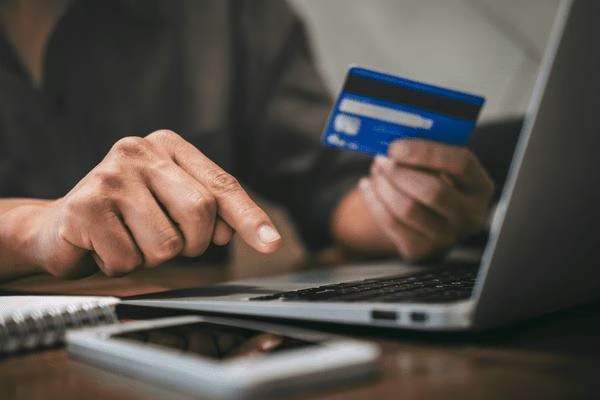
What Drives Better Cross Border Payments In A Paperless World
The landscape of cross border payments is evolving rapidly, and paperless systems are leading the transformation. By removing manual steps from trade documentation, businesses can now handle customs, invoices, and declarations with greater speed and fewer delays. This digital shift is especially critical for companies operating across borders, where outdated processes often slow down payments and create avoidable costs.
Transitioning to digital records is no longer just a convenience. It is quickly becoming a competitive necessity for those engaged in international commerce.
Digital tools support faster clearance, higher accuracy, and smoother communication between trading partners, subject to standard compliance verification and applicable regulations. They also make compliance and reporting more efficient. With simplified steps, fewer errors, and reduced waste, paperless systems offer clear advantages for those navigating global trade. The following sections explore how this digital shift impacts trade, especially for small businesses and environmentally conscious operations.
It Shifts Trade from Manual to Digital
Digital systems are changing how global trade works by replacing traditional paperwork with secure, electronic exchanges. Instead of waiting on hand-signed forms or relying on courier services, businesses can now send documents like customs declarations and invoices in real time. This upgrade enhances the speed and visibility of transactions, helping streamline operations across different regions and platforms. As a result, cross border payments benefit from smoother data flows and fewer delays.
Moving trade processes online also reduces the chance of lost paperwork or manual errors, which often slow down approvals and deliveries. With everything tracked digitally, participants gain better control over timelines, compliance, and recordkeeping. These improvements are not just technical. They create new opportunities for businesses to grow, respond faster, and expand their reach in today’s trade environment.
It Reduces Barriers for Small Businesses
Small businesses often face hurdles when entering international markets, and one of the biggest is managing trade-related paperwork. Manual processes can slow down operations, create bottlenecks, and limit access to global opportunities. By shifting to digital systems, these barriers are reduced significantly, making it easier for small traders to engage in cross border payments and expand their reach.
Here’s how digital tools make global participation easier:
- Simplify document submission with online platforms
- Eliminate the need for physical visits to customs offices
- Reduce processing time through automation
- Improve access to compliance tools and verification systems
Tools like MyMoney.gov help users navigate international financial systems while promoting digital literacy.
These changes mean fewer delays and less dependence on traditional methods. As a result, small businesses can respond to market demands more quickly. Digital solutions also support transparency and give smaller traders the tools they need to stay competitive. With clear workflows and user-friendly systems, businesses can manage international transactions with greater control. This opens the door to more consistent growth and stronger financial partnerships across borders.
It Supports Accuracy and Accountability
In today’s fast-moving trade environment, relying on paper-based systems creates unnecessary risks and delays. Digital records provide a smarter way to manage essential documents, making it easier for businesses and governments to exchange information accurately and efficiently. When applied to customs clearance and regulatory checks, digital tools help streamline cross border payments by reducing manual steps and increasing visibility.
Here’s why digital records offer a clear advantage:
- Easier to track and retrieve in real time
- Faster and more reliable verification
- Secure data storage with reduced risk
- Improved consistency across platforms
Entities like FinCEN have long stressed the importance of transparency and digital recordkeeping in global finance.
By shifting to digital systems, trade processes become more transparent and responsive. This reduces the chance of errors or delays during inspections and helps build trust between trading partners. Businesses that use verified financial service providers are better positioned to operate smoothly and maintain long-term reliability.
It Helps Trade Move Toward Sustainability
Shifting away from paper-based processes is a practical step toward more environmentally responsible trade. By reducing the need for printing, physical deliveries, and excess packaging, businesses can minimize their impact on natural resources while improving the overall efficiency of their operations. This change supports not only sustainability goals but also better workflow management across modern supply chains.
In the context of digital transactions and cross border payments, adopting paperless trade methods creates a cleaner and more adaptable system for global commerce. UnidosUS and similar organizations advocate for eco-conscious economic inclusion through digitized tools.
Aligning with these principles allows for smarter decision-making and contributes to a trading environment that values both progress and environmental responsibility.

Why Cross Border Payments Require Strong Digital Foundations
Cross border payments are only as strong as the systems behind them. While speed and convenience often get the spotlight, the real success of digital trade depends on legal recognition, secure identity verification, and consistent technical standards. These elements are the foundation that make paperless trade work across multiple jurisdictions. Without this framework, even the most advanced tools cannot deliver the efficiency that modern commerce requires.
To ensure that cross border transactions are fast, accurate, and compliant, every part of the system must be aligned. This means shared protocols for document validation, encrypted data flows, and laws that treat electronic records with the same weight as paper. The following sections outline the key components that make digital trade secure and scalable across borders.
Legal Recognition of Digital Documents
For digital trade to function effectively, countries must recognize electronic documents as legally valid, just as they would with paper records. This legal foundation is essential in enabling faster, more reliable cross border payments by removing the friction that outdated documentation often creates. Guidance from the Consumer Financial Protection Bureau (CFPB) supports greater accountability in such systems.
When digital forms, customs declarations, and trade certifications are accepted without question, the process becomes more seamless. This helps small and large traders alike reduce processing delays and build confidence in the system. Order Express also continues to fulfill all record-keeping duties under the Bank Secrecy Act, retaining digital copies of customer identification and transaction data as required.
Secure Digital Identity and Signature Tools
Establishing trust is critical when it comes to digital trade. As more transactions shift to paperless systems, confirming the identity of each party and verifying the authenticity of shared documents becomes increasingly important.
A strong verification process typically includes:
- Electronic identity authentication
- Digital signatures
- Time-stamped documentation
- Encrypted data channels
Resources like the IRS ITIN portal help guide users through proper identity validation, particularly in cross border contexts.
Having a trusted digital process in place ensures both parties can act with confidence and respond faster to changing circumstances.
Data Privacy and Communication Protocols
In a digital trade environment, protecting sensitive information is essential to maintaining trust and efficiency. As cross border payments continue to grow in volume and speed, strong data protection becomes a foundational part of system design. Without proper safeguards, valuable trade data can be exposed to misuse or unauthorized access, putting both operations and relationships at risk.
To ensure data remains secure during every transaction, digital trade systems should include key protective measures:
- Encrypted communication channels to prevent interception
- Secure storage systems to shield critical records
- Defined access controls that limit data to authorized users only
These components help maintain the integrity of each digital exchange, especially when dealing with parties across different regions. Security is not just about technology. It also involves consistent policy enforcement and audits. Resources like StaySafeOnline.org offer guidance to help organizations build these protections effectively.
When systems are built with protection in mind, trade flows more confidently, and trust becomes a long-term asset in global partnerships.
Shared Technical Standards and System Compatibility
When countries use different formats or systems, digital trade becomes fragmented. Shared technical standards are critical for efficient cross border payments. The World Bank notes that harmonized data structures enhance financial interoperability.
Standardized protocols enable systems to interact smoothly and reduce the likelihood of disruptions. This helps ensure faster processing, fewer errors, and a better overall experience for everyone involved in international trade.
Conclusion
Cross border payments are accelerating thanks to the widespread adoption of paperless trade systems. As businesses shift away from outdated paperwork, they gain speed, security, and clarity in every transaction. Digital platforms not only simplify the process but also improve transparency, accuracy, and overall performance across supply chains.
However, success depends on more than just going digital. It requires strong legal support, secure identity verification, and seamless technical compatibility between systems. Countries and businesses that align with these principles can move faster, reduce risk, and build long-term global partnerships.
To learn how digital systems enhance trade without added complexity, businesses can explore the services provided by Order Express. Embracing paperless trade is no longer optional. It is a necessary step toward a more efficient and connected future for international business, provided that all transactions continue to meet established compliance standards.
FAQs
What are cross border payments in a paperless trade system?
Cross border payments involve sending funds across countries using digital systems that rely on electronic documentation instead of paper.
How does paperless trade help small businesses?
It simplifies processes, reduces delays, and removes the need for physical paperwork, allowing small businesses to compete more easily.
Are digital documents legally accepted for international trade?
Yes, when countries recognize electronic records as legally valid, digital documents can replace traditional paper forms in trade.
What makes digital trade systems secure?
Security features like encryption, access controls, and digital signatures help protect sensitive information during international transactions.
Why are shared technical standards important in digital trade?
They ensure systems across countries can communicate effectively, preventing errors and delays in cross border payment processes.

Alvin is a Content and SEO Specialist who creates clear and helpful content about money transfers and payment systems. He focuses on making complex topics easy to understand so readers can learn how these services work in everyday situations.


