


New 1% U.S. Remittance Tax on Cash Transfers Abroad Takes Effect January 1, 2026
Starting January 1, 2026, the U.S. will implement a 1% federal excise tax on certain cross-border money transfers made with cash, money orders, or cashier’s checks. This tax, introduced to increase transparency and deter financial crimes, will affect individuals and businesses who send money internationally using non-digital methods. However, electronic transfers such as ACH, debit/credit card payments, and wire transfers will be exempt. Whether you’re sending funds to family, covering tuition, or managing overseas business payments, understanding how this new remittance tax works is essential for compliance and financial planning.
Learn how to stay compliant, reduce tax exposure, and avoid surprises under the new remittance law through trusted services like Order Express.

What is a Cross-Border Payment tax?
When you send money from the U.S. to another country, whether it’s helping out family, paying for tuition, or simply moving your own cash, you’re making what’s known as a remittance. A remittance tax, under the new law, is a federal excise tax assessed on specific outbound payments from U.S. financial institutions or money service providers to foreign recipients. This tax is not based on income or sales but instead targets the movement of funds across borders.
The remittance tax applies to cash-based international transfers. It is a legislative effort to increase U.S. Treasury revenues, improve transaction traceability, and reinforce financial crime controls.
How things used to work:
- U.S. regulations required MSBs to report certain large or suspicious transfers but did not impose a remittance tax.
- Transfers for tuition, family support, or personal expenses were not federally taxed.
- The IRS did not consider remittances taxable income for the sender.
- There was no federal remittance tax; you only paid regular bank or transfer fees.
What’s changing in 2026:
- The 1% tax applies to overseas money transfers funded via cash, cashier’s checks, or money orders.
- The sender pays the tax; the recipient is not liable.
- Electronic fund transfers (such as wire, ACH, debit/credit card) are expected to be exempt.
- Remittance service providers may be required to collect and remit the tax to the IRS.
- Every qualifying transfer gets taxed at the time of transfer.
- In states such as Oklahoma, a separate state fee ($5 plus 1 percent on the portion above $500) still applies and is in addition to the new federal tax.
This change is a response to years of debate in Washington about international money flows, tax fairness, and money laundering.
How would Cross-Border Payments tax work?
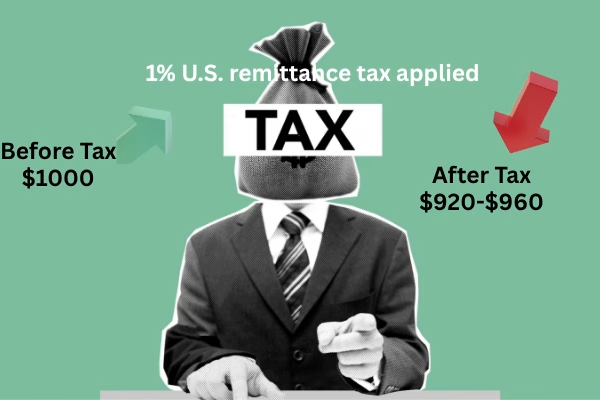
If implemented per current law, the 1% remittance excise tax would apply when funds are sent abroad using cash or other physical instruments. If you’re sending money to family members or friends in another country using physical payment methods, your financial institution will automatically add a 1% federal excise tax to your outbound transfer.
Who pays: The sender always pays the tax, not the recipient. This includes:
- U.S. citizens, green card holders, and non-citizens using U.S. accounts
- Anyone using U.S.-based money transfer services
- Individuals sending money abroad from a U.S. financial institution
When it applies: The 1% remittance tax will apply to outbound transfers from the United States to another country only when the sender provides cash, a money order, a cashier’s check, or a similar physical instrument to the remittance provider, beginning January 1, 2026.
Which transactions are affected: This affects international fund transfers such as:
- Supporting family in another country
- Paying for international education
- Personal fund transfers for travel or emergencies
- Business-related disbursements to foreign vendors or affiliates
What’s exempt from the tax:
- Remittances initiated via mobile apps or card-based systems
- Bank-to-bank electronic international wire transfers
- Internal transfers between accounts under the same name if conducted electronically
- ACH transfers and debit/credit card-funded transactions
How it’s collected: The tax is collected at the time of the transaction by the provider and submitted to the IRS. Your bank or remittance provider automatically collects the tax when you make your transfer. Federal rules also require the provider to show the exact tax amount in the pre-payment disclosure and again on the final receipt you receive.
Regional case examples
The effects of a remittance tax will not be evenly distributed. Countries heavily reliant on U.S.-originated remittances will experience varying degrees of financial pressure.
Major recipient countries and potential impacts:
Mexico (top recipient of U.S. remittances):
- Could see decreased remittance volume, impacting families and local economies
- Many communities depend on these funds for basic necessities.
The Philippines:
- Remittances support everything from education to home construction
- May see delayed or reduced transfers affecting major life decisions.
India and Nigeria:
- Countries with high inflows from the U.S. could experience liquidity drops
- Many families depend entirely on remittances for survival.
The tax’s potential ripple effects on development and financial stability in these economies cannot be underestimated. Cross-border payments are more than monetary exchanges, they are lifelines.
Who’s affected: Americans abroad, expats, and global families
This tax will affect everyday individuals making cross-border payments, not just large institutions or corporations.
Who will feel the impact most directly:
- Immigrant families sending money back to home countries
- U.S.-based individuals supporting loved ones overseas
- Expats paying for dual-country living expenses
- International students receiving support from U.S. family members
- Non-citizens and dual nationals in the U.S. remitting money back home
- Business owners making international payments to vendors
The additional 1% cost could strain already tight budgets and force difficult financial decisions for many families.
How does it affect cross-border payments?
The new remittance excise tax has the potential to increase the cost and complexity of international money transfers, especially for those using physical channels.
Anticipated effects includes
Higher costs:
- A 1% tax on top of existing service fees could add up for frequent users
- For someone sending $1,000, the tax alone adds $10 to the transaction cost.
Additional compliance checks:
- Standard Bank Secrecy Act rules continue to apply. Identity verification is required for transfers of $3 000 or more, and a Currency Transaction Report is filed for cash amounts of $10 000 or more.
- Financial institutions must now comply with new reporting requirements
- This could slow down transaction processing times
- Customers may experience longer wait times
Recordkeeping and reporting:
- Customers and providers will need to keep accurate documentation for IRS reporting
- This is especially important if you regularly support family members overseas
Pro Tip: Use account-based or digital transfers for overseas fund transfers to reduce tax exposure. If using cash, retain all transaction receipts and inquire about tax implications before proceeding.
Cross-border tax planning: proactive compliance
To stay ahead of the potential tax burden, U.S. residents engaging in international wire transfers should consider several proactive strategies:
- Consulting a cross-border tax specialist to assess how this tax impacts personal or business remittances.
- Choosing electronic payment methods, when available, to eliminate the 1 percent tax and lower overall costs
- Documenting the purpose of international payments, such as invoices or tuition letters
- Reviewing agent compliance procedures to verify they’re equipped for the tax

Tax deductions, credits, and compliance questions
Because this tax is new, there are many uncertainties surrounding its interaction with the U.S. tax code.
Key uncertainties include:
Deductibility and credits:
- Will taxpayers be able to deduct or claim a credit for the tax?
- The remittance excise tax may be creditable against your U.S. tax bill
- The IRS has yet to release final guidance on eligibility for credits
Reporting requirements:
- Will the IRS provide a reporting line on Form 1040 or other returns?
- Taxpayers will likely need to report the total amount of remittance tax paid each year
Provider obligations:
- Will agents and providers be required to issue IRS-acceptable statements?
- Keep all receipts and documentation from your financial institution
Pro Tip: Track your remittances. Keep copies of all transactions and stay tuned for IRS guidance. When in doubt, consult a tax specialist familiar with cross-border reporting.
The remittance tax debate: Who wins, who loses, and why it’s making headlines
The introduction of the remittance tax has created sharp debate across political and economic sectors.
What supporters argue the tax will:
- Improve financial transparency in cross-border transactions
- Discourage illicit cross-border transfers and criminal activity
- Boost U.S. Treasury revenue and provide funding for government programs
What critics highlight that the tax may:
- Burden working-class remitters who support family abroad
- Lead to unintended consequences such as underreporting
- Complicate already complex cross-border tax laws
- Create hardship for families that rely on remittances
Why it’s so controversial:
- The proposed law remains a flashpoint in policy discussions
- Concerns about double taxation and more red tape
- Questions about enforcement and permanent implementation
Pro Tip: Expect continued controversy and new updates as implementation unfolds. Be sure to track the latest guidance before your next international transfer.
What should Americans abroad do now?
If you send cross-border payments from the U.S., it’s time to prepare for change. Consider the following steps:
Immediate actions to take:
- Track your outbound international payments by amount, method, and recipient
- Ask your financial institution whether specific transactions will be taxable
- Consider switching to digital remittance methods where possible
- Watch for updates from your provider, the IRS, or your tax preparer
- Consult with a cross-border tax advisor before making big transfers
No one likes tax surprises, so a little preparation now can help you avoid confusion and extra costs when new rules take effect.
Stay ahead of the remittance tax curve
The landscape of cross-border payments is shifting. Whether you send funds abroad occasionally or frequently, it is essential to monitor tax-related developments and ensure full compliance. The proposed remittance tax adds a new layer to outbound international transactions, but with the right knowledge and preparation, surprises can be avoided.
With the new remittance tax potentially in effect, staying informed and prepared is more important than ever. The rules and details will likely keep evolving as implementation approaches, so keeping up with the latest changes is key.
For now, electronic methods of payment remain tax-efficient options, and updated compliance policies will be issued as required.
Have questions? Contact us. Review your receipts, stay informed, and choose providers that prioritize clarity and transparency.
Conclusion
Navigating the upcoming remittance tax landscape will require vigilance, adaptability, and smart decision-making. With the 1% excise tax set to take effect in 2026, individuals and businesses engaging in cross-border payments must understand how it applies to their transfers. By switching to electronic payment methods, consulting tax professionals, and keeping thorough transaction records, you can reduce your exposure and ensure compliance. The tax may introduce friction into global financial flows, but with the right strategies, you can protect your finances and avoid unnecessary penalties. As the IRS continues to release updated guidance, staying proactive is your best defense. Prepare early, act wisely, and make cross-border remittances work efficiently without unexpected tax setbacks.
Frequently Asked Questions
1. Who will be affected by the 1% remittance tax in 2026?
Anyone sending money from the U.S. using cash-based methods will be affected. This includes U.S. citizens, residents, and non-citizens alike. Business owners using U.S. institutions to fund international vendor payments are also subject. The tax does not apply to digital transfers such as wire or ACH payments.
2. What types of transfers are subject to the new remittance tax?
Transfers using cash, cashier’s checks, or money orders to send money abroad are taxable. These include personal remittances for family support, education, or emergencies. Business-related international payments using physical instruments will also be affected.
3. Can I avoid the tax by switching to electronic transfers?
Yes, electronic transfers like ACH, debit, and credit card payments are currently exempt. Mobile app-based remittances and online wire transfers are not subject to the 1% tax. Digital methods offer a tax-efficient alternative to physical transactions.
4. Will the remittance tax be deductible on my U.S. tax return?
It’s currently unclear whether the tax will be deductible or credited. The IRS has not yet issued final guidance on this matter. Until clarified, keep receipts and track your payments for potential reporting.
5. How will remittance service providers handle the tax collection?
Providers must collect the 1% tax at the time of transfer and remit it to the IRS. The charge will be added automatically during qualifying transactions. Customers should ask their provider how the tax will appear on receipts.
Disclaimer: This article is for general information only and does not constitute tax, legal, or accounting advice. For guidance on your specific circumstances, consult a qualified professional.

John is a Content & SEO Specialist who enjoys breaking down complex financial topics, like cross-border payments and money transfers, into content that’s easy to understand. He focuses on creating practical, search-driven content that helps people find answers and make informed decisions.


