


Cross Border Payments play a vital role in international trade and financial services, enabling individuals and businesses to transfer money between countries.But a common concern many people have is: how much time does it actually take for these payments to go through?
The truth is, there’s no single answer, as the processing time can differ depending on a range of factors. In the sections below, we’ll break down exactly what affects the timing and what you can expect during the process. Knowing this can help you plan better and avoid delays when sending or receiving funds globally.
Order Express is a U.S.-registered Money Services Business, and all transfers are processed in accordance with the Bank Secrecy Act.
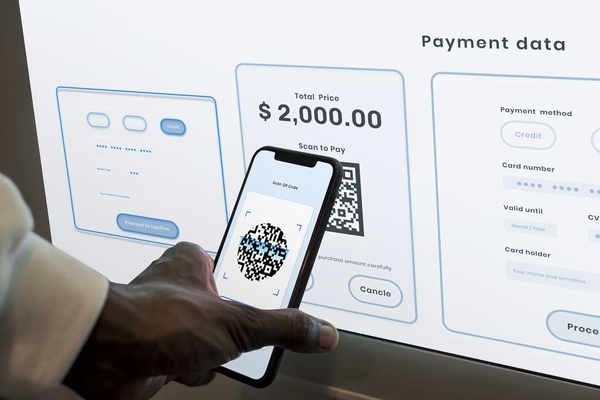
Optimizing Cross Border Payments Through Smart Operational Choices
When it comes to speeding up international transactions, the choices you make upfront can have a major impact. From the type of payment method to the institutions you partner with, each decision plays a role in how efficiently your Cross Border Payments are processed. Understanding these operational factors helps businesses and individuals take more control over payment speed and reliability.
Choosing the Right Payment Method: How It Impacts Cross Border Payments Speed
The payment method you select plays a major role in how quickly Cross Border Payments are processed. Traditional methods, such as international wire transfers through banks, often involve several intermediary or correspondent banks. Each of these steps adds processing time, resulting in transfers that typically take between 1 to 5 business days. The timeline can vary further depending on the countries and financial institutions involved.
In contrast, modern digital solutions are reshaping how money moves across borders. Digital wallets and blockchain-based systems can complete transactions within minutes, or even seconds, by cutting out middlemen and allowing direct exchanges between sender and recipient. These newer technologies not only speed up delivery but can also offer greater transparency and lower costs.
Understanding the pros and cons of each payment method helps businesses and individuals make smarter decisions. Choosing the right solution is key to ensuring your Cross Border Payments arrive safely and on time.
The Role of Banks and Payment Providers in Cross Border Payments Speed
The banks or payment providers you use can make a big difference in how quickly Cross Border Payments are processed. Some financial institutions have advanced systems, strong partnerships with global networks, and the technology to handle international transfers efficiently. These providers are often able to move funds faster by reducing bottlenecks in the transaction process.
In contrast, smaller or less sophisticated banks may not have the same capabilities. They might rely on multiple intermediaries or outdated systems, which can introduce delays and increase processing times.
Specialized payment providers that focus specifically on cross-border transactions often offer a faster alternative. These companies usually partner with a wide network of banks and payment systems worldwide, allowing them to complete transfers more quickly and reliably.
Choosing the right partner for your transfer can significantly impact the timing and success of your Cross Border Payments, especially when speed and reliability are a priority.

External Influences That Affect the Timing of Cross Border Payments
Not all delays are within your control. External factors such as geographic location, government regulations, and unexpected disruptions can all influence how quickly Cross Border Payments are completed. By understanding these variables, you can set more realistic expectations and take steps to minimize potential hold-ups in your international transactions.
How Geographic Location Affects the Speed of Cross Border Payments
The geographic location of both the sender and the receiver has a direct impact on how quickly Cross Border Payments are completed. Transactions between countries with strong, well-connected financial systems and clear regulations, such as those within the European Union, are usually faster. These countries benefit from streamlined processes and shared standards, which help reduce delays.
However, when sending money between a developed country and one with less financial infrastructure, the payment may take longer. Factors like local banking practices, government regulations, and even currency exchange controls can slow things down.
Time zones also play a role. If a payment is made after business hours in the sender’s country, it may not be processed until the next working day in the recipient’s country. This can add an extra day or more to the overall timeline. Being aware of these regional differences helps users set realistic expectations for their Cross Border Payments.
Regulatory Checks and Their Impact on Cross Border Payments
Every Cross Border Payment must comply with a range of international and local regulations designed to prevent fraud and illegal activity. These include anti-money laundering (AML) laws, know-your-customer (KYC) requirements, and tax compliance rules. While these measures are essential for maintaining global financial security, they can also slow down the payment process. For example, in the United States, any transfer of 3,000 USD or more triggers mandatory identity verification and record keeping.
For example, when transferring large amounts, you may be asked to provide extra documentation or undergo additional identity verification. These steps can delay processing, especially if the information is incomplete or flagged for review.
In some cases, a payment might be temporarily held if it doesn’t meet certain regulatory standards. Until the issue is cleared, the transfer won’t move forward. Transfers of 10,000 USD or more in cash are reported to regulators in a Currency Transaction Report, and suspicious activity may be reported through a Suspicious Activity Report.
Understanding these requirements ahead of time and ensuring all necessary documents are in order can help avoid delays. Working with a provider experienced in handling Cross Border Payments can also make the compliance process smoother and more efficient.
Unexpected Delays: External Factors That Can Affect Cross Border Payments
Even with the best planning, external factors can sometimes slow down Cross Border Payments. Technical issues like system outages, software glitches, or downtime at banks or payment platforms can cause unexpected delays. These problems may require time to resolve before the payment can continue processing.
Public holidays in either the sender’s or receiver’s country are another common cause of delay. Since banks and financial institutions are often closed on national holidays, any payment initiated during these times might not be processed until the next working day.
In summary, the time it takes to complete Cross Border Payment can vary based on multiple factors: payment method, location of sender and receiver, the institutions involved, regulatory requirements, and unforeseen external issues. Some payments may go through in minutes, while others may take days.
To minimize disruptions, it’s essential for individuals and businesses to plan ahead, choose the right payment provider, and be aware of potential timing challenges. A little preparation can go a long way in ensuring smooth, timely international transactions.
Conclusion
Understanding how long Cross Border Payments take is essential for managing international transactions effectively. Timing can vary widely depending on your payment method, provider, geographical factors, and external issues like holidays or system outages. Choosing digital tools and experienced providers can reduce delays and improve reliability. Compliance with regulations like AML and KYC is also critical, especially for large transfers.
While some payments may arrive within minutes, others might take several days. By preparing ahead and selecting efficient solutions, businesses and individuals can make smarter decisions that ensure faster, smoother global payments. Don’t leave international transfers to chance , take control by knowing what affects processing time and choosing trusted, optimized channels. With the right approach, Cross Border Payments can be quick, compliant, and hassle-free.
FAQs
How long do cross border payment usually take?
They typically take between one to five business days, depending on several factors.
Can transfers to sanctioned persons be processed?
No. U.S. sanctions prohibit such transactions and they will be blocked.
Can holidays delay international payments?
Yes, public holidays in either country can delay processing by one or more days.
Do I need to provide documents for all cross border payment?
Not always, but larger transactions may require identity or compliance verification.
Can I avoid delays in cross border payments?
Yes, by choosing fast providers, submitting complete documents, and avoiding off-hours or holidays.

Alvin is a Content and SEO Specialist who creates clear and helpful content about money transfers and payment systems. He focuses on making complex topics easy to understand so readers can learn how these services work in everyday situations.


