 Skip to content


Biometric authentication is changing the way financial institutions secure cross-border payments by using physical traits like fingerprints and facial recognition to confirm identity. As global transactions increase, so does the risk of fraud. Biometrics can provide a faster, safer, and more reliable alternative to passwords and PINs. Financial institutions are adopting this technology to improve security, reduce human error, and comply with anti-money laundering regulations. Order Express protects all biometric information it collects in alignment with the Gramm-Leach-Bliley Act and its internal Privacy of Consumer Financial Information Policy. From fingerprint-enabled cards to facial recognition systems, biometric tools are helping validate user identities during transactions in real time. Learn more about secure financial solutions at Order Express.
This article explains how biometric authentication improves payment security, enhances user trust, and supports seamless digital experiences across international banking systems.
Biometric templates are encrypted in transit and at rest, stored only in tokenized form, and never shared with unaffiliated third parties without the customer’s consent.
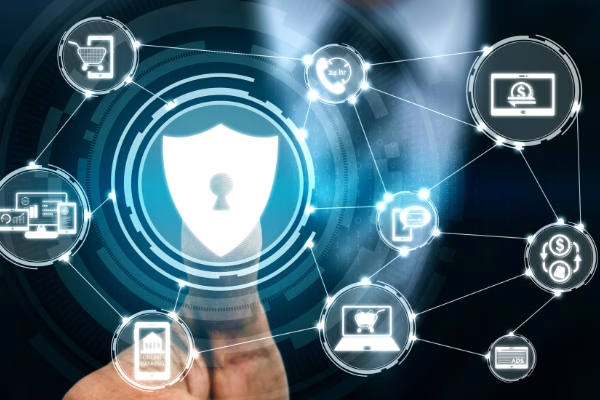
Biometric Basics: What They Are and Why They Matter
What Exactly Are Biometrics?
Biometrics are human characteristics used to verify identity. They are unique to every individual.
These include:
- Facial structure
- Fingerprints
- Voice patterns
- Retina or iris recognition
- Hand geometry
Each person’s biometrics are naturally different. That’s what makes them such a powerful security tool for institutions offering Check Cashing services that require identity assurance.
Why They’re More Reliable Than Passwords
Passwords can be stolen. PINs can be guessed. Biometric traits? Not so easy to replicate.
Here’s why biometrics outperform traditional credentials:
- They’re always with you.
- They cannot be forgotten.
- They can’t be shared or stolen easily.
Biometric authentication significantly reduces the chance of fraud or identity theft.
Common Everyday Uses of Biometrics
You may already use biometrics in your daily life. Think of these examples:
- Unlocking a smartphone using facial recognition
- Approving a payment using a fingerprint
- Boarding a plane using an iris scan
These experiences are fast, secure, and intuitive. And they’re expanding beyond personal tech into areas like plane ticket booking and airport check-ins supported by the TSA’s ID verification procedures.
The Market Is Booming
Grand View Research forecasts that the global biometric technology market will grow from $34.3 billion in 2022 to $150.6 billion by 2030, a compound annual growth rate of 20.4 percent (Source: Grand View Research, 2025).
As demand for seamless verification increases, industries—from healthcare to e-commerce—are embracing biometrics.
As demand for seamless verification increases, industries from healthcare to blockchain-based finance are embracing biometrics.
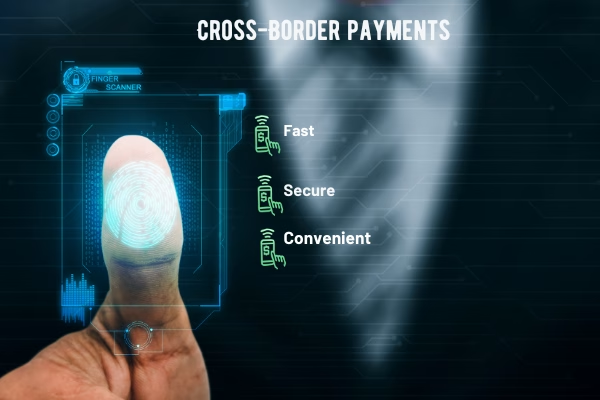
Biometric Payments: Fast, Secure, and Convenient
How Biometrics Fit into the Payment Process
Biometric authentication is now part of real-world payment systems. It’s not just for tech demos or lab experiments.
A payment can now be verified using a fingerprint, face, or voice—no card swipe or PIN entry needed.
Examples include:
- Face recognition on mobile wallets
- Fingerprint scans on biometric-enabled cards
- Voice recognition through call-based banking apps
These advancements are also shaping fintech innovation, as detailed by FinTech Futures.
Innovations in Biometric Debit Cards
Let’s take the example of a biometric debit card. Some banks now issue cards with fingerprint sensors built in.
Here’s how it works:
- When you receive the card, you scan your thumb to store your fingerprint.
- That print gets encrypted and stored securely in the card chip.
- During a purchase, you tap your thumb on the sensor.
- If it matches, the payment goes through.
This approach aligns with modern customer expectations, just like courier services depend on verified delivery handoffs.
Key Benefits for Consumers
Biometric payment systems offer a trio of major benefits:
Speed
- Instant verification with no delays
- Great for high-volume, fast-paced environments
Ease
- No need to remember PINs or passwords
- No risk of getting locked out due to failed attempts
Security
- Stronger than passwords
- Harder for criminals to forge or copy
This system is especially helpful in crowded spaces like airports or busy retail stores, where digital remittance needs to be seamless.
Advantages for Merchants and Banks
Merchants and banks benefit too:
- Reduced fraud-related chargebacks
- Faster checkout lines
- Lower operational costs related to password resets or fraud disputes
Biometric payments also reduce friction, which improves customer satisfaction and retention. These benefits are being integrated across money transfer platforms that prioritize user experience and security.
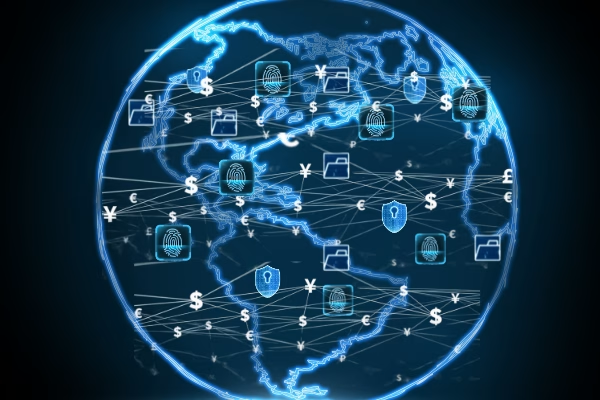
Cross-Border Transactions: New Threats, Stronger Defenses
Why Cross-Border Payments Need Extra Protection
Moving money across borders adds complexity. There are more systems involved. More regulations. More opportunities for fraud.
The rise of neo banks, fintech platforms, and embedded finance has expanded access. But it also widened the attack surface. Financial institutions now face greater pressure to comply with OFAC sanctions screening and related frameworks.
The Threat Landscape Is Growing Fast
Cybercriminals are evolving quickly. Attacks on financial platforms have increased dramatically. According to the Chainalysis crime report, online attack rates surged 233% in Q2 2022.
Fraud, phishing, and identity theft are now major threats to global banking systems.
In 2020, banks paid 80% more in money laundering fines than the previous year. Clearly, existing systems weren’t enough.
Biometric AML Integration
Banks need to meet Anti-Money Laundering (AML) regulations while keeping service frictionless. Biometrics are now central to AML strategies.
Here’s how:
- Facial recognition verifies customer identity at signup
- Voice ID ensures it’s the right person on a call or transfer
- AI compares IDs with facial scans in real time
One standout tool is the Customer Identification Program (CIP). It validates documents in seconds and compares them with live facial data to catch fraud. This approach helps meet standards for Currency Transaction Reports (CTR) and suspicious activity reporting.
Benefits of Biometrics in AML Compliance
Biometrics support AML by:
- Detecting fake accounts during onboarding
- Preventing stolen identities from making cross-border transfers
- Enabling automated compliance checks across platforms
These solutions help banks comply with both local and global regulations while reducing human error. Institutions offering vehicle services also benefit when fraud risks are minimized.
Why Real-Time Cybersecurity Matters
Real-time protection is no longer optional. It’s essential. The volume of global transactions means banks must act instantly.
Real-time biometric checks mean:
- Faster fraud detection
- Instant identity validation
- Continuous monitoring of account activity
This protects not only the bank’s reputation but also its customers’ financial wellbeing. Platforms offering cryptocurrency services also rely on real-time tools to prevent digital asset fraud, aligning with IRS virtual currency guidance.
Biometric Security in Emerging Markets
Emerging economies benefit greatly from biometric cross-border systems. Many citizens lack access to traditional banking. Biometrics help provide:
- Secure access to global banking
- Safe money transfers across countries
- Protection against currency manipulation and fraud
These systems offer financial inclusion while maintaining strict regulatory compliance. This is vital in underserved communities, where financial literacy resources make a long-term difference.
The Future of Biometric Security in Cross-Border Payments
Biometric authentication is more than a modern upgrade. It’s a strategic necessity. As global transactions increase, so does the need for stronger identity protection.
Here’s what makes biometrics ideal for cross-border payments:
- They can provide significant speed and simplicity
- They ensure users are who they say they are
- They reduce fraud and improve trust
- They meet rising compliance and AML standards
Financial institutions must stay ahead of cyber threats, and biometric systems offer a smart, scalable way to do it.
With innovations like fingerprint-authenticated cards, real-time facial ID, and AI-driven CIP systems, the world of payments is evolving. And as the digital economy grows more borderless, biometric security is becoming a foundational layer of financial trust. For more insights on how we support secure services, contact us. Some of the capabilities discussed reflect broader industry trends; implementation timelines may differ by institution. Some of the capabilities discussed reflect broader industry trends; implementation timelines may differ by institution.
If your financial platform isn’t thinking about biometrics yet, it should be. Because the future of secure, seamless, and global banking is already here.
Conclusion
Biometric authentication isn’t just helpful—it’s becoming a must for banks handling cross-border transactions. As fraud tactics grow more complex, traditional systems can no longer keep up. Biometric tools like facial ID, voice recognition, and fingerprint cards offer faster, safer, and smarter alternatives. Financial institutions that adopt biometric security now will build deeper trust and stay ahead of regulatory demands. Meanwhile, customers enjoy a frictionless and secure user experience, even across borders. The finance world is moving fast—and biometrics provide the speed, accuracy, and confidence required to keep that momentum secure. Waiting to adopt them isn’t a risk worth taking. The time to strengthen your cross-border payment infrastructure is now.
Frequently Asked Questions
1. How do biometrics improve security for cross-border payments?
Biometrics use unique traits like fingerprints or facial patterns to verify identity. These traits are hard to replicate. Unlike passwords, they can’t be lost or shared. Linking biometrics to real-time systems helps block fraud during global transfers.
2. Are biometric payments faster than traditional methods?
Yes. Biometrics skip PINs and passwords. A fingerprint or face scan approves transactions instantly. This speeds up checkout, logins, and processing for banks and merchants alike.
3. Can biometric systems help prevent money laundering?
Definitely. Biometric systems support AML checks by verifying identities at signup and during transactions. Programs like CIP compare IDs to facial scans. That stops fake accounts and flags suspicious activity.
4. What are the benefits of biometric authentication for emerging markets?
Biometrics offer secure access for people without traditional IDs. A face or fingerprint allows global account setup and transfers. This increases financial inclusion and trust in digital banking.
5. What makes biometrics better than passwords or PINs?
Passwords can be weak or stolen. PINs are easy to guess. Biometrics are unique and hard to fake. They provide stronger, simpler, and more reliable protection for users and banks.
Order Express® is a registered mark of Order Express, Inc. Order Express is licensed as a Money Services Business where required. All product features and timelines are subject to regulatory approval and may change without notice.

John is a Content & SEO Specialist who enjoys breaking down complex financial topics, like cross-border payments and money transfers, into content that’s easy to understand. He focuses on creating practical, search-driven content that helps people find answers and make informed decisions.


