 Skip to content


Looking for the most reliable ways to send money internationally? The five most common and secure money transfer methods include: 1) bank transfers, 2) online platforms, 3) cash pickup services, 4) cryptocurrency transfers, and 5) prepaid debit cards. Each option serves different needs such as speed, cost, access, and security. Whether you’re sending funds to family, paying remote workers, or managing global expenses, choosing the right method ensures smooth, compliant, and cost-effective transactions. This guide breaks down how each method works, what documents are required, how funds travel across borders, and tips for avoiding scams. By understanding your options, you can send money safely and efficiently with full confidence. Learn more about reliable financial services through Order Express.
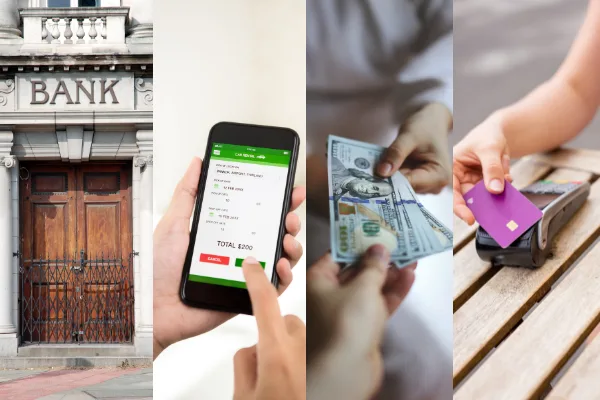
Compliance Basics for Money Transfers
Global money movement follows strict rules. Regulations protect senders, recipients, and financial systems from fraud and misuse. Whether you’re paying tuition or supporting family, knowing compliance basics helps. Regulatory frameworks include federal laws, international sanctions, and anti-money laundering (AML) standards. Licensed providers must follow all guidelines and report suspicious activities. Clear compliance means fewer disruptions and safer transactions for everyone involved.
Key Roles for Money Transfers
Every cross-border money transfer involves three key players. The sender initiates the transfer and provides funds to the provider. The provider verifies the sender’s identity, processes the payment, and confirms transaction details. The recipient collects the money either as cash, bank credit, or digital wallet funds. These roles exist in every transaction, regardless of the chosen method. Clear separation of responsibilities reduces errors, fraud risks, and delivery delays. Providers like Order Express’s money transfer service simplify this structure using trained agents and digital tools.
Required Disclosures and Rights
Federal rules require providers to give a pre-payment disclosure before sending money. This document includes the transfer amount, exchange rate, total fees, and expected delivery date. After payment, you receive a receipt with matching details. You can cancel the transfer within 30 minutes and receive a full refund. You also have 180 days to dispute any transfer errors. The provider must investigate, correct valid mistakes, and refund any proven loss.
Identity verification is required for all transfers. Agents must collect at least one valid photo ID. For transfers of $3,000 or more, at least one valid photo ID is required, and some correspondent networks (for example MoneyGram) require two forms of ID. All names are automatically screened against OFAC sanctions lists to prevent restricted transactions. These checks reduce fraud, support compliance, and protect everyone involved in the transaction.
How Funds Travel Across Borders
Money rarely moves directly from sender to recipient. Most transfers involve intermediary banks or licensed payment processors. A typical route includes a sender’s provider, one or more correspondent banks, and a final clearinghouse. In some countries, local rails like Brazil’s Pix or India’s UPI enable real-time settlement. Other corridors may involve up to three stops and longer clearing times.
Currency conversion happens when the sender and recipient use different currencies. Every conversion step adds cost and possible delay. A reliable provider like Order Express selects the fastest compliant route for each corridor. This ensures customers enjoy transparent pricing and consistent arrival times, regardless of destination. To better understand blockchain-based fund movement, visit Blockchain’s Learning Portal.

Comparing Money Transfer Methods
Not all money transfer options are created equal. Each method whether traditional or tech-driven has its pros, cons, and ideal use cases. From bank wires to prepaid cards, it’s important to understand how each one works so you can match your transfer to your needs. Below is a breakdown of the five most reliable methods, covering speed, cost, security, and accessibility.
Bank Money Transfer Path
Traditional banks are the oldest and most secure channel for international money transfers. You can start a transfer online, over the phone, or at a branch. You’ll need the recipient’s name, bank account number, address, and SWIFT or BIC code. Banks offer strong security and near-global reach. However, they often charge high fixed fees plus hidden exchange markups. Transfers usually take between one and five business days. Delays may occur due to multiple correspondent hops. Choose this path if you’re paying a corporate invoice or sending to someone who requires direct account credit.
For formal international wires, understanding consumer remittance rights under the Remittance Transfer Rule can help avoid unexpected costs.
Online Money Transfer Services
Fintech platforms like Wise, Remitly, and Revolut have transformed international transfers. These services hold local accounts in multiple countries and match transactions internally. Registration is simple and takes only minutes. You can link a debit card or bank account, enter recipient details, review the fee disclosure, and send.
These platforms offer mid-market exchange rates with minimal markup. Most transfers are delivered the same day, sometimes instantly. In-app tracking features and reference codes build user confidence. First-time users may face limits until their profiles mature. Reliable internet access is essential. Online platforms are ideal for freelancers, families, and small businesses who value speed and savings. NerdWallet’s guide to the best ways to send money can help compare top platforms.
Cash Pickup Money Transfer Operators
Cash-based transfer networks serve communities without widespread banking access. Brands such as Western Union and MoneyGram run thousands of global agent locations, while Order Express offers cash pickup only at company-owned branches (its agents do not provide check cashing services on behalf of Order Express). Senders pay fees based on amount, destination, and urgency. In many cases, cash is available for pickup within minutes. Recipients must present a valid ID and sometimes answer a security question.
Cash pickups come with some risk, including theft during collection. Exchange rates are often less favorable than online platforms. Still, this method works best when the recipient has no bank account or prefers physical currency in hand. For more safety, verify participating pickup agents through licensed networks.
Cryptocurrency Money Transfer Channel
Cryptocurrency offers peer-to-peer value exchange without central banks or government intermediaries. Blockchain transactions settle in minutes and are visible on a public ledger. Fees depend on network congestion rather than the amount sent. Crypto token prices fluctuate daily, which may change the value mid-transfer.
Both sender and receiver need digital wallets and private key access. Exchanging tokens into local currency requires a licensed crypto exchange and may involve additional fees. Regulations vary by country. Order Express does not offer crypto payouts yet due to volatility and legal complexity. This method suits tech-savvy users who understand blockchain risks and security protocols. The IRS crypto guidance explains how these transfers are taxed.
Prepaid Card Money Transfer Idea
Prepaid debit cards allow global usage with controlled spending. The sender can buy or reload a prepaid card, then mail it or share digital credentials. Cards work at millions of merchants and ATMs across the world. However, fees apply during loading, monthly use, and ATM withdrawals. Some providers limit daily spending or overall balance. If lost, access is delayed until a replacement arrives. Prepaid cards are a good option for travelers, students, or anyone needing spending control while abroad.
To understand fee transparency better, review Fintech Futures’ paytech compliance coverage.
Money Transfer Comparison Snapshot
| Feature | Bank Transfer | Online Platform | Cash Network | Cryptocurrency | Prepaid Card |
| Typical Fee | High + exchange | Low fixed + low spread | Tiered + exchange | Network-based fees | Load + usage fees |
| Average Speed | 1–5 business days | Same day | Minutes | Minutes | Instant use |
| Cash Availability | No | No | Yes | Needs conversion | ATM compatible |
| ID Requirements | Bank KYC | Digital KYC | Photo ID | Exchange KYC | Issuer KYC |
| Best Use Case | Corporate invoices | Freelance payments | Unbanked families | Tech-savvy users | Student allowance |
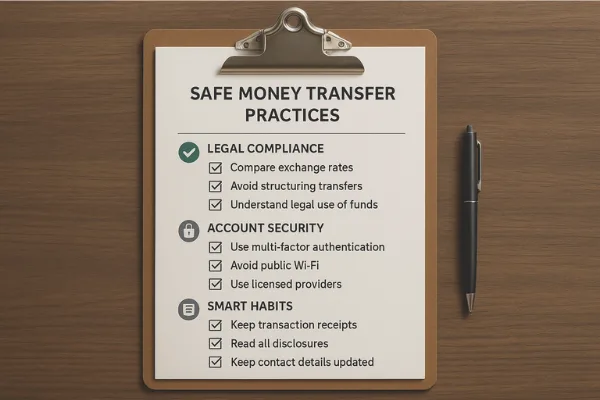
Safe Money Transfer Practices
Sending money across borders isn’t just about choosing the right method, it’s also about using that method safely. Whether you’re transferring funds online, via cash pickup, or through a bank, following best practices reduces risk and ensures compliance. Below are essential tips to help senders protect their funds and stay on the right side of the law.
Compliance Tips for Senders
Compare Exchange Rates
Check the provider’s exchange rate against a public source like XE. This avoids overpaying due to hidden markups.
Keep Transaction Receipts
Save every receipt until the recipient confirms delivery. It helps resolve disputes or tracking issues if delays occur.
Avoid Structuring Transfers
Do not split large transfers into smaller ones to stay under reporting limits. This is illegal and raises red flags. For guidance, refer to FinCEN’s structuring definitions.
Understand Legal Use of Funds
Never send money for sanctioned trade, gambling, scams, or unknown purposes. If uncertain, pause and verify legitimacy. For safe travel and financial guidance, see Travel.State.Gov’s tips.
Bring Two Valid IDs
For transfers of $3,000 or more, at least one valid photo ID is required; some correspondent networks (for example MoneyGram) ask for two forms of ID. Common options include a passport, license, or national ID card. Learn about TSA-compliant identification.
Read All Disclosures
Review pre-payment forms to understand total cost, exchange rate, and estimated delivery time before confirming your transfer.
Keep Contact Details Updated
Make sure your email and phone number are current. Providers may contact you for verification or issue resolution.
Double-Check Recipient Information
Verify the recipient’s name, account number, and destination. A typo can cause serious delivery delays or fund loss.
Use Multi-Factor Authentication
Enable MFA on your money transfer platform to protect your account from unauthorized logins or tampering.
Avoid Public Wi-Fi
Do not use public networks when sending money. They expose your data to hackers. Use a secure connection instead.
Watch for Scam Red Flags
Be wary of urgent money requests, legal threats, or offers that seem too good to be true. Confirm independently.
Use Licensed Providers
Only use services regulated by government authorities. Licensed providers follow strict compliance and encrypt your data. For example, Check-cashing with ID procedures support safe transfers.
Final Thoughts: Make Every Transfer Count
Choosing the right international money transfer method depends on your needs like speed, cost, convenience, or access. Whether you’re supporting loved ones, paying remote workers, or managing cross-border expenses, being informed helps you save time and money. Always compare providers, understand compliance rules, and double-check details before sending. Protect your funds by using licensed financial services, securing your account, and staying alert to scams. From vehicle services to digital wallets and prepaid cards, each option has a place in today’s connected world. With trusted platforms like Order Express, you can move money across borders confidently, legally, and without hassle. Stay compliant, act smart, and let every transfer serve its purpose with peace of mind.
Frequent Money Transfer Questions
Can money transfers be reversed?
You can cancel within 30 minutes of seeing the disclosure. Later cancellations require a proven error to qualify.
Why was my payment blocked?
Common causes include matching names on sanctions lists, missing identity documents, or exceeding transaction limits. Correct the issue or lower the transfer amount.
How do providers set fees?
Transfer fees include a fixed service charge and a foreign exchange spread. Both amounts are disclosed upfront.
What documents prove identity?
Acceptable IDs include passports, national ID cards, residency permits, and driver’s licenses. Secondary IDs may include utility bills.
Who protects my information?
Order Express encrypts all customer data and follows strict privacy laws to ensure secure processing and storage.
What if the funds arrive late?
Call customer support with your reference number. Providers are required to trace delays and issue refunds if necessary.


