


When businesses send money across borders, they often encounter added costs due to the complexity of international financial systems. These extra charges are tied to cross-border payments and transactions, which involve multiple banks, regulatory checks, and currency conversions. While these steps are essential for ensuring secure transfers, they can slow down your operations and impact how efficiently you manage your payments to international vendors.
Understanding the full picture behind cross-border transactions is key to keeping your business financially agile. This guide will break down what makes these payments more involved than domestic ones and offer simple, practical ways to manage and reduce their overall impact. Whether you’re working with global suppliers or expanding into new markets, mastering the flow of secure cross-border transactions can help protect your cash position and strengthen vendor relationships.
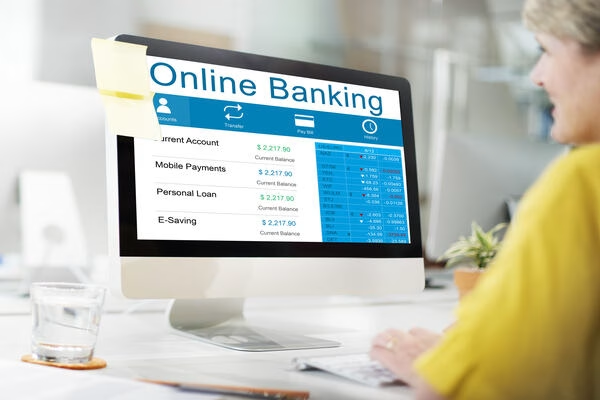
What Every Business Should Know About Cross-Border Payments
When businesses start making international payments, they often focus on speed and convenience, but the unseen costs and extra steps involved in cross-border payments can quietly impact efficiency and profitability. From international fees to additional verification protocols, these transactions operate under different rules than domestic transfers. For companies working with global vendors, understanding how these cross-border transactions function is essential to keeping operations secure and streamlined.
Every international payment involves more than just moving money from one account to another. Behind the scenes, a web of financial institutions, compliance checks, and fee structures come into play. Whether you’re paying contractors overseas or sourcing materials from another region, these hidden layers can influence both the cost and speed of the transaction. By learning what triggers these processes and who handles the associated charges, businesses can gain more control over their international payment strategy, and minimize unnecessary expenses in the process.
Regulatory Note: All cross-border transactions processed through Order Express must comply with U.S. anti-money-laundering (BSA/AML) rules, the USA PATRIOT Act, and OFAC sanctions screening. Order Express also keeps all transaction and blocked-party records for at least five (5) years as required by OFAC and FinCEN rules, and cooperates with any Currency Transaction Report (CTR) or Suspicious Activity Report (SAR) filings required by FinCEN.
For transfers $5,000 USD or higher Order Express may request proof of source of funds (e.g., bank statement, pay stub) before release.
A Currency Transaction Report (CTR) is filed when cash-in OR cash-out totals more than $10,000 in one business day (including fees).
Understanding Cross-Border Fees in Global Transactions
When sending money across international borders, businesses often face additional costs known as cross-border fees. These charges typically arise when the sender’s and receiver’s bank accounts are located in different countries, even if the transaction occurs in the same currency. Without proper oversight, these fees can quietly add up, increasing the total cost of cross-border payments and affecting your bottom line.
These fees often go by different names depending on the payment channel or financial institution involved. Here’s what to look out for:
- International service charges for processing out-of-country payments
- Currency conversion fees, even when the exchange isn’t obvious
- Network or intermediary costs from banks or financial processors
- Administrative or handling charges added by some platforms
Identifying these charges in your payment workflows helps you take control of expenses and plan more accurate budgets. It also ensures greater clarity when dealing with overseas partners.
For businesses managing global vendors, suppliers, or distributed teams, understanding these charges is key to building a more cost-efficient and secure transfer strategy. It’s not just about avoiding unnecessary expenses, it’s about improving the way you manage cross-border transactions at scale. By gaining visibility into where fees originate and how they’re applied, you can make more informed choices and strengthen your international financial operations with greater confidence and control.
Why Cross-Border Payments Involve Extra Steps
Cross-border payments are triggered when a business sends funds between two different countries, such as a company in one region paying a vendor overseas. These transactions are flagged as international because the originating and receiving bank accounts are in separate nations, even if the payment is made in the recipient’s local currency. Whether you’re working with international suppliers, contractors, or partners, these transactions are categorized as cross-border, initiating a unique verification process.
When a payment is initiated, the transfer system detects it as a cross-border transaction, activating several security and compliance checks. This process may involve multiple financial institutions, regulatory protocols from different jurisdictions, and infrastructure designed for secure global transfers. These steps are in place to minimize risks like fraud and ensure that the transaction complies with international standards. Understanding how these systems work helps businesses stay proactive and confident in handling secure cross-border payments with transparency and control.
Important: Intentionally breaking a large payment into smaller transfers (“structuring”) to avoid ID checks or reporting thresholds is a federal offense. Always submit the full amount in one request and provide any documents our compliance team may require.
For any single or aggregated transfer of $3,000 USD or more within 48 hours, Order Express must verify and record valid government ID for the sender (lower limits apply in AZ $900 and OK $1,000).
Understanding Who Handles Cross-Border Payment Charges
In business-to-business transactions, the sender is usually the one responsible for covering any related costs. These expenses can be applied in different ways depending on the payment setup. Sometimes the charges are deducted directly from the amount being transferred, while other times they are added on top of the original total. Knowing how and when these fees appear is key to maintaining transparency in your financial operations and ensuring secure cross-border payments.
Here are the most common ways these charges may appear in your transactions:
- Deducted from the transfer amount: The recipient receives less than the full amount.
- Added to the total transaction: The sender pays the full invoice plus an additional fee.
- Bundled into currency exchange rates: Costs may be hidden in unfavorable conversion rates.
- Included in platform or service fees: Some systems roll charges into their usage pricing.
These cost structures are often reflected in your payment records, such as statements or monthly account summaries. However, they’re not always easy to identify, especially when fees are blended into currency conversions or system charges. That’s why it’s essential to review payment details regularly. Businesses that audit their cross-border transactions can make more informed decisions, improve cost control, and maintain better relationships with global vendors. Understanding where your money goes ensures that every secure transfer aligns with your financial strategy.

Mastering Cross-Border Payments: Reduce Costs and Complexity
Sending money across borders isn’t just about hitting “send” and hoping it lands. Businesses navigating global markets face a range of costs that can quickly add up if left unmanaged. From transaction handling and processing to international banking networks, each step in the cross-border payments process brings its own set of variables. That’s why understanding where these costs come from, and how to manage them, is key to protecting your bottom line and improving the efficiency of your global payment operations.
Whether you’re a finance team managing vendor payouts or a growing business expanding internationally, making informed choices about payment methods and tools is essential. By breaking down the different types of international fees, identifying what drives those charges, and applying practical strategies to reduce them, you can streamline your operations and strengthen financial control. The following sections will walk you through the most important insights, from understanding key fee categories to implementing actionable steps for more secure, lower-cost transfers.
Under the CFPB Remittance Transfer Rule, Order Express provides a Pre-Payment Disclosure (fees, exchange rate, taxes, amount delivered) before you pay, and a Receipt with the same details immediately after payment.
Cross-Border Payments vs. International Transaction Fees
Understanding the different types of charges involved in international transactions helps businesses make smarter, more secure global payment decisions. Here’s a helpful breakdown of how cross-border payments compare to other common international fees:
Cross-Border Payment Fees
These are typically applied when payments are made between countries, especially if the payment processor or issuing bank is in a different region than the recipient:
- Applied when the sender and recipient are in different countries
- Often tied to card or digital payment networks
- Can vary based on transaction method and location
- Helps cover compliance, risk, and processing across jurisdictions
Other International Transaction Fees
These fees may arise depending on how the transaction is routed or how the funds are handled:
- Currency conversion fees: Charged when converting one currency into another
- Foreign transaction handling fees: Incurred when processing payments across borders
- Intermediary bank charges: Apply when banks relay funds without a direct relationship
- SWIFT transfer processing: Associated with secure wire transfers through the SWIFT network
- Receiving bank handling: Sometimes deducted by the recipient’s bank before funds are released
Recognizing each cost helps businesses select the right payment strategies and ensures smoother cross-border transactions. With thoughtful planning, your organization can minimize friction, increase transparency, and make more secure transfers globally.
Understanding Cross-Border Payments: What Affects Your Costs?
Cross-border payments don’t have a one-size-fits-all cost. The total expense depends on a variety of factors including the type of transaction, the destination country, and the currency involved. Whether you’re sending funds by card, bank transfer, or through a digital platform, each method has a unique structure that influences the overall charge. For instance, card-based cross-border transactions often include percentage-based network charges, while bank transfers may include set charges influenced by intermediary institutions.
Beyond the method used, other variables come into play. Transfers to countries with developing or high-risk financial infrastructures may carry higher charges due to risk assessments. Similarly, transactions that require currency conversion can result in additional costs, especially when rates are not clearly disclosed. Even the speed of the transfer can impact the amount, faster processing options may come with higher service tiers. To ensure secure transfers and make the most informed choices, review your statements regularly and stay updated on any structural changes to your provider’s cross-border process.
Smart Strategies to Minimize Cross-Border Fees
Cross-border payments are essential for international business, but they often come with costs that aren’t immediately visible. These fees can accumulate quickly if left unmanaged, affecting your overall financial efficiency. One practical way to reduce them is by opening local bank accounts in the countries where your vendors operate. This turns what would normally be a cross-border transaction into a local one, simplifying the process and making it faster and more secure.
For businesses that can’t maintain local accounts, there are still effective ways to minimize expenses. Using payment platforms designed for global transactions is a strong alternative. These solutions offer key advantages that help reduce the operational and financial friction of paying across borders:
- Support for multiple currencies and local payment methods
- Access to regional banking networks for faster settlement
- Tools to batch multiple invoices into a single transaction
- Transparent pricing and real-time exchange rate insights
These features make it easier to streamline payments, enhance visibility, and maintain strong international relationships.
In addition to the tools you use, how you manage your process also plays a critical role. Consolidating payments into fewer, larger transfers helps reduce the number of fees incurred. Aligning with vendors on preferred currencies can also eliminate unnecessary conversions. By taking a strategic approach to how and when you send funds, your business gains better control over cross-border transactions. It also ensures secure transfers that align with both your cost-saving goals and operational priorities.
Boost Efficiency and Lower Costs in Cross-Border Transactions
Another smart strategy is to collaborate with vendors on preferred payment methods and currencies. Aligning on local currency payments, for example, can reduce the need for conversions and make reconciliation easier on both sides. When possible, consolidate payments into fewer transfers to take advantage of bulk processing, this not only lowers administrative workload but also decreases the overall cost of making international payments.
Finally, prioritize secure transfers through platforms that offer detailed reporting and transparent fee structures. Gaining better visibility into your cross-border payment activity allows you to identify areas of improvement and make data-driven decisions. By refining your payment process, you can reduce unnecessary fees while building a more streamlined and cost-effective global operation.
Sanctions Screening: Order Express blocks or rejects any transfer involving parties listed by the U.S. Office of Foreign Assets Control (OFAC). If a potential match is found, the transaction is held until our Compliance Department completes its review and, if necessary, reports to OFAC.
Order Express strictly prohibits using our service to fund internet gambling transactions in line with the Unlawful Internet Gambling Enforcement Act (UIGEA).
Conclusion
Managing cross-border payments doesn’t have to be costly or complex. With a clear understanding of how these transactions work, businesses can avoid unnecessary fees, strengthen vendor relationships, and improve operational efficiency. From choosing the right payment methods to aligning with vendors on preferred currencies, every strategic decision counts. By reviewing your current setup, using specialized tools, and prioritizing secure transfers, your business can reduce financial friction and move confidently in the global marketplace. With the right approach, international payments can become a source of value, not a cost burden.
FAQs
What are cross-border payment fees?
Fees charged when money moves between banks in different countries, even in the same currency.
Why do international payments cost more than domestic ones?
They involve extra checks, intermediaries, and sometimes currency conversions.
Who usually pays the cross-border charges?
The sender typically covers the fees, either added on or deducted from the total.
How can I reduce cross-border payment costs?
Use local accounts, batch payments, or platforms with multi-currency support and clear pricing.
Are all cross-border payments secure?
Security depends on strict compliance with BSA/AML controls, real-time OFAC screening, and accurate reporting to FinCEN. Using a regulated provider such as Order Express helps ensure each transfer is vetted against sanctions lists and monitored for suspicious activity.
Looking to streamline your international payments? Get a demo from Order Express today!

John is a Content & SEO Specialist who enjoys breaking down complex financial topics, like cross-border payments and money transfers, into content that’s easy to understand. He focuses on creating practical, search-driven content that helps people find answers and make informed decisions.


