 Skip to content


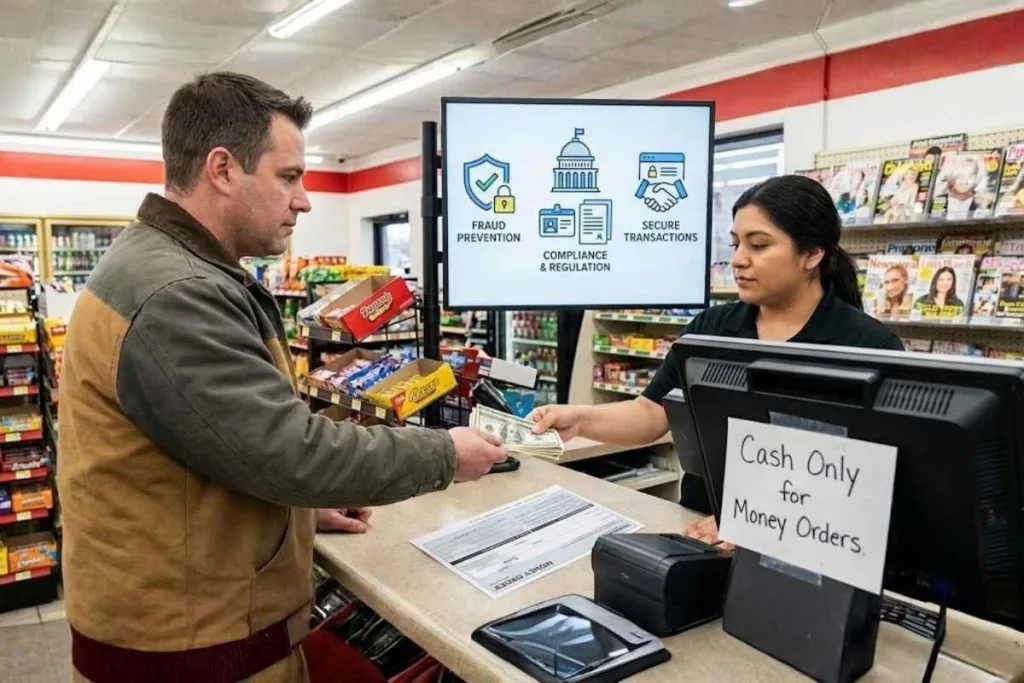
Some stores require cash-only payments for a Money Order to reduce fraud and meet compliance standards. Cash funding supports verification, immediate settlement, and consistent recordkeeping for regulated transactions. Providers operating in this space often function as Licensed Money Service Businesses subject to regulatory oversight.
The following sections explain general federal requirements that apply to financial institutions. Information about Order Express services and customer experience appears in a separate section later in this article.
Licensed Money Service businesses and licensed money transfer providers follow strict rules from financial regulators. These rules focus on compliance, fraud prevention, and secure transfers. Cash-only acceptance helps providers confirm payment sources and avoid reversals.
Customers often want to know why this matters and what steps to take. Understanding these rules helps you prepare, avoid delays, and complete transactions confidently. This guide explains the reasons clearly, outlines what to expect, and shows how regulated providers support safe and compliant financial services.
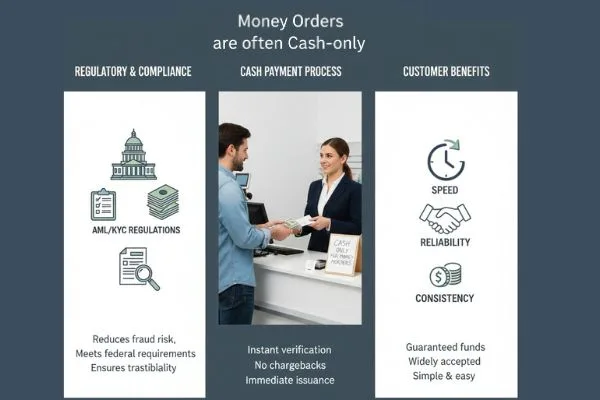
Why Cash-Only Rules Exist For A Money Order
Cash-only rules exist for several reasons. Providers use them to improve reliability, reduce fraud risk and support consistent processing. These goals help customers finish payments quickly and with fewer complications.
Federal Rules And The Money Order As A Payment Instrument
Federal rules treat a money order as a payment instrument and a negotiable instrument in many contexts. That classification creates oversight duties for financial institutions under federal law. Institutions must follow requirements established by the Financial Crimes Enforcement Network as outlined in FinCEN guidance for money services businesses.
Under federal law, financial institutions are required to comply with recordkeeping and reporting requirements, including Currency Transaction Reporting obligations described in FDIC Financial Institution Letter FIL-21-012. These obligations apply to financial institutions only, not customers.
Cash funding supports clarity at the moment of purchase. Staff can confirm payment immediately and issue a transaction receipt right away. That clarity supports audits and routine reviews required under 31 CFR §1010.311 Currency Transaction Reporting requirements.
Cash acceptance also reduces uncertainty about reversals. Card payments may face disputes after approval. Checks may bounce or trigger holds. Cash settles immediately, allowing institutions to complete transactions confidently.
You should also expect consistent steps at many locations. Institutions may request information to satisfy Customer Identification Program requirements under 31 CFR §1022.210. These steps exist to protect the financial system and prevent misuse.
What customers usually notice in cash-only environments:
- Faster counter processing during busy periods
- Fewer payment failures tied to bank authorizations
- Clear documentation for the purchase and receipt
- More consistent rules across locations
This section explains general federal expectations only. It does not describe Order Express policies.
Fraud Prevention And Fewer Payment Reversals
Fraud often targets fast, irreversible products. Criminals favor services that move value quickly. Financial institutions respond by tightening payment acceptance rules to reduce exposure, consistent with suspicious activity monitoring obligations under 31 CFR §1022.320. These descriptions reflect industry-wide regulatory expectations rather than the practices of any specific provider.
Cash-only policies reduce common fraud paths. Stolen cards, counterfeit checks, and chargebacks create losses and disputes. Cash removes those risks at the point of sale.
Customers also benefit from reliability. A Money Order often supports rent, utilities or urgent bill payment needs. Customers want the recipient to accept it without delay. Cash funding helps protect that expectation because the transaction finalizes immediately.
Providers also manage risk across many counters and shifts. A consistent cash-only rule reduces employee error. It also reduces complicated exceptions at the register. That simplicity keeps service faster and more predictable.
Many customers assume cash-only means “high-risk customers.” That assumption is incorrect. Institutions may apply cash-only rules broadly as a standard fraud control across the industry.
Practical Benefits Customers Often Experience Include:
- Avoiding card declines and network outages
- Reducing disputes tied to reversals
- Receiving faster confirmation and documentation
- Completing transactions with fewer variables
Faster Service And Consistent Processing
Cash-only rules can speed up service. Staff do not wait for bank approvals, issuer responses or check verification. That difference matters during peak hours and weekend traffic.
Standard rules also improve consistency. Customers can visit different stores and see similar expectations. Consistency lowers frustration because the process feels predictable. Predictability matters when you need quick service.
Customers also benefit from simpler receipt handling. Cash-funded purchases produce clean records for staff and customers. That record supports tracking if you need proof later. It also supports customer confidence during important payments.
If you want the smoothest experience, plan for the total amount. Bring enough cash for the product and any applicable fees. Ask the cashier for the receipt and store it safely.
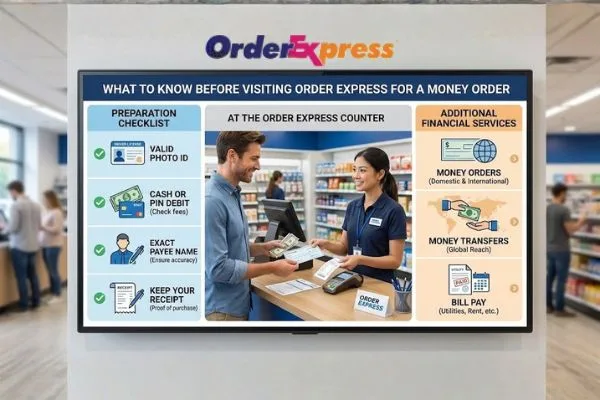
What Customers Should Know Before They Visit Order Express For A Money Order
Order Express aims to deliver accessible financial services to everyday customers. The information in this section reflects Order Express service practices and customer experience, not federal regulatory explanations. The company serves customers who value speed, clarity, and dependable service. Information about available services and locations is available online.
How Order Express Supports Simple, Customer-First Transactions
Order Express focuses on clear counter steps. Staff help customers complete transactions efficiently and understand requirements before starting.
A money order serves practical needs such as rent payments and personal obligations. Customers often prefer it for its wide acceptance and paper trail.
Order Express also offers related services that customers frequently use, including licensed money transfer services and check cashing options. These services help customers select the best option for their situation.
If you want a smoother visit, follow this checklist:
- Bring valid identification if required
- Bring enough cash for the amount and fees
- Know the payee name
- Keep your receipt
For questions before visiting, customers can reach support through Order Express contact options.
What To Expect At The Counter
A smooth counter experience starts with preparation. Confirm the total amount before staff prints the instrument.
Staff may ask clarifying questions to ensure accuracy. These steps help ensure transaction details are accurate and complete before processing.
Most customers complete purchases within minutes when prepared. Busy periods may add wait time.
Key details that matter include:
- Correct payee name
- Correct amount
- Receipt retention
- Transaction completion before leaving
You can also ask staff about available services. Some customers need money transfer services instead. Some customers need bill payment options for recurring expenses. Staff can point you to the right service for your goal.
Use the right tool for the job. Opt for a money order if you prefer a paper-based payment record. Select a transfer when speed is essential. Use bill pay when you need a routed payment workflow.
Common Questions Customers Ask, With Clear Answers
Customers often ask the same practical questions. Clear answers help customers act immediately. These answers also help customers choose the right service.
Do Cash-Only Rules Mean The Provider Distrusts Me?
No. Many providers apply the rule broadly for consistency and operational clarity. The goal is to support reliable transactions for both customers and businesses.
Will A Money Order Help Me Pay Rent Or Utilities?
Yes. Many recipients accept it as a secure payment method. You also get a receipt for tracking.
Should I Bring Identification?
Bring identification in case the transaction requires it. Requirements can vary by transaction type and amount.
Can I Use This For Bill Payment Needs Too?
Yes, but you should confirm the best service for your situation. Some bills work better through bill payment options.
What Else Should I Bring?
Bring the payee name and your funds. Bring any reference information you want for your records.
Customers want fast, clear decisions. Order Express aims to support that goal through consistent service. If you want to complete a transaction now, plan your visit with your details ready.
Conclusion
Cash-only requirements exist to make money order purchases faster, safer, and more reliable. By using cash, providers reduce fraud risk, avoid payment reversals, and keep transactions consistent across locations. For customers, this means fewer delays, clearer records, and confidence that payments reach recipients without complications.
The key takeaway is simple: preparation matters. Bring enough cash, confirm the payee details, and keep your receipt. When you understand why these rules exist, you can plan ahead and complete transactions smoothly. If you need a dependable payment option for rent, utilities, or personal obligations, a money order remains a practical choice.
Ready to make a transaction today? Go to Order Express nearby location and visit today with your information and cash ready. Ask the cashier for the fastest option for your needs and complete your transaction right away!
Disclaimer: This article provides general educational information only. It does not provide legal or financial advice. Federal rules apply to financial institutions and are described here only at a general, educational level. Business practices vary by location and product.
Frequently Asked Questions
Q: Why do financial institutions apply stricter controls to money orders than other payments?
A: Money orders are regulated payment instruments. Institutions apply controls to meet fraud prevention, verification, and recordkeeping obligations.
Q: Who oversees compliance for money order transactions?
A: Federal regulators oversee financial institutions. Agencies set requirements for monitoring, reporting, and risk management.
Q: How do payment controls support anti-fraud efforts?
A: Controls help institutions:
- Detect suspicious patterns
- Reduce misuse of payment instruments
- Maintain transaction integrity
Q: Are money order transactions reviewed after purchase?
A: Yes. Institutions monitor transactions to meet federal recordkeeping and suspicious activity requirements.
Q: What role do money orders play in regulated financial services?
A: Money orders provide a widely accepted, paper-based payment option with predictable settlement under regulated frameworks.


