 Skip to content


Banks reject money orders from unknown issuers to reduce fraud and meet compliance requirements. Financial institutions may apply verification and risk controls before processing certain transactions. These decisions are made by banks based on their own policies and applicable federal laws.
Banks follow federal regulations that support risk-based controls and fraud prevention. These regulations establish supervisory and reporting expectations, as outlined by the Financial Crimes Enforcement Network in its FinCEN guidance for money services businesses, and do not dictate individual bank acceptance decisions.
Unknown issuers increase fraud risk and delay verification. When banks cannot confirm legitimacy, they reject the transaction as a preventive step. Licensed money transfer providers operate under similar compliance standards that focus on fraud prevention, identity verification, and lawful money movement.
Customers benefit when they understand why verification matters. Knowing the rules helps customers choose trusted providers and avoid transaction delays. This guide explains why rejections happen, how verification works, and what steps customers can take to complete secure transfers through compliant financial services.
Why Banks Apply Strict Controls To Money Order Transactions
Banks operate under federal requirements that support risk-based decision-making. These rules exist to prevent fraud, reduce financial crime, and protect consumers during money movement activities, including obligations established under the Anti-Money Laundering Act of 2020.
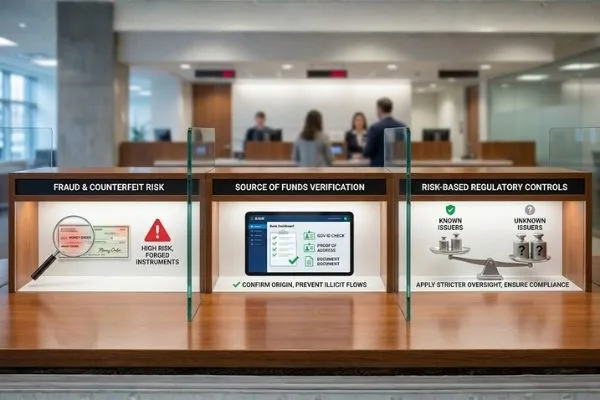
1. Banks Manage Fraud And Counterfeit Risk
Banks constantly face threats from counterfeit instruments and altered documents. When an issuer is unknown, verification becomes difficult and risk increases.
Fraudsters sometimes use forged instruments to exploit verification gaps. Banks respond by limiting acceptance to known issuers with established validation processes. This approach aligns with risk-management principles discussed in the FFIEC BSA/AML Examination Manual, which provides guidance for bank examination programs. Stronger controls create safer money transfer activity across the financial system and reduce disruptions for legitimate customers. Order Express services operate separately from bank acceptance decisions for money orders.
2. Banks Must Verify The Source Of Funds
Federal rules require financial institutions to maintain anti-money laundering programs that include procedures to understand transaction activity. Unknown issuers can make it harder for institutions to confirm whether funds come from lawful activity. Money services businesses are required to maintain compliance programs consistent with 31 CFR §1022.210 requirements. These obligations apply to money services businesses and are separate from bank-specific regulatory requirements.
When banks cannot verify the source, they may reject the transaction as a precaution. This step supports compliance and helps maintain financial system integrity. Money services businesses are required to monitor and report suspicious activity in accordance with 31 CFR §1022.320 Suspicious Activity Reporting rules. These reports are handled internally and confidentially and are not disclosed to customers. Banks apply their own reporting obligations under separate regulatory frameworks.
These safeguards also protect customers who rely on secure payment channels and timely remittance services.
3. Banks Follow Risk-Based Regulatory Expectations
Regulators expect financial institutions to apply controls proportional to risk. Unknown issuers represent higher uncertainty, which increases compliance exposure. Consumer protections and education are reinforced through resources provided by the FDIC Consumer Resource Center. These resources are informational and do not establish bank transaction acceptance policies.
Banks reduce this risk by accepting instruments only from trusted sources. Institutions that fail to apply these controls face penalties and reputational harm. Customers should view these rejections as safeguards designed to protect everyone involved.
How Customers Can Prepare For Smoother Money Order Use
Preparation reduces frustration and delays. Customers who understand financial controls complete transactions more efficiently and with confidence.
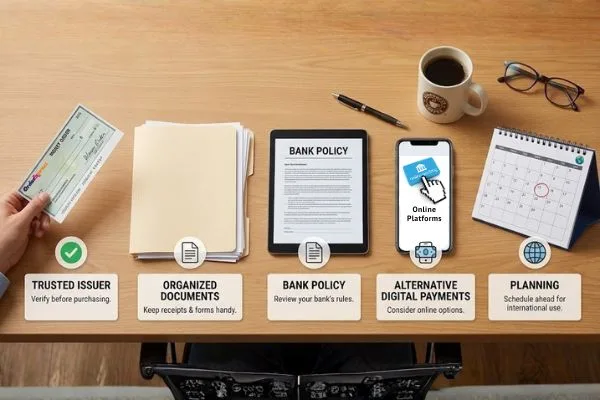
1. Choose Well-Known And Widely Accepted Issuers
Customers should select issuers with established reputations. Widely recognized issuers simplify verification and reduce the chance of rejection.
Banks already maintain validation systems for familiar providers. This familiarity supports faster processing and more reliable payment processing. Customers may also consider complementary services such as Order Express check cashing solutions, depending on their needs and service availability. This does not change or influence a bank’s acceptance rules for money orders.
Choosing trusted issuers supports uninterrupted money movement.
2. Keep Documentation Organized And Accessible
Customers should retain receipts and transaction records. Clear documentation helps institutions resolve questions quickly.
Accurate records support lawful funds transfer activity and help customers track transactions. Organized documentation also speeds resolution if issues arise. This approach aligns with best practices discussed in Order Express educational resources. Keeping records supports smoother service interactions but does not create regulatory obligations for customers.
This habit reflects responsible use of financial services.
3. Understand Bank Policies Before Initiating Transactions
Banks publish acceptance guidelines and service terms. Customers benefit when they review these details before visiting a branch.
Understanding policies reduces surprises and helps customers choose the right transaction method. Order Express customers can also explore alternative offerings through other financial services.
Preparation leads to smoother outcomes.
4. Consider Alternative Transaction Options
Some transactions work better through other channels. Digital remittance services, electronic payments, and wire alternatives offer speed and transparency.
These options support modern payment channels and efficient remittance services. Customers can select solutions based on urgency, destination, and convenience.
Order Express offers multiple options to support diverse transaction goals.
5. Plan Transactions With Timing And Destination In Mind
Certain destinations and transaction amounts require additional review. Customers who plan ahead avoid last-minute disruptions.
Advance planning supports reliable funds transfer and greater confidence during transactions. Customers seeking assistance may contact Order Express through its official contact page.
How Order Express Supports Compliant And Customer-Focused Transactions
Order Express provides financial services designed to support lawful, efficient, and customer-focused transactions. Order Express does not set, influence, or control bank acceptance policies for money orders or other bank-processed instruments. The company operates as a registered money services business and follows applicable federal and state requirements for its own services. Order Express does not set or control bank acceptance policies for money orders or other bank-processed instruments.
Order Express supports money movement across domestic and international corridors. Customers benefit from transparent processes, accessible locations, and clear guidance.
The platform emphasizes remittance services that prioritize clarity, speed, and understanding. Customers can choose options that align with their timelines and goals.
Order Express also focuses on education. Clear information helps customers select the right service and avoid unnecessary delays.
By offering structured transaction options, Order Express helps customers navigate financial controls with confidence. The company maintains a clear separation between federal requirements and internal service practices to avoid confusion.
Why Financial Education Benefits Customers
Education reduces uncertainty and friction. Customers who understand transaction requirements complete transactions faster and with fewer issues.
Knowledge supports informed decisions across payment processing and money transfer services. Informed customers feel prepared and confident.
Financial education also reduces fraud exposure by helping customers recognize risks.
How Transparency Improves Transaction Success
Transparent processes help customers set expectations. Clear steps reduce misunderstandings and errors.
Order Express focuses on straightforward communication so customers know what to expect before starting a transaction. Transparency supports positive outcomes and trust.
How Compliant Services Protect Customers
Compliance protects customers and institutions alike. Strong controls reduce fraud, disputes, and transaction delays.
Order Express operates within applicable regulations to support safe and reliable transactions. Compliance also supports long-term service availability.
Why Flexibility Matters In Modern Financial Services
Customers have diverse needs. Flexible services support different destinations, amounts, and urgency levels.
Order Express offers options that adapt to customer situations. Flexibility combined with compliance creates better customer experiences.
Conclusion
Banks reject money orders from unknown issuers to reduce fraud, confirm lawful funds, and meet regulatory expectations. These controls protect customers and ensure the financial system remains secure. When customers understand why rejections happen, they can plan transactions more effectively and avoid delays. Choosing recognized issuers, keeping records ready, and reviewing acceptance policies all improve transaction success.
Modern financial services also provide flexible alternatives that offer speed and transparency. Order Express supports customers with clear information, compliant services, and convenient options for domestic and international transactions. Taking a proactive approach helps customers move money confidently and stay in control of financial decisions.
Ready to complete your next transaction with confidence? Visit Order Express to start a secure, reliable transaction today and move your money with clarity and speed.
Disclaimer: This article provides general educational information only. It does not describe specific bank policies or Order Express internal procedures. Federal regulations cited are included for general reference and do not describe Order Express service operations or bank decision-making processes.
Frequently Asked Questions
Q: Why Do Banks Reject Money Orders From Unknown Issuers?
A: Banks reject them to reduce risk.
- Prevent fraud and counterfeits
- Verify the source of funds
- Meet federal compliance requirements
Q: Can I Avoid Rejection When Using A Money Order?
A: Yes.
- Use well-known issuers
- Keep receipts and records
- Check acceptance policies before visiting
Q: Are Money Orders Risky For Banks?
A: They can be. Unknown issuers increase:
- Fraud exposure
- Verification difficulty
- Compliance risk
Q: What Alternatives Exist If A Money Order Is Rejected?
A: Consider:
- Digital money transfers
- Electronic payments
- Remittance services through trusted providers
Q: How Does Order Express Help With Secure Transactions?
A: Order Express offers:
- Compliant financial services
- Clear transaction guidance
- Flexible domestic and international options


